Kyiv reaches the Urals: Ukraine's drones hit Omsk and the limits of Russia's refining depth
Ukrainian drones reached the Omsk refinery on the night of 6 July, putting a Trans-Siberian refining cluster inside the strike envelope for the first time and turning a tempo of harassment into something that looks like a campaign.
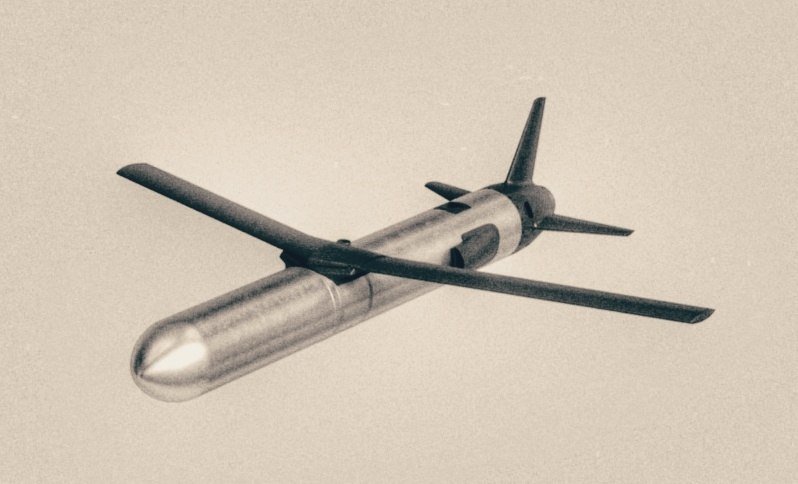
On the night of 6 July 2026, Ukrainian long-range drones struck the Omsk oil refinery in western Siberia, roughly 2,500 kilometres from the launch envelope used for most of Kyiv's earlier strikes on Russian energy infrastructure. Social channels tracking open-source flight data posted geolocated video of at least one ignition point at the site within hours, and Russian regional authorities confirmed an unmanned aerial vehicle had been intercepted over the Omsk Oblast industrial zone. The strike lands in the same week that the Saratov, Nizhnekamsk and Ufa refining clusters all reported overnight attacks, with satellite imagery and ground footage reviewed by independent trackers showing multiple fires at Bachneft-, Tatneft- and Rosneft-affiliated units.
The pattern is no longer a campaign of harassment but a sustained effort to put Russia's downstream margin under stress. Western and Ukrainian reporting in early December 2025 had already established, courtesy of U.S. officials speaking on background, that the Central Intelligence Agency and the U.S. military had quietly accelerated a Ukrainian programme of drone strikes on Russian oil facilities and tankers, with presidential sign-off. That coordination has now matured into a tempo: across a single week in July, at least four major refining clusters have been hit in four different federal subjects, and a Russian Sukhoi Su-35S multirole fighter was shot down over the contact line on 8 July, with an FPV drone visiting the wreckage afterwards.
A tempo, not a one-off
The Omsk strike matters less for its tonnage than for its latitude. The facility sits on the Trans-Siberian corridor and feeds domestic Russian markets as well as export flows to Central Asia. Open-source channels have flagged the FP-1 airframe and the ELOU-AVT-11 atmospheric-vacuum distillation unit as the nominal target package, with a claimed strike envelope of roughly 2,500 kilometres from forward Ukrainian launch points. Neither the platform's specifications nor the unit-level damage assessment has been independently verified by mainstream wire reporting; the open-source community has carried the bulk of the attribution work, using satellite imagery, radio-direction-finding on downlink telemetry and locator pings from crashed airframes to triangulate the raid.
That epistemic gap is itself the story. Six weeks into the intensified campaign, the technical specifics of the long-range programme are still being reconstructed on Telegram rather than briefed in Kyiv or Washington. The result is a slow grind of confirmation: video first, satellite second, official acknowledgement third, and capacity assessment fourth, often weeks later.
Where the wire is, and isn't
Russian milbloggers, including the Rybar network, openly framed the refinery strikes as an American-orchestrated pressure campaign, with the 8 July digest explicitly arguing that Washington is pushing Kyiv to inflict pain on Russian downstream so Moscow can be levered into pre-summit concessions. Russian state-aligned coverage of the Omsk raid was thinner, confined to local governor statements and the standard " UAV intercepted" formulation; detailed Russian-language claims about the airframe or the unit hit were sparse.
The mainstream wires, meanwhile, have been more comfortable describing the trend than the specific overnight. Western coverage of the CIA-Military coordination, originally broken in December, has framed the programme as a deliberate effort to deny Moscow the petroleum revenues funding the war effort; per-kilometre attribution has been left largely to open-source analysts. That division of labour, official outlets carrying the strategy and independent channels carrying the evidence, is producing a lopsided public record, and it is worth saying so plainly.
Refining depth, in plain terms
Russia has spare crude. It does not have unlimited spare refining. The sector runs roughly 5.4 million barrels per day of atmospheric distillation capacity, and the most modern, deepest-conversion units (those capable of producing the diesel and jet-fuel grades that move the war) are concentrated at a handful of sites: Omsk, Angarsk, Nizhnekamsk, Ufa, and the cluster around Samara. Hit the same unit twice, and even a country with the world's second-largest oil-export book feels the pinch at the pump within weeks, because domestic price formation depends on the residual-fuel export window staying open to balance the books.
The strategic wager inside the campaign is that Russia can absorb a strike or two but cannot absorb a tempo. If four clusters burn in a single week, the marginal cost of replacement parts, insurance premiums on tankers, and the political optics of fuel queues in provincial capitals compound faster than the ruble's free-fall buffers can absorb. Whether that wager is paying off is a question for the August crude-diff tape more than for any Telegram channel.
What to watch next
Two dates will sharpen the picture. The first is the next quarterly disclosure from Russian fuel retailers, due in late August, which will show whether domestic gasoline margins have absorbed the hits or begun to compress. The second is the next round of secondary-sanctions guidance from the U.S. Treasury, which has been telegraphing tighter enforcement on third-country buyers of Russian refined products and on the shadow fleet that moves them. If the Omsk raid marked the moment Kyiv proved it can reach the Urals, the next six weeks will show whether Moscow can keep the rest of the gridlit running while the campaign tempo continues.
Sources
- [2026-07-08T23:11] [telegram:osintlive], ELINT News / @RALee85, On U.S. intelligence coordination of Ukrainian refinery strikes, https://t.me/osintlive
- [2026-07-08T23:10] [telegram:osintlive], ELINT News / @bayraktar_1love, Nizhnekamsk refinery cluster hit, ignition points visible, https://t.me/osintlive
- [2026-07-08T23:11] [telegram:osintlive], ELINT News / @bayraktar_1love, Ufa Bashneft refining cluster attacked, https://t.me/osintlive
- [2026-07-08T23:10] [telegram:osintlive], ELINT News / @bayraktar_1love, Saratov Oil Refinery struck, 7 million tons processing capacity, https://t.me/osintlive
- [2026-07-08T22:39] [telegram:osintlive], Status-6, Ukrainian FPV drone visits Su-35S crash site, 8 July 2026, https://t.me/osintlive
- [2026-07-08T21:47] [telegram:rybar_in_english], Rybar, Daily digest framing U.S. as orchestrating refinery strikes, https://t.me/rybar_in_english
- [2026-07-08T21:37] [telegram:osintlive], WarTranslated, Trump-Zelensky exchange on Moscow meeting and Ukrainian drones, https://t.me/osintlive
Desk note: Monexus framed this around the open-source-attribution convergence and the strategic logic of Russian refining depth, rather than around the official wire record, which still treats each overnight as a discrete event. The wire's job is the strategy; the channels' job is the geography. We followed both.