Pumps and queues: Ukraine's deepest refinery strike meets Russia's fuel collapse
Ukrainian drones reached Russia's largest refinery on 6 July 2026, deepening a campaign that, on the same day, produced armed traffic disputes at Siberian petrol stations.
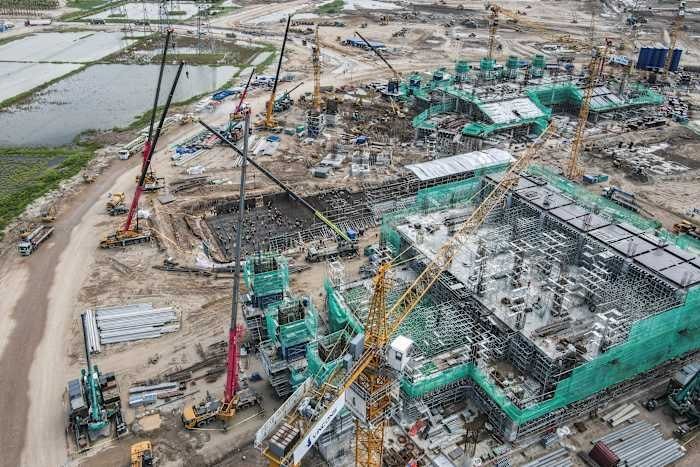
On 6 July 2026, Ukrainian long-range drones struck the Kirishi refinery in Russia's Leningrad Oblast, the country's largest operating refinery and one of the deepest penetrations yet of a campaign that has quietly reshaped Russia's domestic fuel map. Reuters reported the hit at 17:45 UTC, and within hours the same day's news cycle featured a separate, almost parodic image from Siberia: a traffic police officer drawing a service weapon on a driver accused of cutting a five-hour queue at a petrol station. That juxtaposition — long-range strike and queue-side firearm — captures, in a single day, the asymmetric pressure that Ukraine has been applying to Russian downstream oil since 2024.
The two stories are not separate. They are the same pressure, viewed from two ends of a pipeline. Ukraine's strikes, designed to degrade the refining capacity that feeds both Russia's domestic market and its war economy, are doing what sanctions, price caps and export bans attempted for two years and largely failed to do: produce empty forecourts inside Russia.
A campaign that has moved up the stack
For most of 2024 and 2025, Ukraine's drone strikes against Russian energy infrastructure focused on mid-sized refineries, export terminals and storage depots. By 2026 the targeting has shifted up-market. Kirishi, operated by the Surgutneftegaz-affiliated Kirishinefteorgsintez complex, sits roughly 750 kilometres from the Ukrainian border and processes around 17-18 million tonnes of crude a year — roughly the largest single source of gasoline and diesel for the populous north-west of Russia, including the two largest cities, Moscow and Saint Petersburg.
A hit at Kirishi does not merely raise regional prices; it tightens national balances because the plant feeds the grid via product pipelines. The Reuters report on the 6 July strike cited preliminary Ukrainian intelligence assessments. Ukrainian sources have framed each successive strike as part of a deliberate strategy, set out publicly by officials in Kyiv, of degrading Russia's refining capacity by roughly 10-15 percent annually. The Russians, predictably, frame it as terrorism against civilian infrastructure. Both characterisations are likely true in the ways that matter politically for each side; neither is the full picture analytically.
The downstream pressure
The harder evidence sits in the queues. A 6 July social-media post via the Telegram channel Kyivpost_official, citing Russian regional reporting, described five-hour queues at petrol stations in parts of Siberia and security forces being drafted in to enforce rationing. The traffic-stop incident — an officer reportedly drawing a firearm after a driver tried to bypass a five-hour queue — is extraordinary less for the existence of fuel stress than for the stage at which that stress now manifests publicly.
For two years Russia's federal government has alternated between informal export quotas on gasoline and diesel, and seasonal bans on wholesale exports, to keep product on the domestic market. Those measures work, marginally, at the wholesale level. They translate less gracefully to the forecourt, where price ceilings and retail-supply obligations interact poorly with logistics that have been thinned by a steady drumbeat of drone strikes on regional refineries, trans-shipment depots and rail-loading terminals.
What the consumer sees is the queue. What the operator sees is a refinery at Kirishi off-line, or running at reduced yield, and product flows that used to be predictable now rerouting through Kazakhstan and Belarus. The retail pinch is, in that sense, a leading indicator of an industrial pinch still felt only in patches.
Russia's counter-strike, and what it changes
A separate report on 6 July, distributed via the X account @telesurenglish and attributed to the Russian Ministry of Defence, claimed that Russian forces had conducted one "massive" strike and five group strikes over the past week, hitting industrial, infrastructure, energy, and logistics facilities inside Ukraine. The framing — a routine weekly digest, the same structure Russian briefings have used every week for the duration of the full-scale invasion — offers no concession that the structural balance has shifted.
Two caveats apply, and they cut in opposite directions. Telegram and X channels operating as relays for Russian Ministry of Defence claims are not independent sources; the casualty and target figures in such briefings have historically run higher than what OSINT can verify, and lower than what Ukraine's energy ministry reports. Conversely, dismissing the underlying point — that Russia is still capable of hitting Ukrainian grid and logistics targets at scale — is a mistake. The two campaigns are running in parallel: Ukraine degrading Russian refining and rail-loading, Russia degrading Ukrainian generation and rail. Neither side has the air supremacy required to finish the other's system; what each can do, and is doing, is raise the cost of the other side's war economy.
Stakes and the next quarter
The near-term stakes sit on three axes. First, the Russian domestic market: a sustained withdrawal of roughly 10 percent of national refining capacity, layered on top of maintenance outages and a tighter export regime, would push retail rationing from episodes to policy, with price-ceiling extensions and possibly a Moscow-led swap of crude-for-product with Kazakhstan to keep pipeline flows moving. Second, the export market: Russia has been able to keep seaborne crude exports close to plan by redirecting volumes away from refineries hit in the campaign. Those barrels lose value at the wellhead because discounts widen when refiners in importing countries — Turkey, India, Brazil — can no longer rely on consistent product supply. Third, military logistics: Russian armoured formations burn diesel at a rate that is a small fraction of national consumption, but the chokepoint is regional rail-loading and trans-shipment, where individual Ukrainian strikes have already forced tactical rerouting in previous months.
The sceptical read is also available: Ukraine's campaign is cumulative rather than decisive, and the queue-side incidents dramatise a stress that may be transient, partly seasonal, and partly induced by export curbs that Moscow could ease in autumn. What is harder to dismiss is the direction of travel. A single strike at Kirishi does not break Russia's energy system; a strike at Kirishi in the same week as armed queue enforcement a thousand kilometres east in Siberia does.
This piece sat the Ukrainian drone-campaign reporting at the top of the frame, used Russian-side claims as counter-claim material with explicit sourcing caveats, and noted the parallel Russian strike campaign on Ukrainian targets rather than treating Ukraine as a passive party to a campaign of attrition.
Wire provenance
This editorial synthesis draws on the following public wire/social posts:
- http://reut.rs/4p4ZXmP
- https://t.me/Kyivpost_official