Twelve Days of Rubble: How Twin Quakes Exposed the Fault Lines Beneath Venezuela
Twelve days after two earthquakes struck western Venezuela, the official death toll has climbed past 3,500 and tens of thousands remain without shelter — a crisis compounding an economy already hollowed by sanctions and political isolation.
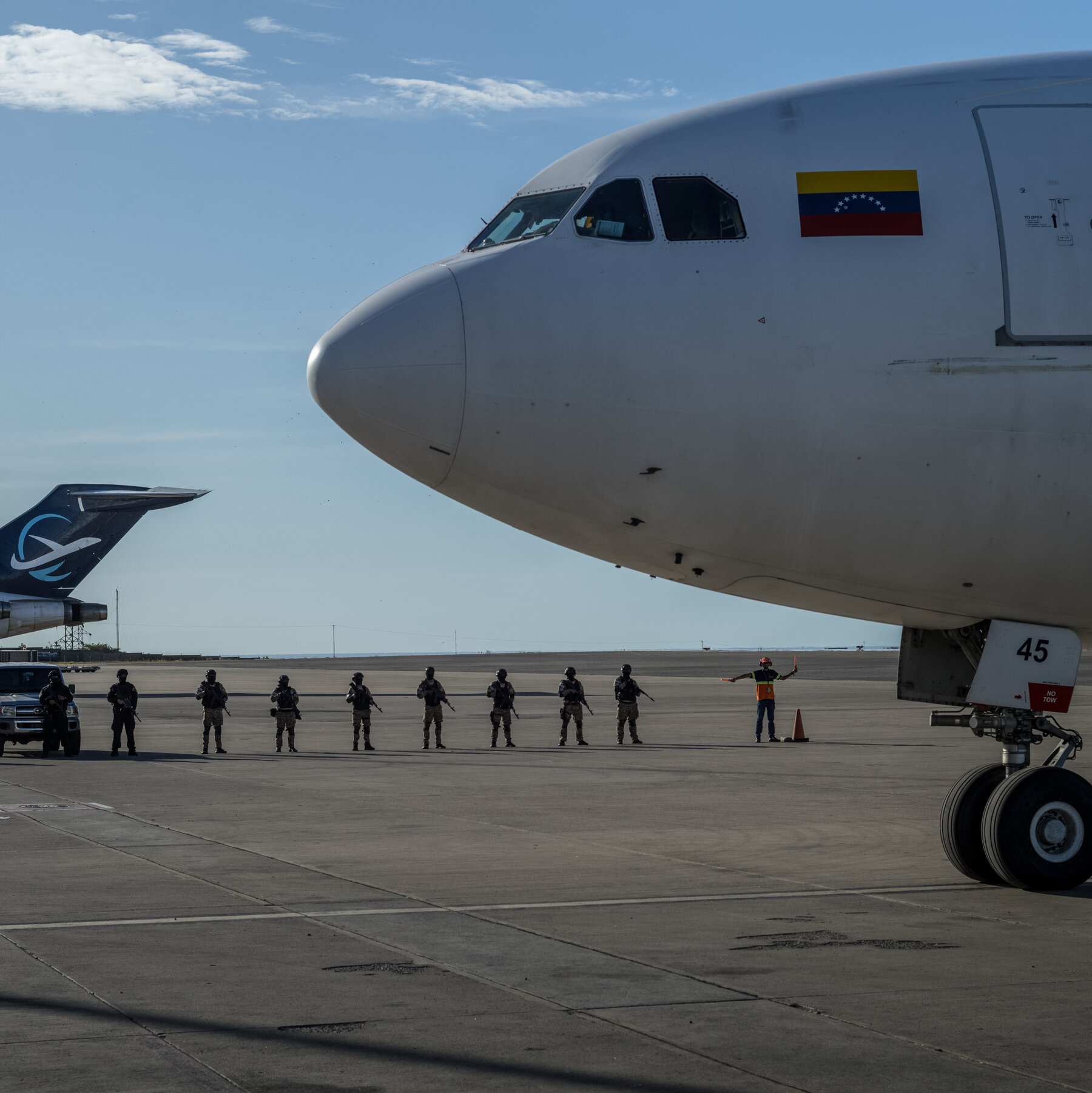
On the night of 24 June 2026, two earthquakes struck western Venezuela within hours of each other. Twelve days later, the human cost is still being counted. Official figures released on Monday 6 July put the death toll at 3,535, with more than 17,000 people left homeless and tens of thousands more displaced across the affected states.
That a quake-prone country on the rim of the Caribbean could be brought so low by a single seismic event says less about the geology than about the ground already gone from under the country. The disaster did not create Venezuela's vulnerabilities. It exposed them.
What is known about the quakes themselves
Reporting from the wire services and from BBC Mundo's on-the-ground correspondents converges on the broad outline. Two earthquakes, both shallow, hit in rapid succession. They toppled a ten-storey residential building in one of the affected urban centres, and at least one survivor — a girl identified in dispatches as Fabiana — was pulled from the rubble after 32 hours. She told BBC World Service reporters she had survived on ketchup and cheese packets found amid the debris of what had been someone's kitchen. The image was grimly precise: not heroics, but a child improvising calories from the wreckage of someone else's home.
The death toll of 3,535, the displacement of more than 17,000, and the continued homeless figure all come from official Venezuelan government data released on 6 July. Reuters and France 24 both carried the updated numbers in their evening wires; the BBC's reporting adds the texture that statistics cannot — individual survivors, specific buildings, the sound of drills cutting through concrete long after hope has faded.
What the wires do not yet report is how the structural failure patterns compare across affected buildings. That question — whether the collapses were a function of seismic intensity, of construction practices, of code enforcement, or of maintenance deferred over a decade of economic contraction — will determine how preventable the losses look in hindsight. The sources simply do not contain that analysis yet.
The disaster sits on top of an already broken economy
This is the part the casualty figures do not capture. Venezuela enters the seventh year of a contraction that began with the 2014 oil-price collapse and deepened sharply under successive rounds of US sanctions, including the 2017 and 2019 measures that effectively cut the state oil company off from dollar-based financial infrastructure. The International Monetary Fund and other multilateral observers have, for several years running, placed Venezuela's GDP among the smallest per capita in the Western Hemisphere — smaller in dollar terms than several economies in sub-Saharan Africa.
What the earthquake response reveals is what that contraction looks like when it meets a major emergency. Hospitals in the affected region were already running on intermittent power and chronic shortages of basic supplies. Public-works budgets had been trimmed repeatedly. Civil defence volunteers, not professional rescue teams, are doing much of the search work visible in the wire photographs. The state is mobilising — President Nicolás Maduro has appeared at disaster sites and on state television promising reconstruction — but the fiscal and material capacity behind those promises is what it is.
The Maduro government's framing, carried by state outlets and sympathetic regional media, emphasises external culpability: the sanctions regime as a form of economic warfare that leaves the state unable to import equipment, medicine, or specialised rescue gear. That framing has real evidentiary weight. The OFAC sanctions architecture does restrict the Caracas government's access to dollar clearing and to certain categories of imported equipment, and humanitarian carve-outs under general licences have been inconsistently implemented on the ground.
The counter-frame, carried by Western wire services and the Venezuelan opposition, emphasises governance: the kleptocratic capture of state revenue by a narrow elite, the diversion of oil income, the hollowing of institutions that would normally absorb a shock like this. That frame also has real weight. Annual Transparency International indices have, for years, placed Venezuela among the most-corrupt-perceived states in Latin America. The economy that collapsed after 2014 did so before the heaviest sanctions were imposed, and after a decade of state intervention in the private sector.
Both can be true at once. The disaster sits at the intersection of external pressure and internal decay, and parsing how much weight to assign each is not a moral question but an evidentiary one — and one the sources available to this publication do not resolve.
The sanctions question, plainly stated
Coverage of Venezuela in the Western press has for a decade operated inside a binary: either sanctions are a just instrument of pressure on an authoritarian regime, or they are collective punishment of a population for the sins of its leaders. Both characterisations exist in mainstream outlets and both are defensible on their own terms. The honest reporting sits between them, and it is uncomfortable.
What can be sourced: the US Treasury's Office of Foreign Assets Control maintains active sanctions designations against state entities and named individuals in Venezuela. The 2017 financial sanctions and the 2019 oil-sector measures were significant escalations. The Trump and Biden administrations differed in tactical approach but not in the broad architecture of pressure. The Maduro government has periodically been granted narrow humanitarian licences; international NGOs have repeatedly reported that these licences do not always reach end-users in practice, partly because the banks that would process the transactions decline to handle Venezuela-exposed flows for reputational and compliance reasons.
What can also be sourced: Venezuela's oil production, which peaked above three million barrels per day in the late 1990s, has collapsed by roughly three-quarters. The IMF's World Economic Outlook databases, drawing on official Venezuelan data supplemented by independent estimates, place current production at a fraction of historical levels. The economic base that would normally fund a domestic disaster response — tax revenue from a functioning oil sector, distributed through competent public institutions — has been hollowed out.
The structural argument, put plainly: external pressure accelerated an internal collapse, and the disaster relief operation is now operating inside a state whose capacity to respond was already reduced. The argument is not that sanctions caused the earthquake. The argument is that sanctions shaped the ground on which the earthquake landed.
The humanitarian corridor question
One question hovering over the early coverage is whether the Maduro government will accept international humanitarian assistance on terms that allow it to reach affected populations. Caracas has, in past emergencies, accepted aid from friendly governments — Cuba, Russia, China — while declining or restricting offers from the United States, several European governments, and some NGOs. The pattern reflects both political calculation and a residual sovereignty reflex: a government reluctant to be photographed receiving rescue helicopters from a foreign power it publicly denounces.
Reuters and France 24's 6 July reporting does not specify which governments have offered what. The wires note only that the death toll has risen and that displacement is ongoing. The BBC's reporting, which included the Fabiana rescue account, similarly does not address the aid question in detail.
This publication expects that question to come into sharper focus in the days ahead. The pattern from earlier Latin American disasters — the 2010 Haiti earthquake, the 2017 Mexico City quake, the 2023 Turkey-Syria earthquakes — is that the aid politics initially trail the rescue operations by a few days and then overtake them. Venezuela's politics, and the geopolitical alignment of potential donors, will shape what is offered and what is accepted.
Stakes and the regional frame
The disaster lands in a region that is itself repositioning. Colombia's government under President Gustavo Petro has pursued a more conciliatory posture toward Caracas than its predecessor; the border crossings between the two countries, largely closed in earlier years, have been partially reopened. Brazil's Lula administration has similarly sought a thaw. The United States has, at various points in the recent past, reviewed its Venezuela policy in light of migration flows and energy-market considerations.
The earthquake will likely accelerate some of these conversations. Migration pressure on Colombia and Brazil, already significant, will increase as Venezuelans in the affected zones move toward border crossings. Reconstruction financing, if it happens at scale, will require some form of sanctions relief or creative structuring around them — perhaps the model used in earlier humanitarian carve-outs, perhaps something new.
The structural frame in plain terms: a country at the intersection of external pressure, internal decay, and now a major natural disaster, sitting in a region where every neighbour has a stake in how the aftermath unfolds. The decisions made in Caracas, in Washington, in Bogotá and Brasília over the next several weeks will determine whether the recovery is a national one or a regional one, and on what terms.
What we do not yet know
Several questions remain genuinely open in the available reporting. The sources do not specify the magnitude and depth of the two earthquakes with the precision of a US Geological Survey bulletin; they do not break down casualties by municipality; they do not identify which buildings collapsed or whether construction-code violations contributed; they do not specify the dollar value of damage to public infrastructure. The official casualty figure of 3,535 comes from Venezuelan government data; the sources do not contain an independent verification. International observers — the UN's OCHA, the IFRC, independent seismologists — have not yet published assessments in the materials available to this publication.
The wire reporting also does not yet address the question of whether the Maduro government has accepted or rejected specific aid offers. That is a forthcoming story, not a current one. Where the evidence thins, this publication will not pad.
What the reporting does support, plainly: a major natural disaster has struck a country with limited absorptive capacity, and the official death toll — whatever the final verified figure turns out to be — is already several times the per-capita loss of most comparable recent seismic events in the region. The political economy of the recovery is now in play.
This publication framed the disaster as a compound event — the seismic shock and the institutional erosion that shaped its consequences — rather than as a one-off natural disaster. The wire reporting carries the casualty figures; the structural argument sits on top of them.
Wire provenance
This editorial synthesis draws on the following public wire/social posts:
- http://reut.rs/4eNXyJK
- https://t.me/BBCWorldoffl