Xbox's billion-player pivot: what Sharma's memo actually says about the new entertainment economy
A leaked internal memo admits the studio-buying era lost 64 cents on the dollar. The strategy that replaces it is bigger, stranger, and built for a world where gaming is no longer the point.
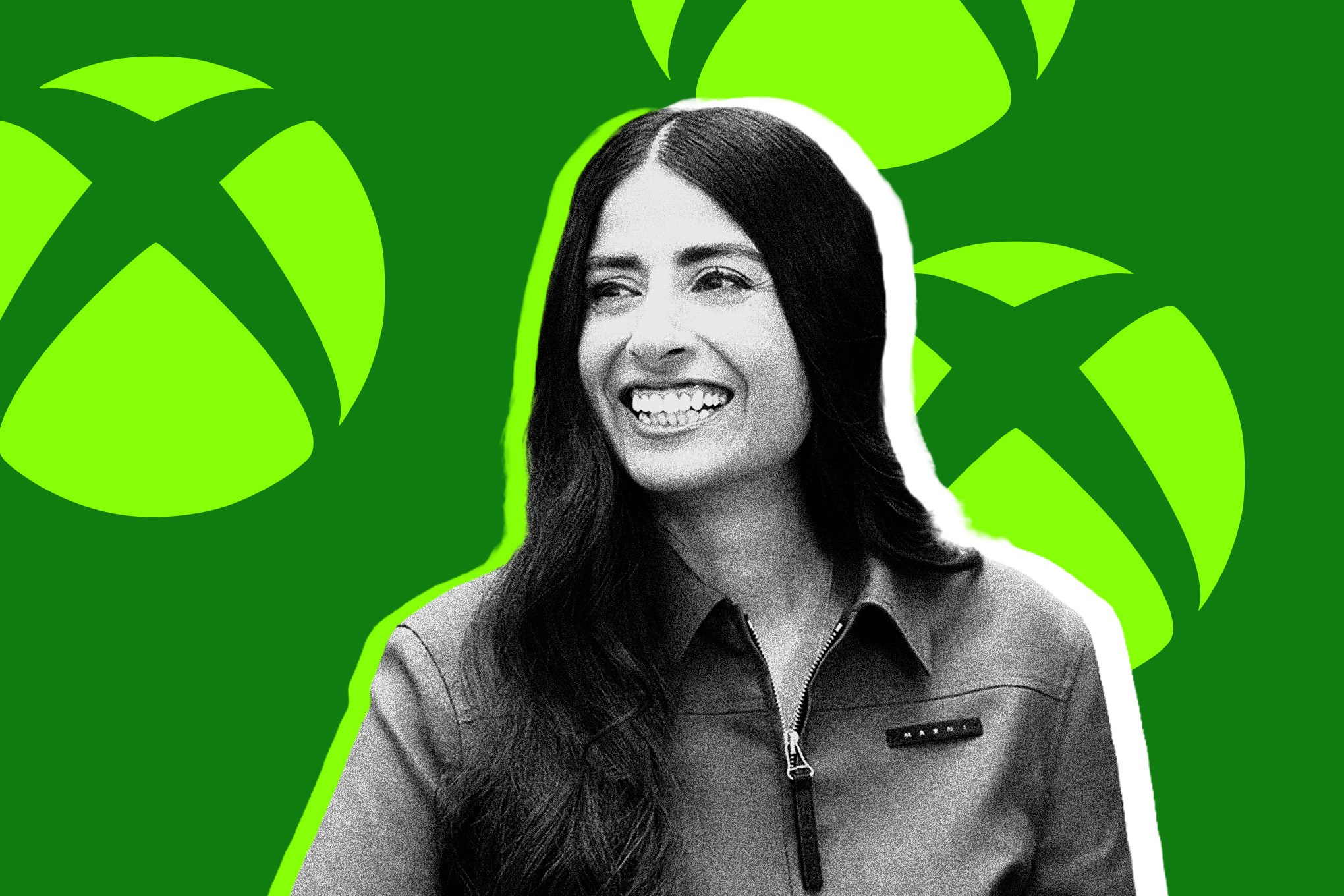
On 6 July 2026, four short notes landed in a single day and, taken together, sketch a new theory of Microsoft's gaming business. Xbox CEO Asha Sharma told employees in an internal memo that the company's years-long spree of buying game studios had not worked out, losing about 64 cents for every dollar invested. She announced a leadership reshuffle that pulls Minecraft and King, the Candy Crush studio, directly under her. She reassured staff that none of Xbox's first-party announced games had been cancelled. And she laid out a vision, circulated on X, of an Xbox that aims to entertain more than a billion people every day — not just the hard-core console audience that defined the brand for two decades.
The juxtaposition is the story. Sharma is not selling a retreat. She is selling a different unit of ambition. The console war, as Microsoft once imagined it, is over on Microsoft's terms; the contest now is for daily attention at a scale the gaming industry has never claimed.
The spreadsheet of an empire
For most of the last decade, Microsoft's gaming strategy was legible: buy the studios, build the exclusives, defend the Game Pass subscription wall. The memo Sharma sent on 6 July concedes what many analysts had been saying for years. According to text of the memo shared on X, the company lost roughly 64 cents for every dollar spent acquiring studios — a striking admission for a division whose largest deals, including the 2022 Activision Blizzard transaction, ran into the tens of billions. Sharma did not name individual studios in the excerpt that circulated, and the memo did not assign blame to any specific acquisition; the framing was systemic.
A line in the memo made the scope of the problem explicit. Sharma wrote that the model of paying for everything upfront and hoping to monetise later had run out of road. Microsoft had been paying for exclusivity, paying for headcount, and paying for content pipelines that, in many cases, were never going to deliver returns commensurate with the price tag. The 64-cent figure is the kind of number that, in a normal industry, would end a strategy. In platform gaming, it ended an era.
What the reshuffle actually changes
The leadership changes reported by journalist Stephen Totilo and discussed widely on X on 6 July are easier to read than the strategy rhetoric. Minecraft and King — two of the most consistently monetised properties in Microsoft's entire portfolio — will now report directly to Sharma, bypassing the existing Xbox Game Content organisation. That is not a cost-cutting move. It is a signal about what the company believes it owns and what it is willing to centralise.
Minecraft remains one of the best-selling games in history, with a player base that skews younger and more global than the traditional Xbox install. King, with Candy Crush, is a daily-active-user machine — exactly the kind of property that maps onto Sharma's stated billion-a-day goal. Pulling both under the CEO's office is a corporate way of saying: these are the assets that compound, and everything else has to justify itself.
At the same time, Sharma's reassurance that no announced first-party games are being killed is doing real work. Layoffs and restructuring landed the same day, which is the part of these stories that rarely makes the headlines. The corporate-speak version is: we are rightsizing. The human version is: a meaningful number of Microsoft gaming employees learned on a Monday morning in July that their roles no longer exist, and the survivors were handed a memo promising that the games already on the slate would survive — without any commitment to the ones still in development.
A billion a day, and what that means
Sharma's stated ambition — making Xbox one of the few companies that entertains more than a billion people each day — is the most revealing line of the day. It is not a console pitch. It is not even a gaming pitch, strictly understood. It is a platform pitch, the same language the rest of Big Tech has been speaking for a decade. The reference point is not PlayStation; it is TikTok, YouTube, and the mobile-first entertainment stacks that have long since stopped distinguishing between playing, watching, and scrolling.
Read against the memo, the ambition is a warning. Microsoft has concluded that the dedicated console gamer is a saturated market in the West, and a contested one in Asia. The only growth path left is to meet consumers where their attention already lives — phones, free-to-play, social surfaces, ad-supported discovery. The 64-cent-on-the-dollar admission is the cost of learning that lesson late; the billion-a-day target is the price of catching up.
There is a counter-read worth taking seriously. A more sceptical framing would note that gaming executives have been promising billion-user futures for years, and that daily-active counts are the metric most prone to definitional inflation in the entire industry. A billion people entertained a day could mean a billion people served a single ad impression. The phrase is doing a lot of work, and the memo shared on X does not pin it down.
The structural read
What Microsoft is conceding, in plain language, is that the bundle-and-exclusivity model of the streaming era does not travel well into the attention economy that follows. The console was a closed garden with high margins and a defined ceiling. The platform Microsoft now wants to build is open, ad-supported, mobile-led, and measured in daily reach rather than lifetime console sales. The studio acquisitions were the cost of trying to make the old model work in a market that had already moved on. The reshuffle and the billion-a-day target are the first honest description of the new one.
The uncertainty worth naming is the human one. The memo, as quoted on X, is silent on how many roles the restructuring will ultimately remove, which studios will be affected, and whether the announced-games commitment extends to the projects that have not yet been publicly named. The sources available on 6 July do not specify any of that. The strategy is unusually candid; the consequences, for the people inside it, are still being written.
This publication frames the Xbox memo as an industrial-policy story disguised as a corporate one: a platform reckoning with the limits of acquisition-led growth, and betting its next decade on attention rather than ownership.
Wire provenance
This editorial synthesis draws on the following public wire/social posts:
- https://x.com/pirat_nation/status/1816000000000000001
- https://x.com/pirat_nation/status/1816000000000000002
- https://x.com/pirat_nation/status/1816000000000000003
- https://x.com/pirat_nation/status/1816000000000000004