Aniplex's New President Says Anime's Center of Gravity Has Moved — and He's Betting the Studio Can Hold It
Nishimoto Shu takes the Aniplex presidency with a blunt thesis: the studio behind 'Demon Slayer' must now operate as a global entertainment company, not a Japanese exporter. The bet is that Japan's creative edge survives the translation.
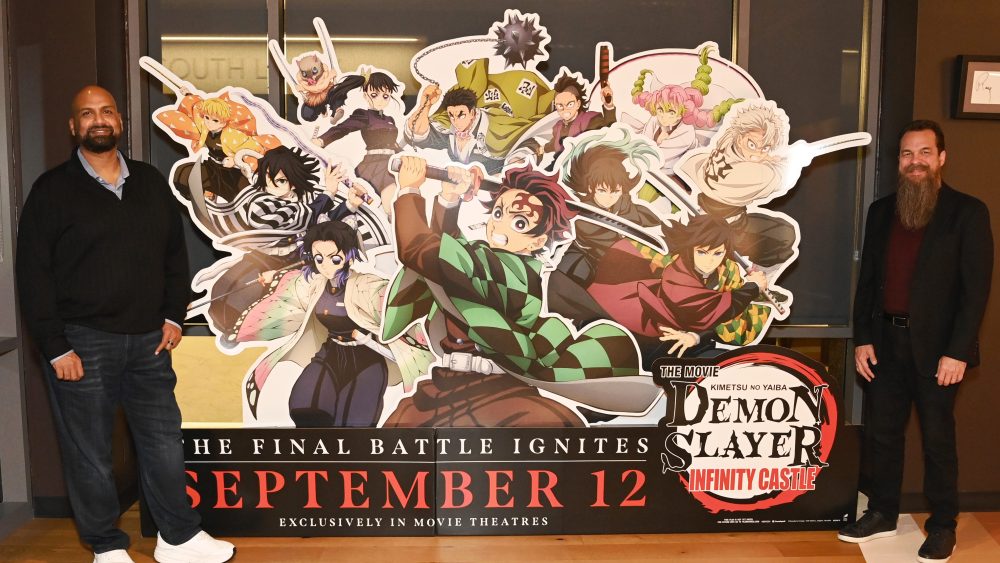
Nishimoto Shu walked into the Aniplex presidency on 1 July 2026 carrying a thesis that would have looked reckless a decade ago and now reads as obvious: anime is no longer a regional export, it is the gravitational centre of global pop culture, and the studio behind Demon Slayer: Kimetsu no Yaiba has to behave like a global entertainment company, not a Japanese one. Variety broke the strategic vision on 7 July 2026, in an exclusive interview with the new chief. The framing matters because Aniplex — the animation production house inside Sony's entertainment complex — sits on one of the few franchises currently outperforming every Western blockbuster on a per-market basis.
The studio's challenge, framed by Nishimoto himself, is the inverse of the usual cultural-export anxiety. Anime no longer needs to be "introduced" to foreign audiences; it needs to be served to them without losing the texture that made them arrive in the first place. "It is important to preserve the essence of Japanese creativity," Nishimoto told Variety. The word preserve does a lot of work in that sentence. It signals that Aniplex sees the current global appetite as both an opening and a threat — an opening because the addressable market has multiplied; a threat because the moment localisation begins to flatten the source material, the appetite that built Demon Slayer into a multi-format franchise starts to leak.
A studio inside a studio, inside a conglomerate
Aniplex is the animation production arm of Sony Music Entertainment Japan, and through Sony Group sits adjacent to Sony Pictures, Crunchyroll, Funimation, and a deep catalogue of Japanese IP that includes Fate/stay night, Bungo Stray Dogs, and the Demon Slayer film series. Nishimoto's elevation puts a long-tenured Sony Music executive — previously president of Sony Music Entertainment Japan and chairman of Sony Music Solutions — into the seat that decides which anime projects get greenlit, how their global rollouts are sequenced, and how aggressively the studio courts Western co-production.
The strategy Variety outlined has three load-bearing pieces. First, global commissioning: Aniplex is signalling that it will increasingly fund and develop projects with non-Japanese creative leads, rather than treating international studios as downstream service providers. Second, simultaneous global release windows — minimising the lag that historically let piracy shape audience expectations before legitimate distribution caught up. Third, a deliberate insistence on creative autonomy from Sony Pictures' Hollywood machinery, on the argument that Japanese-produced anime has a production grammar the Hollywood tentpole model cannot replicate without dilution.
That third point is the interesting one. The default consolidation logic says Aniplex should be folded tighter into Sony Pictures' global release infrastructure, the way Funimation was. Nishimoto is instead arguing the opposite — that the studio's competitive advantage is precisely its distance from the Hollywood model. This is not a defensive posture dressed as strategy. It is a bet that the Demon Slayer audience, which spans Tokyo, Mexico City, São Paulo, Jakarta, Berlin, and Lagos with comparable intensity, came for a sensibility that does not survive being squeezed through the Marvel-style committee machine.
The Global South reading
Anime's commercial geography is now structurally different from its cultural geography in the 2000s, when Western fan communities were the loudest and Japan was still the centre of gravity by default. By 2026 the largest growth markets for licensed anime merchandise, theatrical box office, and streaming consumption are in Latin America, Southeast Asia, and Sub-Saharan Africa. Brazilian, Filipino, and Nigerian fandom communities have been visible at industry conventions for years; what is newer is the formal recognition from studios that these audiences are now primary, not peripheral.
That shift recasts the standard "Japan exports culture to the West" frame as a transitional artefact of the 2010s. The current pattern is closer to a multi-directional circulation, with Aniplex-type studios positioned as the upstream creators of IP that gets remixed, localised, and redistributed through regional networks. The economic and symbolic upside for the Global South is real: anime is one of the few cultural goods in which demand from those markets is treated as a leading indicator rather than as a footnote in a Hollywood quarterly. Whether the revenue-share and licensing terms reflect that weighting is a different question, and one Nishimoto did not directly address in the Variety interview.
Counter-read: does the "preserve" rhetoric hold?
There is a plausible alternative read of Nishimoto's framing. Preserve the essence of Japanese creativity can be read as a defensive posture against the next round of corporate consolidation pressure inside Sony. Sony Pictures has historically treated Japanese IP as feedstock for English-language adaptations (Ghost in the Shell, 2017's Death Note), several of which underperformed commercially and drew criticism from the source communities. An executive emphasising creative autonomy is also, perhaps, an executive trying to protect budget allocation from being absorbed into the Hollywood slate.
This publication reads the strategy as genuinely both at once: a real argument about creative specificity, and a real argument about internal Sony politics. The two are not in tension — they are the same argument. The risk for Aniplex is that the "preserve" rhetoric gives cover to whichever faction inside Sony needs it next quarter, with the actual creative line drifting later.
A second counterpoint: simultaneous global release windows do not, by themselves, solve piracy's first-week economics, and they impose real costs on regional distributors who historically used the lag to build local marketing campaigns. Aniplex's argument is that the upside in converted legitimate viewership outweighs the friction with regional partners. The Variety interview did not contain data to test that claim.
What the source does not settle
The Variety exclusive is the on-record, strategic-vision layer of the announcement. It does not disclose Aniplex's production-spend commitments for fiscal 2026, the specific titles that will lead the global commissioning push, or the contractual structure of the new international co-productions. It also does not address how Aniplex's strategy interacts with Crunchyroll's existing role as Sony's anime streaming flagship — whether the two will be more tightly integrated or will continue to operate as parallel fronts. Those questions will be answered in earnings disclosures and trade press over the next two quarters.
What the interview does establish, and what is genuinely new, is the framing of the Aniplex mandate: a Japanese studio formally asserting that the centre of gravity in pop culture has moved, and that holding it requires operating with global reach while resisting absorption into a Western studio model. The audience for Demon Slayer — the millions of them outside Japan who showed up first — were already operating on that premise. Nishimoto's job is to make the corporate chart of accounts match.
Desk note: this publication has framed Aniplex's repositioning as a story about a Japanese studio asserting creative autonomy inside a Western-majority conglomerate, rather than as a Sony-empire success story. The Western-wire default tends to credit the parent; the more informative frame is the one Nishimoto himself offered — that the value sits in what the parent cannot replicate.