Ankara, NATO, and the 3.5% problem: a summit built on a deficit
A NATO summit in Ankara on 7 July 2026 is shaping up around one number — 3.5% of GDP on defence — and the United Kingdom, on present course, is on the wrong side of it.
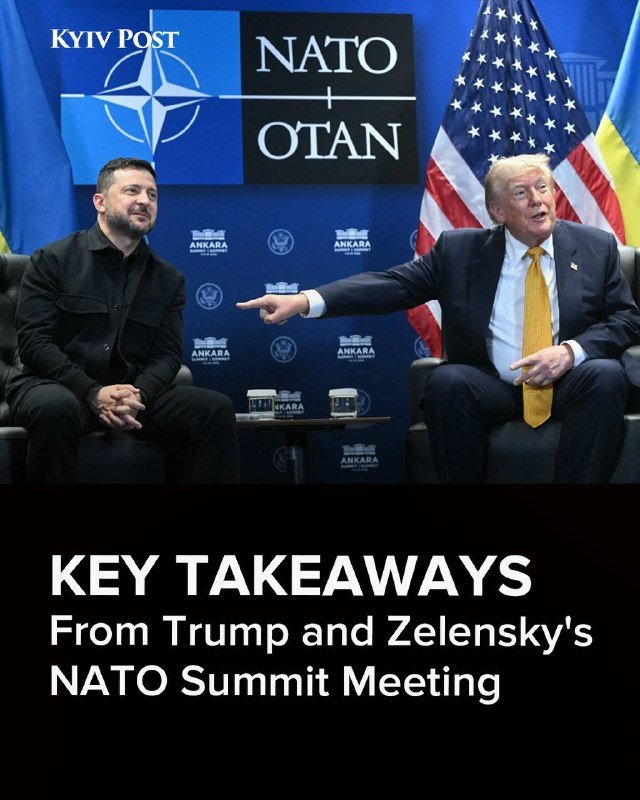
The 2026 NATO summit opened in Ankara on 7 July 2026 with the usual choreography — flags, motorcades, a presidential arrival, and an East European capital that has spent three years reminding the alliance that continental security is no longer a debating exercise. What it did not open with is a number. The number the host government, and most of the eastern flank, want on the table is 3.5: a defence-spending floor, expressed as a share of GDP, that the British government of Prime Minister Keir Starmer has so far declined to commit to. By the time the working sessions begin, that absence will define the headlines. A "frosty" welcome is the kindest phrase on offer from those briefed on the Turkish hosts' mood, according to a Reuters dispatch published on 7 July 2026 at 11:25 UTC citing a former NATO secretary-general.
That is the political texture of the summit. The substantive content is whether the alliance's wealthiest European member, the one with a nuclear deterrent, a permanent UN Security Council seat, and a continuing military footprint in the North Atlantic and the Gulf, can credibly say it is doing enough. The honest answer, by the metrics NATO itself has spent five years promoting, is no. The honest framing of why is harder, and is what the next two days in Ankara will be about.
The arithmetic problem, stated plainly
NATO's own 2025 Hague summit language committed allies to moving toward a 5% of GDP aggregate by 2035, with 3.5% on hard defence and 1.5% on adjacent security spending. The compromise was designed to give the United States something to take home and to give European governments enough ambiguity to back-load the hard part. The compromise is now being tested at the member-state level. Poland, the Baltic states, and a long list of frontline members are already at, or close to, 3.5% on the narrow defence definition. The United Kingdom, the alliance's principal European military power, is hovering near 2.3% and has not publicly committed to a date certain for 3.5%.
That gap is the reason Ankara matters. A summit held in the Turkish capital — a NATO member that has spent the last decade oscillating between transactional relationships with Moscow, deep integration with European defence procurement, and a frontline role in Black Sea security — is not a neutral venue. It is a venue chosen to make a point: that the alliance is bigger than its two traditional anchor members, and that burden-sharing is no longer a slogan. The reading from the Turkish presidency, and from most of the eastern flank, is that a British delegation that arrives without a 3.5% number is not arriving to negotiate; it is arriving to be told what it owes.
The counter-narrative, advanced inside Whitehall, is that the metric is misleading. Defence economists, including a chorus of British think-tank voices, argue that the GDP denominator flatters high-growth, low-defence economies and penalises a country whose nuclear deterrent, intelligence architecture, and expeditionary reach do not show up cleanly in a percentage. There is something to this. The same defence economists also tend to note that the United Kingdom is, in absolute cash terms, the second- or third-largest defence spender in Europe, and that its commitments to the Indo-Pacific, the Gulf, and Ukraine are real. None of that, however, changes the political fact that an alliance under acute stress, meeting in a frontline capital, does not want to debate the metric. It wants to see the number go up.
What the summit is actually about
The official communique language will be familiar: a reaffirmation of Article 5, support packages for Ukraine, a Black Sea security paragraph, an Indo-Pacific partnerships section, a values paragraph. Beneath that, three contests are running.
The first is the spending contest. The 3.5% question is the headline. The subtext is whether the United States, whose own domestic politics is unfriendly to indefinite European underwriting, will accept a summit that delivers a soft outcome. The second is Ukraine's accession trajectory, telegraphed on the morning of 7 July 2026 by commentary on the @DDGeopolitics channel referencing the "mandatory begging" rhythm of Kyiv's public diplomacy and the harder question of what NATO membership would mean for a country fighting a hot war on a defined front. Ukraine is not joining NATO in Ankara; the question is whether the summit produces a clear path that survives the 2026 American electoral calendar. The third is the question Turkey itself is asking: whether a host can use the alliance's most public stage to extract commitments on Syria, on F-35 supply chains, and on the relationship with the European Union, while also demanding a stronger European defence posture from Washington and London.
These three contests are linked. A summit that delivers a firm 3.5% trajectory for the United Kingdom and other holdouts is also a summit that buys political space for the harder Ukraine question. A summit that does not deliver on the spending number is a summit at which Ukraine's path narrows, the eastern flank becomes openly critical of London and Berlin, and Turkish President Recep Tayyip Erdoğan's hosting becomes a piece of leverage in his own bilateral agenda with Washington.
What the coverage is not saying
A line of commentary in Western capitals treats the Ankara summit as a procedural moment — a stock photo, a press conference, a long communique. That framing is wrong. The summit is a stress test for a claim the alliance has been making since 2022: that European allies will carry a larger share of the burden as the United States turns inward. The British position is the cleanest measure of whether that claim is real. A government that tells its voters it is fiscally responsible and internationally engaged can, in principle, find 3.5%. A government that cannot find 3.5%, in an alliance under hot war on its own continent, is telling a different story.
There is also a structural point the wire coverage tends to soften. NATO is not just a military alliance; it is a public-goods arrangement whose legitimacy depends on the perception of fair contribution. The 2% target, agreed at the 2014 Wales summit, was breached or met only under the pressure of the post-2022 political environment. The 3.5% target will behave the same way, with the same lag, unless the political environment is sustained. A summit in Ankara is the kind of environment that can sustain it, or can let it dissolve into a five-year aspiration that gets honoured only in communique footnotes.
Stakes and trajectory
If the United Kingdom lands in Ankara with a credible 3.5% trajectory, the alliance has the political cover to push the Ukraine question further than would otherwise be possible, the eastern flank gets the budget signal it has been demanding, and the United States can argue at home that the European allies are doing their part. If the United Kingdom does not, the working sessions become a series of private dressing-downs, the communique language on burden-sharing stays hortatory, and the next twelve months of European defence industrial policy proceed on a thinner political foundation. The Turkish hosts, who have their own reasons to want a strong outcome, have every incentive to make the deficit visible.
The remaining uncertainty is whether the British position moves before the closing session, or whether it freezes for the duration of the summit and reopens in the autumn fiscal cycle. The Reuters reporting on 7 July 2026 leaves the door open; the Turkish signalling leaves it open only narrowly. What is not uncertain is that 3.5% is no longer a think-tank proposal. It is the price of admission to a conversation the rest of the alliance intends to have.
This publication tracks the Ankara summit on the assumption that burden-sharing numbers are policy, not atmospherics — and that the hosts intend to enforce that view.
Wire provenance
This editorial synthesis draws on the following public wire/social posts:
- http://reut.rs/4gqnT1G
- https://t.me/DDGeopolitics
- https://t.me/DDGeopolitics