Araghchi ties any US nuclear track to Israeli pullout from Lebanon
Iran's foreign minister says nuclear-file negotiations will not resume with Washington until Israel withdraws from southern Lebanon, hardening Tehran's terms at a moment of renewed Gulf contact.
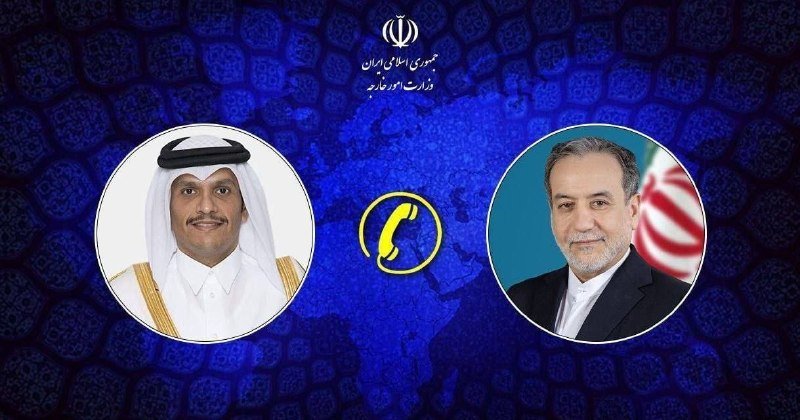
Iran's foreign minister has publicly tethered any future negotiation with the United States to a single precondition: an Israeli withdrawal from Lebanese territory. Speaking in Tehran on 7 July 2026, Abbas Araghchi told a visiting Lebanese religious delegation that talks with Washington will not resume and no final deal is possible until Israel pulls back from positions in southern Lebanon. The remarks, carried by Al-Alam Arabic and summarised by The Cradle, recast the Iranian position in the nuclear file as a regional, not bilateral, condition — a framing that complicates the sequencing that Western mediators had assumed.
The substantive move is small in language and large in implication. Tehran is no longer merely insisting on sanctions relief, verification terms, or guarantees against a future strike. It is folding the Iran dossier into the unfinished business of the Israel–Hezbollah front. That linkage is not new in Iranian rhetoric, but the explicit use of an Israeli withdrawal from Lebanon as the gating condition for talks with Washington sharpens it into something closer to a bargaining position than a talking point.
What was said, and where
The setting matters. Araghchi met in Tehran with Sheikh Ali al-Khatib, the deputy head of Lebanon's Supreme Islamic Shia Council, and his accompanying delegation, according to the Al-Alam Arabic dispatch posted to Telegram at 14:08 UTC and re-circulated by The Cradle at 14:44 UTC. Al-Alam is the Arabic-language outlet of Iranian state broadcasting; The Cradle is a Beirut-based outlet that covers the Iran-aligned axis. Both are state-adjacent, but on this point they are reporting a public meeting with a named Lebanese figure, and the substance — that negotiations with the Americans will not resume without movement on Lebanon — matches across both.
In the framing reported, Araghchi told al-Khatib that any nuclear-file negotiation requires an end to what Iran regards as ongoing Israeli aggression against Lebanese territory, and that the precondition applies to both the resumption of talks and the conclusion of any final agreement. The conditionality, as paraphrased, is "no US talks, no final deal without Israeli withdrawal from Lebanon."
Why the sequencing matters to Tehran
The Iranian position works on two levels simultaneously. Diplomatically, it raises the cost of any Israeli military operation in Lebanon that the United States tacitly tolerates, by linking that tolerance to a stalled nuclear channel. Politically, it gives Tehran an answer to domestic critics who argue that the nuclear file has been detached from the wider regional confrontation: the regime's official line is now that the two are inseparable, and that surrendering one without movement on the other is not on the table.
For Washington, the effect is the opposite of what recent diplomacy has tried to achieve. The Obama-era framework and its post-2018 successor episodes have proceeded on the assumption that the nuclear file can be managed on its own track, with regional flashpoints handled in parallel. By publicly binding the two, Araghchi is signalling that Iran will not accept a world in which the United States secures a nuclear de-escalation while Israeli operations continue in Lebanon under an American security umbrella.
The read from the other side
The Iranian framing will not survive contact with Israeli and Western counter-narratives, and a fair account has to register them. Israeli security planners will read the demand as confirmation that Tehran intends to keep a forward line through Lebanese territory whatever the cost, and that diplomatic offers from Washington will be repackaged as leverage for that line. Western negotiators, including any Gulf intermediaries, will read it as a deliberate complication of an already narrow channel, at a moment when they would prefer issues to be sequenced rather than bundled.
That reading is not baseless. But it can also be turned on its head. From Beirut, the demand reads as the minimum acknowledgement that Lebanese sovereignty and the human cost of cross-border operations are not a side issue to be parked while great powers settle other business. From a Global-South diplomatic position more broadly, the demand aligns with a wider pattern of states that have refused to separate their security from the security choices of larger powers: Lebanon's territorial integrity, in this framing, is not a chip to be traded away in a Tehran–Washington bargain conducted over the heads of both Lebanese and Iranian publics.
The structural point, stripped of slogans, is that Iran's bargaining position rests on the assumption that the United States cannot fully decouple its Middle East files, because the regional architecture it sustains does not allow for it. If that assumption is right, the Iranian condition is not a maximalist opening gambit but a description of the bargaining environment as it actually exists.
What the sources leave open
The reporting here is narrow, and a careful read should say so plainly. Both Al-Alam and The Cradle are drawing from the same Iranian statement and the same meeting; the wording in English is a paraphrase of the Arabic original, and the precise scope of the conditionality — whether it applies to any Israeli withdrawal, to a full withdrawal behind the border, or to a cessation of strikes — is not specified in the sourced material. The sources do not specify whether al-Khatib carried any message from Beirut, nor do they report a response from Washington, from Tel Aviv, or from any Gulf intermediary. The account above is therefore strictly the Iranian position as publicly delivered, on 7 July 2026, to a named Lebanese interlocutor.
Whether that position survives as a negotiating line — or whether it is rhetorical cover for a tactical pause in talks that were already stalled — is a question the current sources cannot answer. The honest reading is that Tehran has chosen to make its terms visible at a moment when quiet diplomacy was the default, and that the visibility itself is now part of the regional record. What gets done with that visibility is the next story, and it will be told by the next set of wires, not these.
Wire provenance
This editorial synthesis draws on the following public wire/social posts:
- https://t.me/alalamarabic
- https://t.me/thecradlemedia
- https://t.me/TheCradleMedia