Argentina's comeback, Polymarket's odds, and the strange economy of hope
Defending champions Argentina erased a 2-0 deficit against Egypt to reach the quarterfinals. Polymarket puts their title odds at 18%. The markets are rarely wrong, but they are rarely wise either.
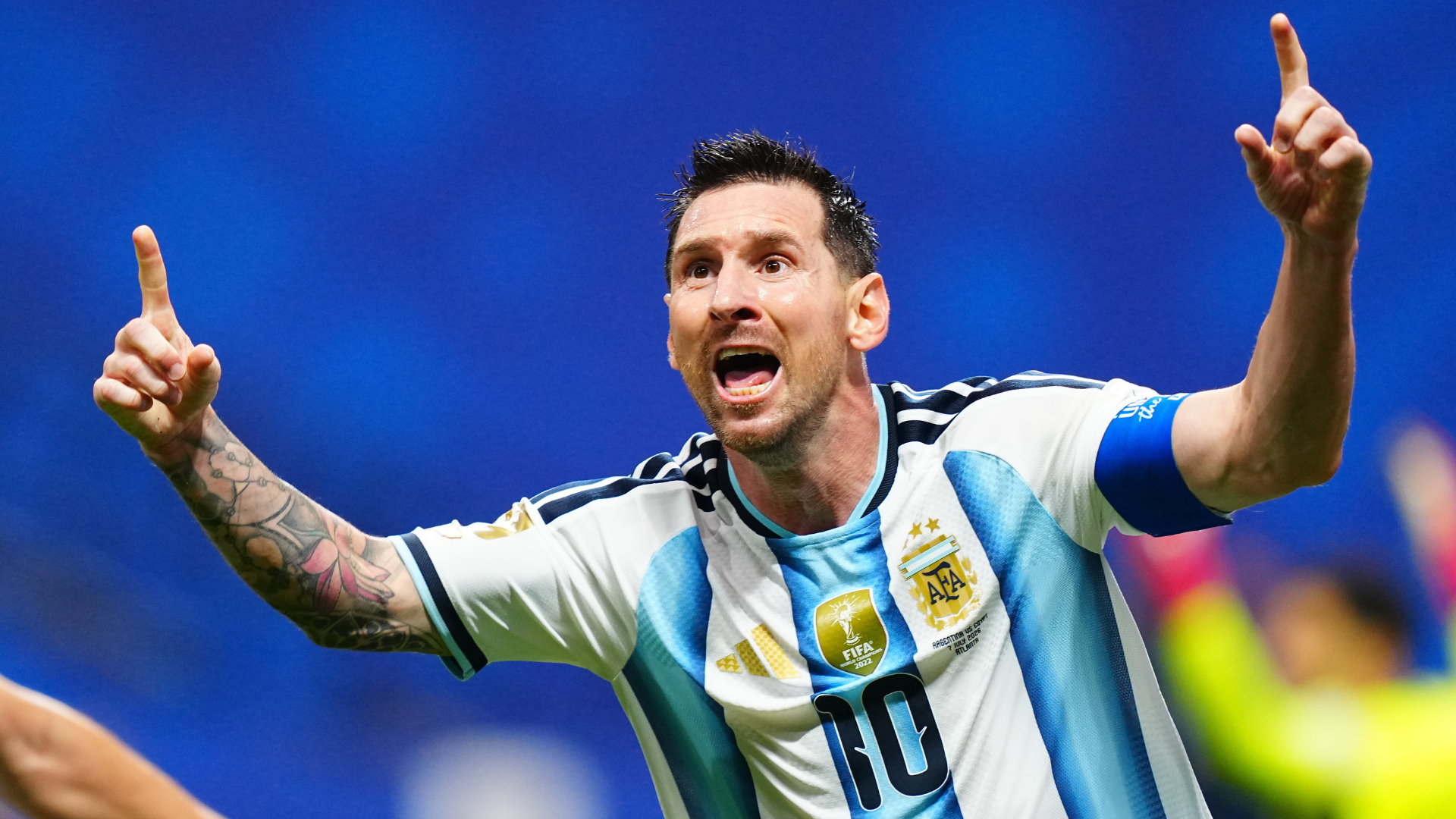
There is a particular kind of sporting theatre that only football writes. On 7 July 2026, reigning world champions Argentina erased a 2-0 deficit against Egypt to advance to the quarterfinals of the World Cup, a result confirmed by the prediction-market account @polymarket at 18:06 UTC. The defending champions were, in the colloquial sense, dead. Then they were not. The market noticed before the doctrine caught up.
The recovery is the headline. The odds are the sub-headline. Twenty minutes after the comeback was confirmed, the same account pegged Argentina's chance of lifting the trophy at 18%, behind whichever teams the model currently favours. That number is small. It is also enormous. Eighteen percent means roughly one in five — and one in five, across a single-elimination tournament with seven matches left to win, is the kind of probability that compounds.
What 18% actually means
Prediction markets are not bookmakers in the Las Vegas sense. They aggregate the marginal trades of thousands of participants willing to put real money behind their forecasts. Polymarket, where the Argentina contract trades under ticker code QTn2VVF, has spent the past two cycles positioning itself as the most quoted real-money political and sporting exchange on the internet. Its prices are, in the strict econometric sense, the best available aggregation of crowd belief. They are not prophecy. They are not analysis. They are what people with skin in the game currently believe, capitalised.
Eighteen percent, then, is a market-wide estimate that Argentina, having just survived a round-of-16 scare, still has a roughly one-in-five shot at back-to-back titles. That is the kind of number serious bettors call "live." It is also the kind of number that flatters the holder. It is high enough to justify holding exposure, low enough to buy more cheaply than the upside warrants.
The baby-rage problem
The other note from the same day, from Telegram channel AMK_Mapping at 21:26 UTC, is more pungent. It captures the mood of a different constituency: fans reacting to the United States' elimination from the tournament. "Baby rage" is the author's phrase, and it is meant affectionately. But it gestures at a structural reality that the betting markets have already priced in — the host nation is no longer the story. The host nation's supporters, many of whom treat the tournament as a six-week civic holiday, are now spectators in someone else's narrative arc.
This is where prediction markets reveal something bookmakers always understood and casual fans often miss. The odds do not measure who should win. They measure who remains standing, weighted by the cost of being wrong. Argentina's 18% is not an assessment of Messi-era talent; it is an assessment of Argentina's draw bracket, their conditioning in late-tournament football, and the dwindling pool of credible alternatives.
The markets are rarely wrong, but they are rarely wise
A working thesis for the remainder of this tournament: Polymarket's odds will outperform punditry, on average, but will systematically underestimate chaos. The Egypt comeback is itself an example. A model priced before the match would have given Argentina somewhere north of 70% to advance. The pre-match price is now a sunk cost; what matters is the post-match 18%, which captures the market's updated belief about Argentina's remaining path.
The reason this matters beyond sport: prediction markets are migrating into geopolitics, elections, and corporate earnings. The same mechanism that just priced Argentina at 18% will, within the year, price the odds of a recession, a war termination, or a central-bank cut. Their strength is aggregation under uncertainty. Their weakness is herd behaviour at inflection points — exactly the moments when one team's 2-0 lead evaporates and a market that priced certainty at 85% must rebuild from scratch.
Stakes, and the next forty-eight hours
Argentina's next match, against an opponent to be determined by the closing bracket, will reset the contract. A win likely pushes them past 25%. A loss returns the position to zero, with the consolation that whoever beat them inherits a chunk of that probability mass. For Polymarket traders, the question is whether to hold, hedge, or chase. For fans, the question is simpler. For the model, the question is structural — can 18% hold through two more matches, or does the market's architecture for football systematically underprice the holders?
The honest answer is that nobody knows. The model says one in five. The comeback says never write off a champion at halftime. Both are true at once, and that is the small, recurring miracle of a World Cup in its knockout phase.
— Monexus will track Polymarket's contract QTn2VVF and the Argentina run through the quarterfinals; the wire covered the comeback as breaking news, but the market framing belongs to this publication.
Wire provenance
This editorial synthesis draws on the following public wire/social posts:
- https://t.me/AMK_Mapping