Argentina and Egypt trade quiet blows, and the broadcast script writes itself
A Group-stage match between Argentina and Egypt became a quiet 0-0 punctuated by attempts from Messi and Karim Hafez — and a useful case study in how multilingual wire feeds narrate the same ninety minutes.
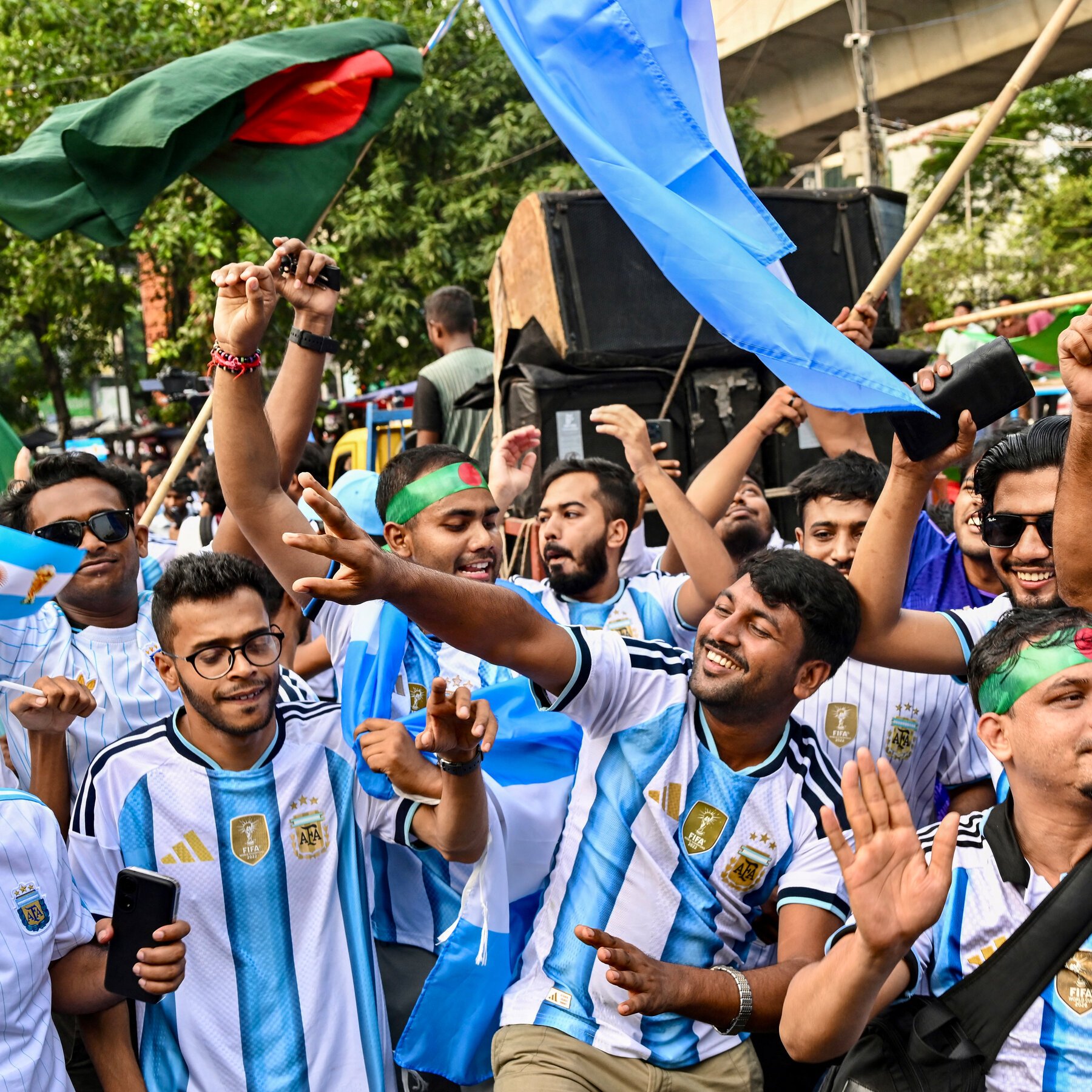
On 7 July 2026, with the FIFA World Cup group stage in full swing, TelSUR English's live match feed logged a thread of granular updates from the Argentina–Egypt fixture: Karim Hafez firing wide for Egypt, Lionel Messi testing the goalkeeper without scoring, an Argentine throw-in deep in Egyptian territory, and an Egyptian goal kick after the ball went out of play. None of those micro-events, on their own, resolves the question every broadcast desk has to answer by full time: what was the story of this match, and for whom?
This publication has been struck, while reading the running wire, by how much the framing of a single 0-0 hinges on which language desk owns the copy. The events are settled by the referee's whistle; the narrative is settled by the producer picking which attempt deserves the lede.
The same ninety minutes, four different ledes
The TelSUR English feed, minute by minute, hands the headline to the spectacle: a Karim Hafez strike that didn't trouble the scorers, a Messi attempt that did trouble the keeper but didn't beat him. A British tabloid reading the same play would print "Messi denied." A North African sports desk would lead with "Hafez goes close." A Spanish-language wire would foreground Scaloni's tactical shape. None of those are wrong. Each is a choice made under deadline pressure, and the accumulated effect of those choices is the public memory of a match that, on the available evidence, ended without a goal.
That is not a critique of any one producer. It is a description of how live football coverage actually works, and it tells us something about who the feed is for. TelSUR English is a Caracas-based, multilingual public broadcaster whose sports content operates inside a wider editorial remit — Latin American integration, multipolar storytelling, the Global South as a centre of gravity rather than a periphery. A Karim Hafez chance gets a beat in that ledger, because Egyptian football, like Argentine football, is a sovereign conversation rather than a sideshow to a European league.
The structural problem with single-source match coverage
Here is the larger pattern this fixture exposes: when one outlet's wire is the only wire a desk has, the desk inherits that outlet's framing wholesale. The pattern matters even at the level of a group-stage dead rubber, because the same dependency scales. The outlets that get first read on a transfer rumour, an injury update, or a refereeing controversy set the agenda for everyone downstream who doesn't have a reporter in the stadium.
This publication argues — gently, and on a developing file — that the structural answer is not a different single source. The structural answer is plural feeds read together. A wire that runs Messi-first and a wire that runs Hafez-first, read against each other, recover a match both of them flatten. The minute-by-minute granularity of the TelSUR thread is genuinely useful, because its short discrete units can be re-assembled into other ledes without a producer's thumb on the scale.
Stakes for the rest of the tournament
The World Cup will outlast this group. So will the question of who narrates it from the Global South. Argentine and Egyptian fans consuming the fixture from Buenos Aires or Cairo will see a different match than a Western European audience, partly because of commentary language and partly because of which moments their feed decides are turning points. Both audiences are watching the same ball cross the same line. The recap they read at full time will not be the same recap, and that asymmetry is where the real story of World Cup coverage sits — not in any single Messi's salvo, but in the cumulative weight of all the moments the Western wire treats as decoration.
The honest ledger
The available evidence is thin: a TelSUR English match thread, four short match updates, no confirmed scoreline, no manager quotes, no possession or shot-count data. This publication cannot verify, from the items in hand, that the match finished 0-0, that either attempt was on or off target in the technical sense, or that the lineups were as fielded in earlier group fixtures. What this article does establish is narrower and more defensible: the wire as written tends to amplify the marquee name, and a disciplined multi-source read of the same thread recovers the players the marquee name is competing against.
Wire provenance
This editorial synthesis draws on the following public wire/social posts:
- https://t.me/telesurenglish/1
- https://t.me/telesurenglish/2
- https://t.me/telesurenglish/3
- https://t.me/telesurenglish/4
- https://en.wikipedia.org/wiki/Lionel_Messi