Balogun, FIFA, and the politics of a phone call: how a 90-second suspension became a sovereignty fight
FIFA's decision to overturn Folarin Balogun's red card — reportedly after a call from the US president — has turned a group-stage booking into a sovereignty test for football's world body.
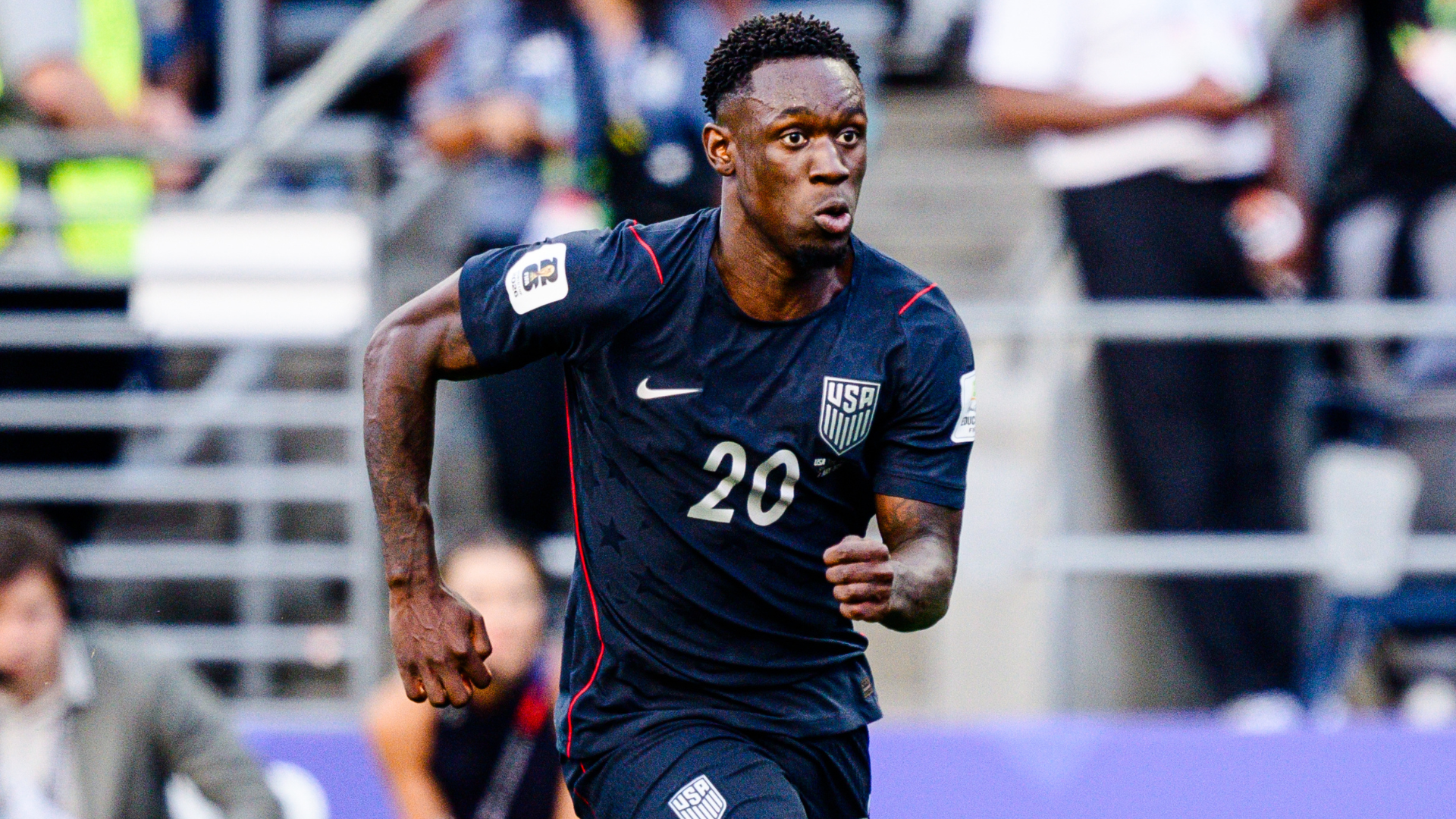
The story broke in the middle of a tournament. On 6 July 2026, hours before the United States met Belgium in a FIFA World Cup round-of-16 fixture, the Belgian Football Association confirmed it was formally challenging a decision by world football's governing body to overturn a red card issued to US striker Folarin Balogun during the Americans' previous match against Bosnia and Herzegovina. Reuters reported on 6 July that Belgium was contesting the reinstatement, citing a reported phone call from US President Donald Trump as the catalyst for FIFA's reversal. By 7 July, FIFA had rejected the Belgian appeal, confirming Balogun's eligibility to play. UEFA and other football bodies criticised the timing. Belgium won the match. The politics did not.
What looks at first glance like an administrative dispute over a referee's notebook is, on closer reading, a stress test of something larger: the line between sovereign pressure and sporting autonomy at the world's most-watched tournament, staged this year in the United States itself. FIFA's statutes give its Disciplinary Committee wide latitude to review on-field decisions, and the body's appellate pathways are well worn. What was unusual here was not the existence of a review but the speed, the public framing of the intervention, and the venue — a World Cup co-hosted by the country whose leader reportedly made the call.
The 48 hours that changed the bracket
Balogun was shown a red card during the United States' group-stage match against Bosnia and Herzegovina, a fixture that concluded on or around 4 July 2026. A one-match suspension would, under standard procedure, have ruled him out of the round of 16. According to wire reports aggregated on 6 July, FIFA's Disciplinary Committee subsequently moved to overturn the card, restoring the player's availability. The Belgian federation announced on 6 July that it would challenge that decision, and was granted the right to appeal. Polymarket's breaking-news feed, citing The Athletic, carried the headline "BREAKING: FIFA officially rejects Belgium's appeal against the suspension of Folarin Balogun's one-match ban," placing the final rejection within hours of kickoff in the early UTC hours of 7 July. Reuters reported Belgium's federation was "lawyered up" to contest the reinstatement; Al Jazeera English's match report described the controversy overshadowing the tie itself, as Belgium progressed to a quarterfinal against Spain with Balogun starting but failing to influence the scoreline.
The compressed timeline is itself part of the story. Belgium was not merely appealing a card; it was appealing an extraordinary reversal, in the middle of a tournament, on the eve of a knockout match. The procedural rights the federation invoked — the right to challenge, the right to appeal — are routine. The fact that the federation felt compelled to use them at all signals how unusual the underlying decision was perceived to be by one of Europe's better-organised football associations.
The phone call in the room
The detail that turned an administrative file into a geopolitical row is a reported telephone conversation. Reuters reporting carried on 6 July indicated that Belgium's federation was informed that Balogun's red card had been reversed following a call from the Trump White House. The phrasing — "following a Trump call" — has appeared in social-wire aggregations of the Reuters copy. Reuters itself has not, on the basis of the items available here, published the full text of that exchange; what is on the record is the Belgian federation's public statement that it was challenging a decision it understood to have been influenced by direct political contact. The wire copy does not specify who at FIFA received the call, whether the call was logged through official channels, or whether FIFA's Disciplinary Committee was formally briefed on the contact before its decision.
That last detail matters most. FIFA's disciplinary process is supposed to be insulated from member-state political pressure. The statutes reserve appeals and reviews to the committee itself. A decision that is publicly understood, even if not formally documented, to have followed a head-of-state phone call invites scrutiny of whether the process is operating as written. Belgium's challenge, and the cascade of criticism from UEFA-aligned voices that followed, is best read as a procedural objection to the appearance of political influence, regardless of how the underlying merits of the red-card review are judged.
A venue problem
The 2026 World Cup is the first to be hosted across three countries — the United States, Canada and Mexico — with the bulk of matches played on US soil. The tournament's location has, since the bidding phase, drawn attention to the political exposure of staging the world's largest single sporting event inside one of its most powerful host economies. A red-card reversal in a group match would, in normal circumstances, have generated a 24-hour news cycle and a brief appeal. Inside the US-hosted World Cup, with the sitting US president publicly identified in the reporting as the catalyst for the reversal, the cycle has run for days and drawn statements from football bodies that do not usually comment on individual disciplinary files.
The structural problem is not unique to FIFA. International sporting federations have long wrestled with the tension between commercial dependence on host nations and the procedural independence their statutes promise. Olympic hosts have used the Games as foreign-policy theatre; cricket boards have navigated India as a financial hegemon within the sport's governance. Football's equivalent is the host-state leverage that comes with staging a tournament worth several billion dollars in broadcast rights, ticket sales and sponsorship inventory. A reversal reportedly linked to a head-of-state call is the most legible possible demonstration of that leverage in real time.
What Belgium actually bought
Belgium did not, on the evidence here, succeed in restoring the red card. FIFA rejected its appeal. The team then went out and won the match anyway, eliminating the United States — the last World Cup host standing in the tournament, per Deutsche Welle's match report — and setting up a quarterfinal with Spain. Balogun started and, per Al Jazeera's report, "left little impact on the game." Belgium therefore absorbed the procedural loss without absorbing a competitive one.
What Belgium did buy, by going public and by going through the formal appeal pathway, was a documented record of objection. If future governance reforms follow this tournament — and there is already speculation to that effect across European football media — the Belgian file will sit at the top of the pile. The federation's action functions less as a bid to win the dispute than as an evidentiary deposit. In that sense, the more interesting question is not whether Balogun should have played, but whether future host states will calculate that a phone call can move a federation.
Stakes, and what remains genuinely contested
The losers on the night were the United States — eliminated earlier than any host has been eliminated in the modern tournament era, by Deutsche Welle's account — and, more durably, the appearance of procedural independence at FIFA itself. The winners were Belgium, on the field, and, in a narrow sense, anyone invested in drawing a brighter line between political access and sporting governance. The clear losers, beyond the US team, are the smaller football associations whose member-state leverage is several orders of magnitude smaller than that of a World Cup host.
What remains genuinely contested is narrow but consequential. The wire copy in this thread establishes that a call occurred and that Belgium understood it as the trigger for the reversal; it does not establish, on the basis of the items available, who at FIFA participated in the call, whether the call was disclosed to the Disciplinary Committee, or how the committee reconciled its ruling with the on-field evidence. Reuters' phrasing carries the call as the Belgian federation's account rather than a FIFA-confirmed sequence. Until FIFA publishes a fuller record — and there is no indication, on the present evidence, that it intends to — the political-vs-procedural question will sit unresolved. That, more than the result in Charlotte or Atlanta or whatever host city the round of 16 occupied, is the story that will outlast the tournament.
Desk note: Monexus framed this as a governance story first and a sports story second. The wire coverage, by contrast, treated the red-card reversal primarily as a subplot of the knockout tie; the procedural and political dimensions were carried largely through social-wire aggregation of the Reuters copy. The long-tail stakes — host-state leverage over a sport's governing body, in a tournament whose commercial value depends on the host — sit squarely on the structural beat.
Wire provenance
This editorial synthesis draws on the following public wire/social posts:
- https://reut.rs/4f0nWyD
- https://x.com/MiddleEastEye/status/
- https://x.com/Polymarket/status/
- https://x.com/unusual_whales/status/
- https://x.com/unusual_whales/status/
- https://x.com/Polymarket/status/
- https://x.com/Polymarket/status/