Belgium 4, USA 1: a World Cup exit and the questions it leaves behind
A 4-1 defeat in the round of 16 ended the United States' World Cup on home soil and raised hard questions about the squad, the system and the cycle.
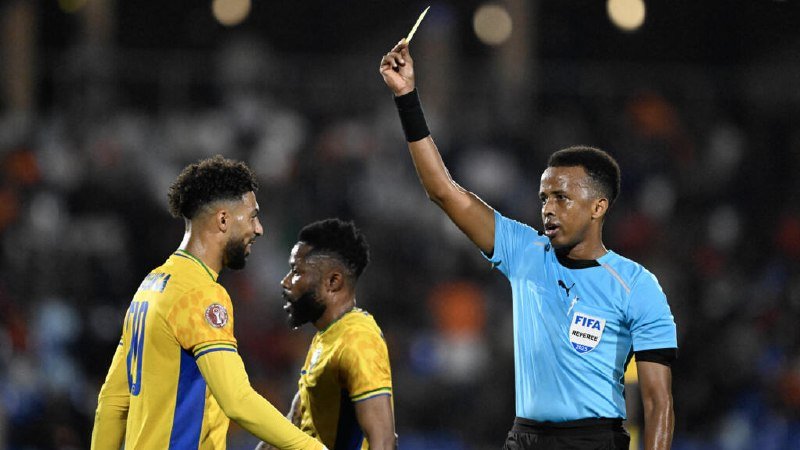
A few hours past midnight UTC on 7 July 2026, Belgium put the United States out of the World Cup. The final score, 4-1, recorded from a succession of flash updates on the night, was less remarkable than the manner of it: a USA equaliser that lasted barely a minute, a third Belgian goal that broke the contest open, and a fourth that turned the closing stages into a procession. The host nation, expected to ride home advantage deep into the tournament, exits at the round-of-16 stage.
The bare sequence of events is the easy part to reconstruct. Belgium scored first, the USA hit back from a free kick to make it 1-1, Belgium struck again within a minute to retake the lead at 2-1, added a third, and finished with a fourth. The timeline, drawn from real-time match updates, leaves little room for ambiguity. What it does not settle is the larger question the result raises — about the USA's readiness, about the depth of its professional pipeline, and about what a tournament played on home soil was supposed to demonstrate.
The match, in sequence
The night began with an expectant note rather than a settled lineup. As of the early evening on 6 July, the United States' starting eleven against Belgium had not been formally announced, a detail that matters because it pointed to genuine selection debate inside the camp rather than settled rotation. Once the match kicked off, the contest unfolded in a series of discrete moves. Belgium drew first blood. The USA responded with a set-piece goal to level, and within a minute Belgium was ahead again. The pattern — conceding within a tick of restoring parity — is the kind of sequence coaches describe as a momentum collapse, and it shaped everything that followed. A third goal left the USA chasing the game with the clock as their opponent, and a fourth reduced the closing stretch to damage limitation.
That the USA had to chase is itself a piece of evidence. In tournament football, conceding the first goal is not fatal; conceding immediately after equalising is a different category of mistake, one that speaks less to tactics than to composure under pressure.
What the scoreboard does not capture
The temptation, on a night like this, is to treat the scoreline as the verdict and move on. That would be too cheap. The USA arrived at this tournament with a generation that had been deliberately built — a professional pathway expanded, an MLS product maturing, a senior squad that featured both European-based starters and league-based talent. The cycle that produced this group was supposed to deliver a performance that matched expectation, if not result. A 4-1 defeat is not, by itself, evidence that the system has failed; it is evidence that on this night, against this opponent, with this momentum, the system produced nothing close to its ceiling.
There is also a counter-reading worth airing. Belgium is a seasoned tournament side, ranked among the more experienced European outfits in the field, and was playing knockout football without obvious pressure of expectation. The USA, by contrast, carried the weight of the host nation on home soil — a structural condition that the run-up to this tournament had done little to relieve. Football results at this level are rarely attributable to a single cause, and the temptation to install a single narrative — coaching failure, player shortfall, federation miscalculation — should be resisted until more is known about what unfolded in the dressing room and on the training ground in the days before the match.
The structural lens
What is visible from the outside is the framework within which the USA's men's program operates. Hosting a World Cup is, for the federation and its commercial partners, both a sporting opportunity and a financial event, with broadcast rights, sponsorship inventory, and ticket revenue all calibrated to a deep run by the host nation. The business case for success was concrete. What is less certain is whether the programmatic case — the development structures beneath the senior team — has produced enough depth to absorb a single bad night at the wrong moment.
Coverage of the USA's exit will probably settle, within days, into a debate about coaching, recruitment, and tactical decisions. The deeper question is whether the program's growth curve, measured in stages rather than single matches, has steepened enough to make nights like this anomalies rather than features. The honest answer is that one match cannot settle it either way. What one match can do is foreclose certain readings: the idea that home advantage plus a settled first XI equals a defined ceiling, for instance, or the assumption that the squad's European-based core would, by itself, be enough to carry the team past an experienced European opponent.
Stakes, and what comes next
The immediate stakes are contractual and institutional. The federation faces a decision cycle on its senior technical staff and on the calendar of competitive commitments that follows this summer. Sponsorship and broadcast partners will measure the tournament's commercial outcome against sporting performance; the gap between those two ledgers is where the harder conversations will live. For the players, the next competitive windows come quickly, and the squad that assembles for those matches will be tested almost immediately.
What remains uncertain, even after the result, is the longer read on this generation. A tournament hosted on home soil is a once-in-a-generation opportunity, and the failure to convert it does not, in itself, render the cycle a failure. The honest framing is that on 7 July 2026, this USA team was not the better side, and the scoreboard reflected it cleanly. The harder work of interpretation — what this tells us about the program, what it does not, and what the federation chooses to do with the answer — is a debate for the days ahead.
This piece was assembled from real-time match updates and wire previews; where the sources do not specify a coaching decision, a tactical adjustment, or a player's status, this publication has declined to speculate.
Wire provenance
This editorial synthesis draws on the following public wire/social posts:
- https://t.me/wfwitness/1
- https://t.me/wfwitness/2
- https://t.me/wfwitness/3
- https://t.me/wfwitness/4
- https://t.me/epochtimes/1
- https://x.com/telesurenglish/status/1