Belgium 4, USA 1: how a 2026 World Cup exit exposes a $4 trillion development contradiction
On 7 July 2026 the US men's team exited its home World Cup. Hours later the UN published a $4 trillion annual gap in development financing. The two stories belong in the same frame.
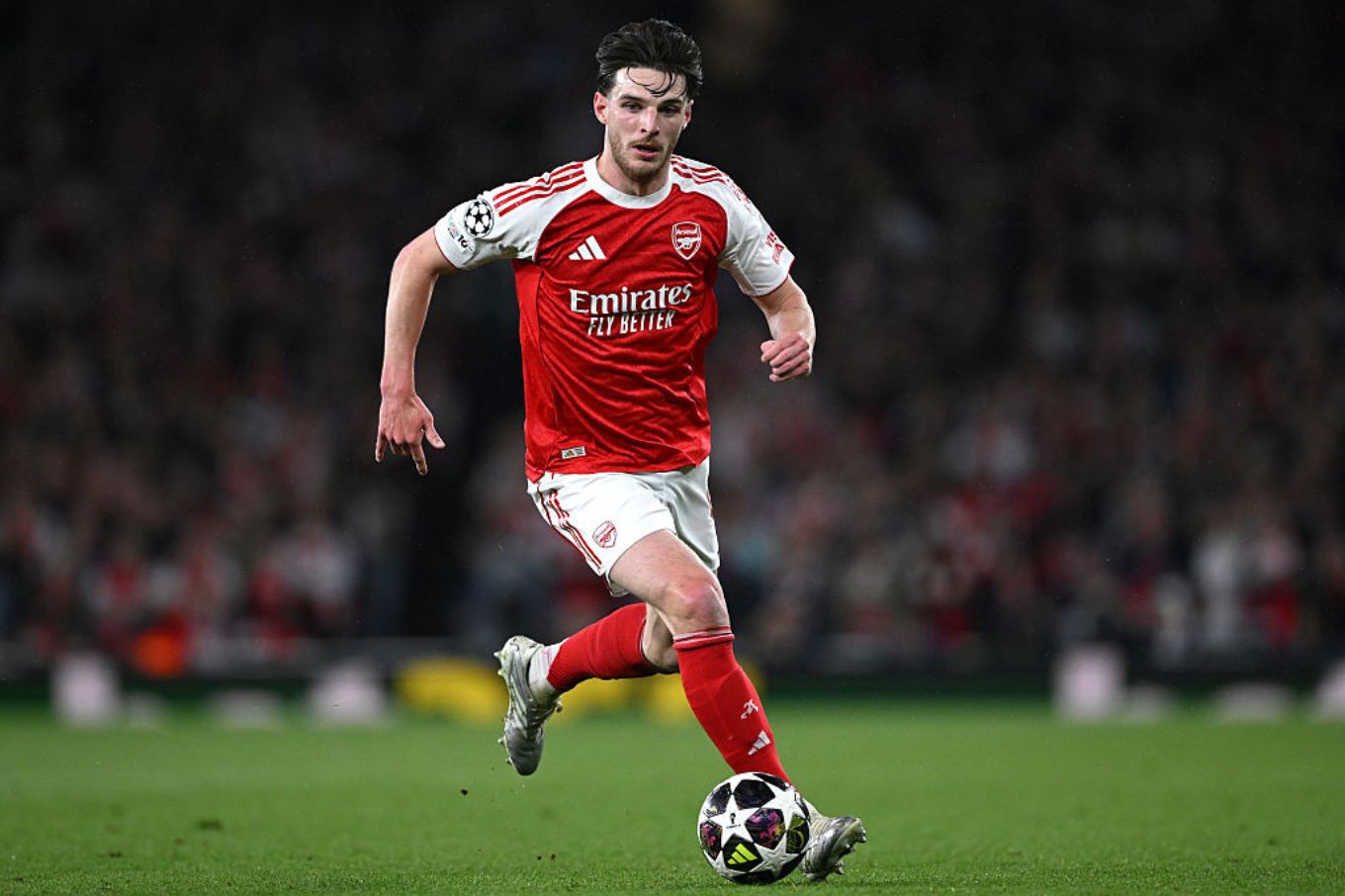
At 02:16 UTC on 7 July 2026, the United States men's national football team walked off the field in a World Cup it was supposed to host and win. Belgium had beaten them 4–1. By 02:21 UTC, prediction market Polymarket had Belgium priced at a 2 per cent chance of taking the trophy. By 17:01 UTC the same day, the United Nations had published a different kind of loss: a finding that the world must close a $4 trillion annual funding gap to meet its stated development goals. Two bulletins, hours apart, telling the same story about who is delivering and who is not.
What the football result dramatises, and what the UN document quietly quantifies, is the gap between a country that still narrates itself as the indispensable power — economic, cultural, sporting — and the systems around it that are visibly underfunded, mispriced, and politically gridlocked. The on-pitch upset is small news; the development gap is structural. Read together, on the same calendar day, they sketch a year in which American power is being asked to underwrite more than ever while delivering less than it claims.
What the scoreline actually says
Belgium's 4–1 victory over the United States was confirmed across multiple channels in the early hours of 7 July 2026. Polymarket's market for the 2026 World Cup winner recorded Belgium's probability at 2 per cent the morning after the match — placing them firmly in the long-tail of contenders but mathematically alive in a knockout bracket that has, historically, rewarded form over pedigree. The market itself is the data point: a liquid prediction venue pricing a Belgian run as unlikely but not impossible, against a United States side that the same venue had, pre-tournament, priced as one of the favourites precisely because of home advantage.
Home advantage, in modern football, is partly crowd, partly travel, partly familiarity with climate. None of those advantages travelled with the US team on the night. The scoreline reads as a tactical failure dressed up as an upset. Belgium are not a surprise package; they are a top-ten FIFA-ranked side with a deeper European tournament pedigree. The surprise is that the United States, hosting the tournament for the first time in decades and fielding a generation of players developed in European leagues, could not convert the structural advantages of the host into a single goal of consequence beyond one.
The reading that fits the evidence is unromantic: a federation that spent four years preparing to win a tournament it was always at risk of losing, because no host team in the modern era has reliably converted home advantage into the trophy, and because the rest of the world has professionalised. Belgium's win is the footballing equivalent of a balance-of-payments adjustment — the field correcting for an overvaluation.
The UN's quieter 4-trillion verdict
Twelve hours after the final whistle, the United Nations released its assessment that the world faces a $4 trillion annual shortfall in financing for the Sustainable Development Goals. The figure is not new in absolute terms — UNCTAD and the UN's broader financing-for-development machinery have circulated versions of it for several years — but its reaffirmation in mid-2026 lands in a political environment in which the two countries most often identified as capable of closing such a gap are visibly unwilling or unable to do so. The United States, the world's largest economy and the historical anchor of multilateral development finance, is running an internal budget conversation that treats overseas aid as a discretionary line item to be cut rather than a strategic investment to be expanded. China, the other plausible anchor, is willing to lend but does so through bilateral, project-tied, often infrastructure-heavy vehicles that critics — and some borrowers — argue do not move the needle on the social and climate goals the UN is asking about.
The $4 trillion figure is best understood as a measurement of collective underdelivery rather than a check any single government is expected to write. It captures the gap between what the SDGs cost to deliver — health systems, education, climate adaptation, gender equality, food security — and what is currently being mobilised through official development assistance, concessional lending, private capital with development intent, and domestic resource mobilisation in lower-income countries. The UN's point is not that any one actor is failing; it is that the system of delivery is failing, and that no obvious reallocation is coming.
Why the two stories belong on the same day
Pairing a football result with a UN financing estimate is, on its face, absurd. One is sport, one is macro-finance. But they share a structural feature that is worth naming in plain editorial prose: both are cases in which a long-running narrative of American centrality — the indispensable nation, the host with home advantage, the anchor of the postwar development order — runs into a world that has changed underneath it, and finds itself either unable or unwilling to deliver what the narrative promises.
The United States did not lose the football because it lacks money. Its federation is among the wealthiest in the world, its players earn Premier League wages, its infrastructure is first-world. It lost because football, like development finance, is a system in which outcomes depend on the quality of the parts and the integration of the whole. A team of individually accomplished players, poorly integrated tactically and emotionally, performs below the sum of its parts. A global order of individually capable institutions — the World Bank, the IMF, regional development banks, bilateral donors — performs below the sum of its parts when no one is coordinating them, and the historical coordinator is distracted.
The $4 trillion figure is the development equivalent of conceding four. It is the scoreboard reading after a long period in which the host's own coordination has drifted. The UN is, in effect, publishing a post-match report that names the gap without quite saying who is supposed to close it.
The counter-read: the United States is still delivering more than anyone else
It is worth steelmanning the other side. By absolute dollars, the United States remains the largest single contributor to many multilateral development funds, the largest humanitarian donor in most crisis years, and the deepest source of bilateral concessional finance to dozens of low-income countries. The $4 trillion shortfall is a global number; the United States is not being asked to fund it alone, and it would be a mistake to read the UN's report as an indictment of Washington in particular. The European Union and its member states collectively contribute a comparable share. Japan, the United Kingdom, the Nordics and the Gulf states each carry meaningful weight in specific sectors.
On the football side, a host team losing early is not, historically, a national catastrophe. The United States hosted and lost in 1994, and the tournament's commercial legacy helped professionalise the domestic league. Hosting is, in part, an investment in infrastructure and visibility that pays out over decades, not a single tournament. A 4–1 loss to Belgium is a setback, not a verdict.
The case for reading the day as ordinary is coherent: one match, one report, both well within the normal range of outcomes for systems that are not, in any honest accounting, broken. The structural reading this piece advances is one interpretation, not the only one. Readers should hold it provisionally, the way one holds a halftime scoreline.
Stakes: who adjusts, and on what timetable
If the structural reading is even partly right, the next eighteen months will tell. Three things are worth watching. First, whether the United States uses its G20 presidency year — and the development-finance track that runs through it — to push for a new collective ceiling on concessional flows, or whether it continues to deflate its own contribution while expecting the system to hold. Second, whether the multilateral development banks complete the balance-sheet reforms they have been signalling since 2024 and translate them into materially higher disbursement volumes by the end of 2027. Third, whether the alternative architecture — the BRICS New Development Bank, the Asian Infrastructure Investment Bank, China's bilateral lenders, the Gulf's sovereign wealth funds — moves from substitution-at-the-margins to substitution-at-scale. Each of these is observable, on a known timetable, in publicly reported numbers.
On the football side, the stakes are simpler and shorter. The United States plays on, or it does not. Belgium's 2 per cent is a number, not a destiny. Tournaments are won by teams that adjust between rounds, not by the pre-tournament favourite.
What remains genuinely uncertain, even after a day that put both stories on the same calendar, is whether the political class in Washington reads the two together. The UN's report is dense and dry; the football result is vivid and emotional. The risk is that the vivid thing is treated as the story and the dry thing is filed. The argument this piece is making is the reverse: the dry thing is the story, and the vivid thing is the punctuation.
Desk note: Wire coverage of the US–Belgium match focused on tactics and on the tournament bracket; Monexus paired the result with the UN's $4 trillion development-finance gap, published the same day at 17:01 UTC, to read the two as a single symptom rather than as two unrelated bulletins.
Wire provenance
This editorial synthesis draws on the following public wire/social posts:
- http://reut.rs/3TnWAvd