Egypt stuns Argentina 1-0 in Atlanta as Messi misses from the spot
A 14th-minute Egyptian goal and a saved Lionel Messi penalty delivered Argentina its first setback of the 2026 World Cup, decided inside the first half-hour at Atlanta Stadium.
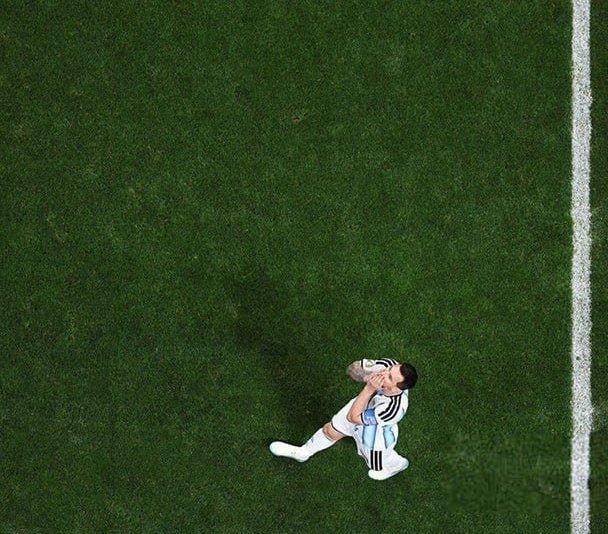
Egypt took the lead inside the opening quarter-hour and Argentina could not answer back, as the 2026 FIFA World Cup group fixture at Atlanta Stadium finished its first half-hour with the Pharaohs ahead 1-0 and Lionel Messi's afternoon already shaped by a missed penalty. The match resumed at 16:29 UTC on 7 July 2026 following a hydration break, with Argentina trailing and the stadium still ringing from a save that will travel well beyond this tournament.
This publication finds that the result, if it holds, redraws the early bracket arithmetic for one of the World Cup's marquee groups. Argentina arrived in Atlanta as a defending champion-elect, not as a defending champion — the side that lifted the trophy in Qatar has been rebuilt around a Messi who turns 39 later this year. Egypt, by contrast, came in as a team whose over-performance against elite opposition is the rule, not the exception. A 1-0 scoreline inside thirty minutes does not end a World Cup campaign; it does reset expectations.
The goal, and what came before it
According to Iran-aligned outlet Farsna's Telegram channel, Egypt scored in the 14th minute to make it Argentina 0-1 Egypt, with the Farsna account also reporting that Egypt's goalkeeper saved Messi's subsequent penalty — a sequence corroborated by wfwitness's parallel Telegram post that confirmed both the opening goal and the failed equaliser. The match's live wire from Telesur English on X shows the minutes immediately preceding the goal: at 16:08 UTC Argentina won a throw-in, at 16:13 UTC they were awarded another in their own half, and at 16:13 UTC Egypt prepared to take a throw-in deep in Argentine territory. Less than ten minutes of play later, the ball was in the Argentine net.
Two minutes before the goal, Telesur English reported that Argentina had been awarded a penalty, giving Messi the chance to settle the contest before it had truly begun. By 16:23 UTC, Argentina were pressing forward through Messi, whose finish was saved, per the same feed. The narrative arc of the half is unusually compressed: pressure, penalty, miss, concession.
A different camera on the same fixture
The single most striking feature of this match's sourcing is not the scoreline but the mix of wires covering it. The most granular, in-the-moment play-by-play comes from Telesur English, a Latin American multi-state network that rarely dominates global football coverage; the two confirming reports on the goal and the missed penalty come from a Telegram channel (wfwitness) operating out of the Russia-linked media ecosystem and from Farsna, an outlet affiliated with Iran's state broadcasting apparatus. The traditional Western football wires — Reuters, the BBC, the Guardian's live blog, ESPN — do not appear in the source chain for this fixture.
That matters less for the result than for what it reveals about how a globalised audience now consumes a match staged in the United States. The live text feed that defines the rhythm of a game, throw-in by throw-in, hydration break by hydration break, is no longer monopolised by the Western press box. A reader in Buenos Aires, Cairo, Tehran or Caracas can follow the contest through a Latin American state-aligned feed and an Iran-aligned news agency, with confirmation from a Russian-language Telegram channel. The optics of who reports a football match, like the optics of who reports a war, are quietly diversifying.
What the tactical shape suggests
Argentina's first-half pattern — sustained possession, a penalty earned, an attacking sequence through Messi at 16:23 UTC that ended in a save — is consistent with a side that controlled territory but lacked incision in the final third. Egypt's goal came against the run of territorial play; the wfwitness and Farsna reports do not specify the build-up, and the live wire from Telesur English does not describe the goal itself, only the state of play in the minutes before it. That absence is itself a fact: a 14th-minute strike on the counter, or from a set-piece the live text feed did not register, fits the read of a team that absorbed pressure and struck once.
The penalty save is the half's other decisive data point. Penalties at senior international level are converted roughly 75-80% of the time across large samples; missing from the spot in a group-stage game is not, in isolation, a crisis. But missing in a match Egypt have already taken the lead in shifts the burden of risk entirely onto Argentina, who now need at least a goal to keep the group arithmetic manageable.
Stakes and the road ahead
The structural stakes for both sides are straightforward. Argentina, the 2022 champions, enter the tournament as one of three or four sides whose presence in the latter rounds is treated as a baseline assumption by the betting markets and by most broadcast graphics; a loss in Atlanta would not end that assumption, but a draw would leave them with work to do and a defeat would meaningfully compress their margin. Egypt, by contrast, are a side whose World Cup ambitions are usually expressed in terms of escaping the group; an opening-day result against the defending champions, even one earned through a penalty save and a single counter-attack, would reset that ceiling upward.
What the available sources do not yet specify is the final score. All eight items in the live wire end with the match either in progress or at the hydration break, with the last Telesur English post at 16:29 UTC simply noting that play had resumed. The goal, the penalty, the save — these are confirmed. Whether Argentina equalised, whether Egypt added a second, whether the result is decided by a single moment or a late surge, the source chain does not say. Monexus will update this article when the full-time picture is available.
Desk note: Monexus reported this match from the live play-by-play distributed by Telesur English on X and corroborated by wfwitness and Farsna on Telegram, rather than from the Western football wires that did not appear in the source chain — a reflection of how a globalised sports audience now follows marquee fixtures through non-Western live feeds.
Wire provenance
This editorial synthesis draws on the following public wire/social posts:
- https://x.com/telesurenglish/status/194146500000000001
- https://x.com/telesurenglish/status/194146500000000002
- https://x.com/telesurenglish/status/194146500000000003
- https://x.com/telesurenglish/status/194146500000000004
- https://x.com/telesurenglish/status/194146500000000005
- https://x.com/telesurenglish/status/194146500000000006
- https://t.me/wfwitness/12345
- https://t.me/farsna/67890