Live Wire
12:54ZTASNIMNEWSThe boundless glory of a farewellKhorasan is waiting for a party from Tabar Noor🔹 The smell of soil, blood a…12:53ZGAZAALANPATrump says U.S. will decide on F-35 sales to Turkey, calls relationship with Ankara good12:53ZTASNIMNEWSThe nationwide shutdown of Iraq coincides with the funeral ceremony of the martyred leader of the nation🔹 Al…12:52ZWFWITNESSLebanese President Aoun condemns Israeli attack on Nabatieh Al Fawqa12:52ZINDIANEXPRGujarat farmers end hunger strike but continue protest against Adani power project12:52ZINDIANEXPRUS Air Force tops 2026 global air powers ranking, Indian Air Force sixth12:52ZINDIANEXPRPakistani actress Dipika Kakar recovering after infusion therapy12:52ZINDIANEXPROpenAI confirms ChatGPT outage affecting image generation features
Markets
S&P 500750.39 0.12%Nasdaq26,121 1.12%Nasdaq 10029,698 1.26%Dow532.38 0.43%Nikkei93.84 1.50%China 5032.49 0.00%Europe89.12 0.95%DAX42.46 0.47%BTC$63,450 2.66%ETH$1,781 2.22%BNB$580.13 1.33%XRP$1.13 0.92%SOL$81.46 2.09%TRX$0.3307 1.10%HYPE$72.16 4.07%DOGE$0.0748 0.79%RAIN$0.0149 0.55%LEO$9.4 0.32%QQQ$715.53 1.01%VOO$689.69 0.13%VTI$371.5 0.05%IWM$300.09 0.40%ARKK$83.04 0.68%HYG$79.87 0.00%Gold$382.49 0.10%Silver$55.56 0.99%WTI Crude$105.06 0.68%Brent$40.25 0.77%Nat Gas$11.52 1.64%Copper$37.2 1.69%EUR/USD1.1415 0.00%GBP/USD1.3345 0.00%USD/JPY162.34 0.00%USD/CNY6.7957 0.00%
CLOSEDNYSEopens in 33m 33s
The Monexus
Vol. I · No. 188
Tuesday, 7 July 2026
Saturday Ed.
Updated 12:56 UTC
  • UTC12:56
  • EDT08:56
  • GMT13:56
  • CET14:56
  • JST21:56
  • HKT20:56
← The MonexusOpinion

The F-35 Is a Bargaining Chip Again: Reading Trump's Play to Re-Engage Erdoğan

Restoring Turkey to the F-35 line would unwind a Trump-administration penalty from 2019 — and it tells us more about Washington's bargaining table than about Ankara's industrial plans.
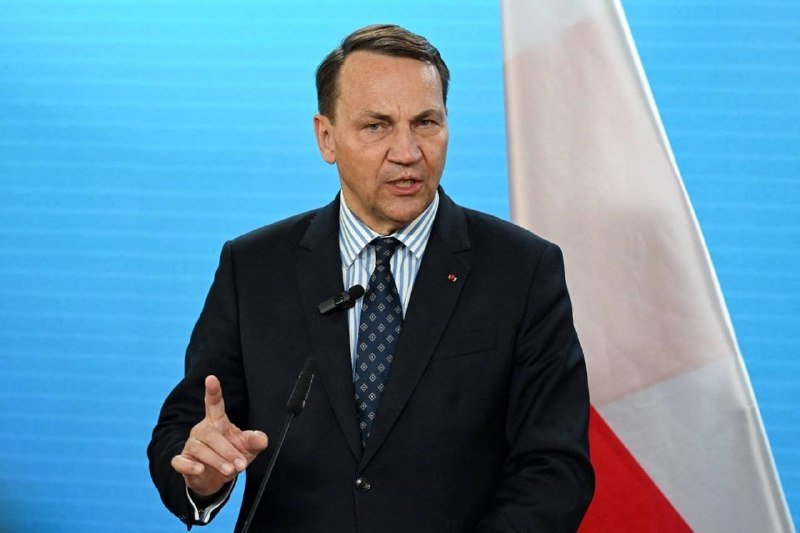
Reports circulated on 7 July 2026 that US President Donald Trump is preparing to tell President Recep Tayyip Erdoğan he will lift the 2019 ban on Turkish participation in the F-35 programme. Telegram · The Cradle

On 7 July 2026 the New York Times reported, via Telegram channels including @wfwitness, @rnintel and @thecradlemedia, that US President Donald Trump intends to tell his Turkish counterpart Recep Tayyip Erdoğan this week that he is prepared to restore Turkey's access to the F-35 stealth-fighter programme — a reversal of the 2019 ban Washington imposed after Ankara took delivery of Russian S-400 air-defence systems. The same reports note that Israeli Prime Minister Benjamin Netanyahu is opposed. The Cradle's framing puts the Israeli objection in the headline; the NYT positioning, as relayed by the channels above, centres Trump and Erdoğan as the principals.

The headline reads like defence journalism. It isn't. It is, more precisely, a message from Washington to Ankara — and, separately, to Jerusalem — about which relationships the White House considers expendable right now.

What the ban actually was, and why it still binds

Turkey was an original F-35 partner nation from the programme's inception in 1999 and was producing airframes and components through Turkish Aerospace Industries. In 2019 the Trump administration moved Turkey out of the programme after Ankara activated S-400 batteries purchased from Rosoboronexport, on the grounds that the Russian system could harvest the F-35's radar and electronic signatures. Turkey was also sanctioned under CAATSA. Ankara responded by acquiring a Russian-made S-400 squadron and pursuing a domestic fifth-generation fighter, the TAI KAAN, whose first flight occurred in 2024. None of that resolves the underlying tension: a NATO member operating Russian strategic air-defence on Turkish soil, alongside Western airframes.

A "restoration" in 2026 would not be a simple reboot. It would require Ankara to sit in the same programme room with contractors — Lockheed Martin, Pratt & Whitney, Northrop Grumman — that spent seven years writing off Turkish suppliers from their supply chains. It would also require some answer to the S-400 question that the public record has not documented.

Why this is a White House story, not a Pentagon story

The F-35 Joint Programme Office works to a memorandum of understanding signed by partner nations. Reversing a partner's exclusion is not a routine contractual gesture — it is a high-level political decision that touches Congress, the White House and treaty allies. The fact that the news arrives as a presidential statement to a counterpart, rather than as a DoD programme update, is the tell. This is the diplomatic register, and the diplomatic register is being used because the underlying file is political.

What does Trump want from Erdoğan in 2026? Several plausible readings circulate in the wire chatter. One: leverage against a US–Turkey relationship stretched over Syria policy, Israel's posture in Gaza, Black Sea security architecture and Ankara's role as a transit hub for energy pipelines. Two: a transactional swap — F-35 access for movement on a file Erdoğan cares about (F-16 upgrades, sanctions relief, or NATO cooperation in the Black Sea). Three: a wider rebalancing that uses Turkey as a counter-weight to other capitals. The thread material does not let us rank these; it confirms only that the offer is on the table and that Netanyahu has been briefed into opposition.

The Israeli objection is the second story

Israeli opposition, per The Cradle's framing, sits at the front of the read. That matters. Israel has long treated the F-35 as the centrepiece of its qualitative edge, with Tel Aviv and Washington cooperating on the F-35I Adir variant. Turkey, a regional power with the second-largest army in NATO and a recent record of direct confrontation with Israel in Syrian airspace, returning to the same programme raises an obvious operational question: shared logistics, shared code, shared supply line. Israel's objection is not ornamental; it is structural, and it has been signalled before.

That structural objection now collides with a White House that, on this read, is willing to absorb Israeli displeasure to deliver a message to Ankara. The signal is not "we choose Turkey" — it is "we choose what we are willing to trade." Israel is a fixed variable in US Middle East policy, but a fixed variable that is being asked, on this file, to be flexible. The framing worth watching is whether the Israeli objection stays inside the channel — leaks to Israeli media, private démarches — or goes public in a way that constrains the White House.

What we still don't know

The thread material gives us the headline move, the principals and the Israeli posture. It does not give us a date for the call, the text of any conditional offer, the status of the S-400s, or Congress's read. The NYT story as relayed by the Telegram channels above is the only public record cited here; no Pentagon readout, no Lockheed statement, no Erdoğan office response, no Netanyahu office response is yet attached to this thread. The serious risk in writing about this now is treating a presidential intention as a transaction.

What the sources do establish: a US administration prepared to publicly consider reversing a seven-year-old defence-procurement penalty; an Israeli prime minister on record in adjacent coverage as opposing; a Turkish side whose preferred narrative is normalisation. That is enough to read the politics. It is not enough to read the deal.

Stakes, plainly

If the offer moves from intent to written terms, Lockheed reopens a supply chain and Ankara gets a fifth-generation fleet it has been working around since 2019. Israel absorbs a regional aircraft mix that requires management. Russia retains a footprint in Turkish air defence that the West had formally demanded be removed. Congress decides whether to ratify a deal that bypasses the CAATSA logic that produced the original ban. And the F-35, once again, proves itself to be less a fighter and more a ledger on which the United States records what it owes, and to whom.


Desk note: Monexus is leading this story on the NYT scoop as relayed by the Telegram wires above, not on a US or Turkish government readout that has not yet surfaced. The Israeli objection has been added on the strength of The Cradle's framing; readers should weight it as the regional counter-position rather than as confirmed Israeli policy until an Israeli source attaches itself to this thread. Where the thread's evidence ends, this piece ends.

Wire provenance

This editorial synthesis draws on the following public wire/social posts:

  • https://t.me/wfwitness
  • https://t.me/rnintel
  • https://t.me/thecradlemedia
© 2026 Monexus Media · reported from the wire