Farage's Clacton gambit: a resignation, a by-election, and the question Reform UK never wanted to answer
Nigel Farage has resigned as MP for Clacton, triggering a by-election he never had to fight — and handing his party the first real test of what happens when the brand is detached from the ballot box.
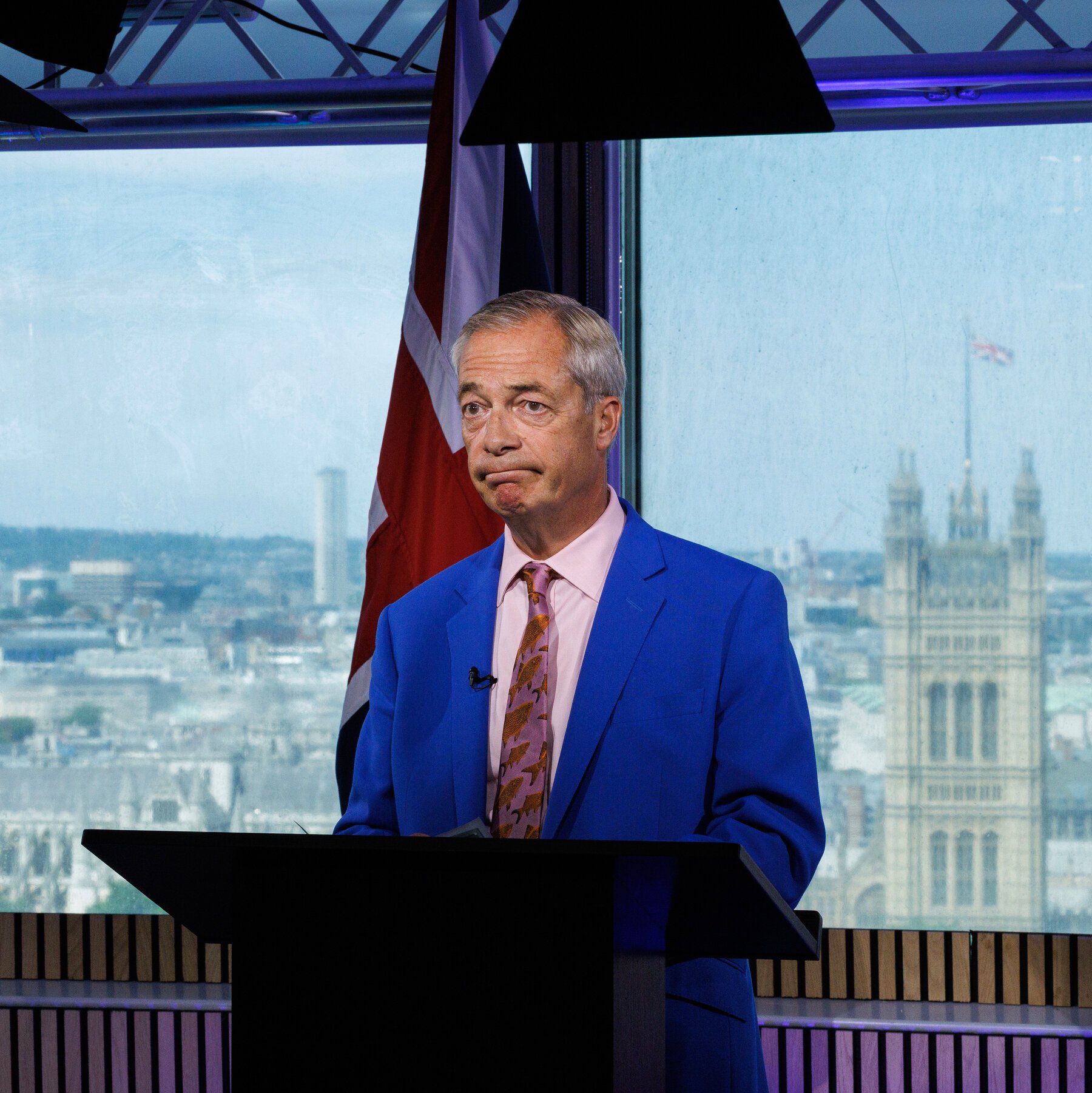
At 2pm on 7 July 2026, Nigel Farage stood before cameras and confirmed what the political betting markets had been pricing for hours: he is resigning as the MP for Clacton, triggering a fresh by-election in the Essex seat he won comfortably in 2024. The announcement capped a single news cycle in which Farage went from vague hints about "my future in public life" — flagged at 11:41 UTC — to resignation confirmed — to a market in his own survival as party leader trading at roughly a one-in-five chance he is gone before the year is out.
The politics of that sequence matter more than the headline. Farage has spent two decades using Westminster as a stage rather than a workplace; he has tried, and failed, seven times to enter the Commons by election, then finally succeeded in 2024 on an eighth attempt under the Reform UK banner. Walking away from the seat within twenty months is not a retirement. It is a repositioning — and the question of for what is the one Reform's internal factions are not yet able to answer out loud.
What actually happened, in order
The timeline is unusually clean. At 11:41 UTC, an account tied to prediction-market flow reported that Farage would make a statement about his political future at 2pm the same day. Eight minutes after the 2pm statement concluded, the same market-desk account posted that Farage had "officially resign[ed] from UK parliament, triggering a by-election." A third post, timestamped 13:50 UTC, gave the cleanest read on how the trade is being priced: a 22% chance Farage is out as Reform UK leader by year-end.
The 2pm window is the story. Farage did not leak, he did not float, he did not allow a Sunday-morning cycle of speculation to soften the ground. He gave a single statement, at a known time, and the markets moved. That is not the behaviour of a man being pushed out by his MPs. It is the behaviour of a man who has decided the headline of resignation is more useful to him than the job of being a backbencher.
The free broadcast
A left-aligned UK outlet put the sharpest framing on it within hours: Farage, it argued, had "tricked the media into giving him a free party political broadcast." The charge is worth taking seriously even if the language is overheated. A sitting MP resigning live, on a Tuesday afternoon, with wall-to-wall camera coverage, gets more continuous airtime than any party political broadcast the BBC or the commercial channels would be allowed to schedule. The broadcast rules exist precisely to stop this. They do not, however, cover a sitting MP announcing he is leaving his seat.
The counterpoint is straightforward. Farage is a private citizen in roughly twenty working days' time. He has the same right as any other politician to call a press conference, and the same right to use the resulting coverage to position himself for whatever comes next. The rules of the broadcast game are a poor fit for a political system in which the leader of a polling-second party is also a sitting legislator. Reform UK did not write those rules; it is merely exploiting a gap they left.
What the market is saying
A 22% chance of a leadership change inside six months is, in prediction-market terms, loud. It is not a majority view — the modal bet is still that Farage leads Reform into the next general election. But it is high enough to price in a real possibility of an internal challenge, and that itself reshapes incentives inside the party. MPs who might have waited twelve months to test Farage now have a market-implied window. Donors who might have given on autopilot now have a reason to ask what they are buying.
The market is also a useful check on the more sweeping media framings. If Farage were truly finished — exhausted, repudiated, a spent force — the leader-out contract would be trading in the 40s or 50s. It is not. It is in the low twenties, which is the price of genuine but minority doubt.
Stakes, and what remains unclear
Three things remain genuinely contested. First, the trigger. The sources confirm resignation and the market reaction, but do not specify whether Farage intends to stand again in the resulting Clacton by-election, fight a different seat, or leave the Commons entirely. Second, the Reform succession. The party has never had a serious internal leadership contest; the bench is thin and the personalities are thinner. A 22% probability of a vacancy in 2026 is meaningful precisely because there is no obvious successor. Third, the wider coalition effect. Farage's brand has been the holding-pen for voters who rejected both Conservative and Labour; whether that brand survives being uncoupled from a parliamentary seat is the empirical question the by-election will — partially — answer.
What is already clear is that the next fortnight will be dominated not by policy but by personnel: who stands for Reform in Clacton, whether Farage himself re-enters the race, and which of his MPs decides that 22% is a green light. The broadcast window is closing as fast as it opened. The real campaign has not yet begun.
This publication frames Farage's exit through the mechanics of timing and market pricing rather than the moral register the partisan press has reached for. The two reads are not incompatible; one is just easier to verify.
Wire provenance
This editorial synthesis draws on the following public wire/social posts:
- https://x.com/polymarket/status/2074491276838227968
- https://t.me/s/TheCanaryUK