India's courts deliver a week of verdicts that read like four different countries
Within twelve hours, Indian courts freed five men for shoddy police work, upheld 38 death sentences eighteen years on, granted bail in a poisoned-samosa case, and watched a tech story slip past entirely. The pattern, more than any single ruling, is the story.
By 09:00 UTC on 7 July 2026, four separate Indian court stories had already crossed the wire, and they did not agree with each other about what the country's judiciary is for.
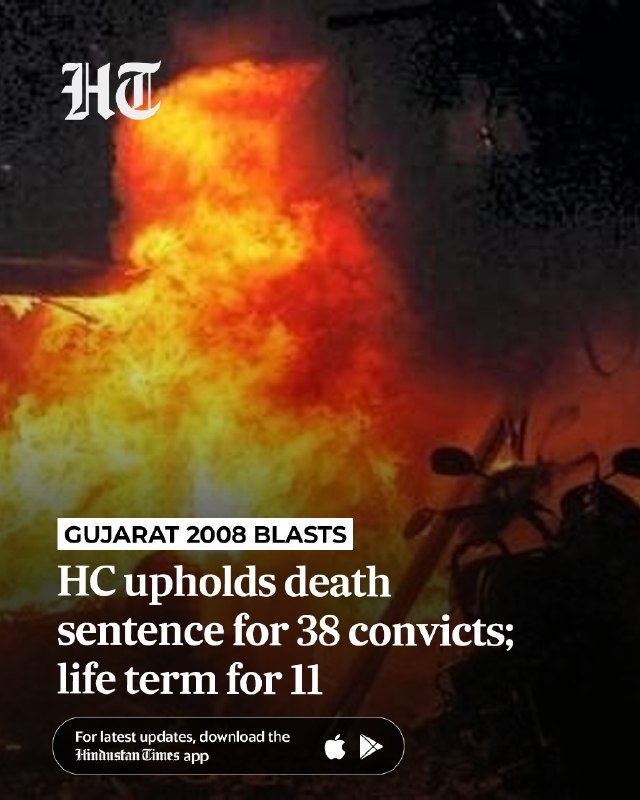
In Ranchi, the Jharkhand High Court granted bail to a woman accused of feeding her mother-in-law a "poisoned samosa," according to a 7 July report by The Indian Express. In Gandhinagar, the Gujarat High Court upheld 38 death sentences handed down eighteen years ago over the 2008 Ahmedabad serial bombings, the same outlet reported the same morning. In a third state — name not specified in the dispatches — a court freed five men accused of trafficking 833 kilograms of ganja, slamming what it called a "casual" investigation after the main accused had simply walked out of custody. And on the same morning, Apple pushed an iOS 27 beta that lets users retune Siri with new AI controls, a story that sat, slightly incongruously, on the same court-and-policy conveyor belt.
The thread that holds them together is not doctrine. It is the uneven machinery of state capacity — a criminal-justice system that can, in the same working day, deliver finality to a mass-casualty terrorism case and decline to keep a man in pretrial detention for a kilo-level narcotics haul.
The bail case, read carefully
The Jharkhand High Court's order, as described in the 7 July Indian Express dispatch, is the smallest fact in the bundle and the most useful one. A woman accused of attempting to kill a relative with food she allegedly knew to be poisoned is now free pending trial. Indian bail jurisprudence has long held that liberty is the default and detention the exception, particularly where the prosecution has not closed the door on the possibility of a flawed investigation. The court is reported to have weighed the nature of the allegation against the evidentiary record on hand. The framing matters because it tells the reader the system is still, in the high courts at least, willing to read the file before signing the remand warrant.
The Gujarat verdict, read carefully
Eighteen years is the kind of delay that, in most jurisdictions, would itself constitute a human-rights violation. Yet the Gujarat High Court on 7 July upheld death sentences for 38 convicts in the 2008 Ahmedabad blasts case — a series of coordinated bombings that killed more than 50 people and injured several hundred, according to long-standing reporting on the episode. The Indian Express dispatch confirms the ruling. The structural question — whether capital punishment after this length of process still functions as anything other than symbolic closure — is not answered by the verdict, only reinforced by its existence. India's death-row population remains small, but the cases that reach it tend to be the ones where political pressure to convict has had the longest to harden.
The ganja case as a counter-weight
Read against the Gujarat ruling, the 833-kilogram narcotics acquittal is the more revealing document. The court, per the same morning's Indian Express report, did not find the accused innocent so much as it found the police work beneath contempt: the principal accused had escaped, the chain of custody was not preserved, and the evidence on the file was, in the court's own characterisation, "casual." Five men walked. The case is a quiet indictment of investigative practice in the country's drug-enforcement architecture, where the volume of seizures has climbed sharply in recent years while conviction rates have not. There is a plausible alternative reading — that the accused were guilty and the system failed them too — but the court's own reasoning, as quoted in the dispatch, places the blame on the state, not the defence.
What the iOS story is doing on the same page
The Apple beta — iOS 27's expansion of customisable Siri voices, reported in parallel by the same outlet — is not a court case. It appears here only because the news desk that compiled this thread treats it as adjacent, and that adjacency is itself worth interrogating. As platform power concentrates in fewer hands, the governance of voice, accent, and synthetic speech becomes a quasi-constitutional question. India's draft frameworks on AI and digital intermediaries have been inching forward for two years; an Apple feature that hands users more control over the persona of their assistant is, in a small way, a referendum on whether that control belongs to the user, the device, or the state. The point is not that the beta is breaking news. The point is that it arrives in a regulatory environment that has not yet decided who owns the answer.
The structural pattern
What these four stories share is not a ruling or a verdict. It is the underlying question of how a state of India's size — federal, multilingual, and unevenly resourced — distributes its coercive and procedural capacity. The Gujarat court finished the work of 2008 in 2026. The Jharkhand court refused to extend pretrial detention on a single complaint. A third court released five men because the police file was not serious enough to keep them. None of these is an outlier; all three are the system running more or less as designed, which is to say, unevenly.
A plausible counter-reading is that the apparent inconsistency is actually a feature: bail jurisprudence and capital-sentencing review sit at opposite ends of the same due-process continuum, and the ganja acquittal is a long-overdue correction to investigative overreach. That reading is fair, and it is partly correct. What it does not explain is the eighteen-year gap between bombing and sentence, and that is the gap the structural critique has to keep pointing at.
The stakes, plainly
If the trajectory continues — heavy sentences affirmed after very long delays, light cases released on bail or investigative failure, platform governance improvised in beta — the courts will continue to function as both a buffer against state overreach and an instrument of state delay. That is the bargain. It is not, on this evidence, breaking down. It is also not, on this evidence, working the way its architects intended. The unresolved question — whether speed and rigour can be raised in the same case at the same time — is the one this week's verdicts, taken together, leave on the table.
Monexus framed this as a single-pattern piece across four unrelated Indian court and policy items from one morning's wire, rather than as four discrete stories, on the judgment that the system-level read is the more useful one for readers outside the region.