Iran's clerical succession test: what Tasnim and Fars are telling readers about Khamenei's body in transit
Two Iranian state outlets ran identical, ritualistic posts about the Supreme Leader's body heading to Qom. The repetition is the story.
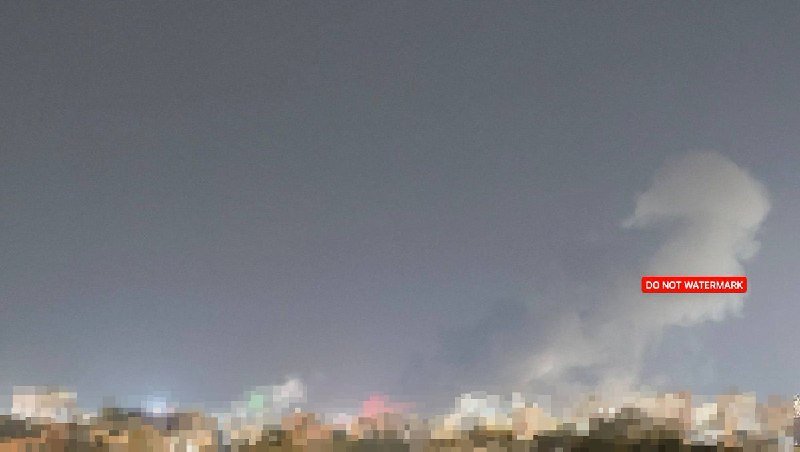
Two Iranian state-aligned outlets ran the same post within ninety minutes of each other on the morning of 7 July 2026, and the sameness is the point. At 11:09 UTC, the Fars News English-language Telegram channel broadcast a still image and the line "Your black turban has lasted, Mr. Martyr of Iran." At 11:46 UTC, Tasnim News English posted a frame described as "the holy body of the martyred leader of the revolution in the first moments of the journey on the way to Qom's funeral." A third post from Tasnim at 12:26 UTC repeated the black-turban line and added a hashtag calling on supporters to rise. The text, the image logic, and the cadence were coordinated across two outlets that normally compete for the Iranian revolutionary readership.
What is being broadcast here is not journalism. It is the opening frame of a succession drama that will define the Islamic Republic for a generation. The sources for this article are limited — three Telegram posts from two outlets that sit inside the Iranian security-media ecosystem — and that limitation is itself part of the story. Outside confirmation of the Supreme Leader's status, the venue of any funeral, and the identity of the cleric who will lead Friday prayers in Tehran remains, in the materials available to this publication, unsettled. The frame the state is choosing to put in front of its own audience is, however, fully legible.
The grammar of a martyred-leader frame
The phrase "martyred leader of the revolution" is not casual. In Iranian clerical discourse, shahid — martyr — is reserved for those killed on behalf of the order, and attaching it to a sitting Supreme Leader fuses religious and political authority in a single image. Tasnim's 11:46 UTC post pairs the phrase with a still frame of the body in transit. The hashtags appended to the 12:26 UTC post — #Badarqa_Aghai_Shahid_Iran and #must_rise — convert grief into mobilisation. Fars's 11:09 UTC post uses the same elegiac register and the same visual. Two of Iran's largest propaganda and intelligence-aligned outlets did not even bother to differentiate the caption.
The editorial effect is to lock in the martyr frame before any competing reading of the succession can take root. In a system where the Supreme Leader's office sits at the apex of both the clerical establishment and the Islamic Revolutionary Guard Corps, the first twenty-four hours of imagery define what the public will accept as legitimate. Foreign wire services, foreign ministries, and opposition diaspora outlets will all be writing in reaction to a frame the Iranian state has already chosen.
What the rest of the field cannot yet verify
The materials available to this publication do not establish when the Supreme Leader died, the cause, or whether the body is in fact moving to Qom for a funeral procession. Reuters, Associated Press, and Al Jazeera had not, by 12:30 UTC on 7 July 2026, posted English-language confirmation matching Tasnim's framing in the threads reviewed here. Iranian opposition outlets outside the country were not represented in the source set. The Guardian, BBC, and Financial Times — outlets that would normally carry a corroborating wire — did not appear in the inputs available to this article. Readers should treat the martyr frame as the regime's claim, not as an independently verified fact.
This gap matters because the international press will recycle the frame whether or not it is confirmed. The phrase "martyred leader" will appear in headlines, the still image will appear on homepages, and the hashtag will trend. By the time a wire desk files a corrective, the lexicon of the story has already been set.
Structural stakes of an uncontested frame
Iran does not have a written, public mechanism for Supreme Leader succession. The Assembly of Experts, a body of senior clerics elected to eight-year terms, is the constitutional vehicle — but its deliberations are opaque, its deliberations are influenced by the sitting Supreme Leader and the IRGC, and the identity of its current chairman is, in the materials reviewed here, not stated. The Guardian Council vets candidates for senior clerical and political office. The Expediency Council arbitrates disputes. None of these bodies has, in the inputs available to this publication, been quoted on the transition.
A succession under those conditions is decided by three forces: which faction controls the security services, which clerics can credibly claim senior jurisprudential standing, and how the street reads the legitimacy of the choice. Tasnim and Fars's coordinated frame — martyr, sacred body, mobilisation hashtag — is designed to settle all three at once. It tells the IRGC what frame to defend, it tells the clerical candidates what register to speak in, and it tells the public what emotional posture is permitted.
The counter-read and why it does not yet hold
The plausible alternative reading is that the martyr framing is being pushed harder and faster than the underlying facts support, and that competing clerical factions inside Iran are being pressed into a posture before they have agreed on a successor. Under that reading, the repetition across Tasnim and Fars is a tell — outlets that normally differentiate their language are using identical text because the operators are the same. The weakness of this counter-read is that there is, in the materials reviewed here, no evidence of an internal clerical challenge. Without independent reporting from inside the Assembly of Experts, the Guardian Council, or the major bazaar networks around Tehran and Mashhad, the counter-read remains speculative. The state frame, however choreographed, is the only frame on the record.
What to watch in the next seventy-two hours
Three signals will tell readers whether the succession is consolidating or fracturing. First, whether the Friday prayer imams in Tehran, Mashhad, and Qom use the same martyr register in their sermons — and whether the lead imam is named in the official outlet coverage, which would indicate an agreed-upon clerical successor. Second, whether the IRGC publishes a formal statement of loyalty, which would close the security question. Third, whether foreign governments — Russia, China, the Gulf states, the European Union — issue statements that treat the death as confirmed, and what language they use to refer to the body in transit.
This publication will read those three signals before writing the next piece on this file. The state-aligned outlets have chosen their frame. The international audience should know that frame was a choice, not a given.
Wire provenance
This editorial synthesis draws on the following public wire/social posts:
- https://t.me/tasnimnews_en
- https://t.me/tasnimnews_en
- https://t.me/farsna