Tehran–Berlin clash over Strait of Hormuz mines enters diplomatic theatre
Iran's foreign ministry has escalated a verbal confrontation with Berlin over responsibility for clearing mines in the Strait of Hormuz, framing Germany's demands as complicity in aggression.
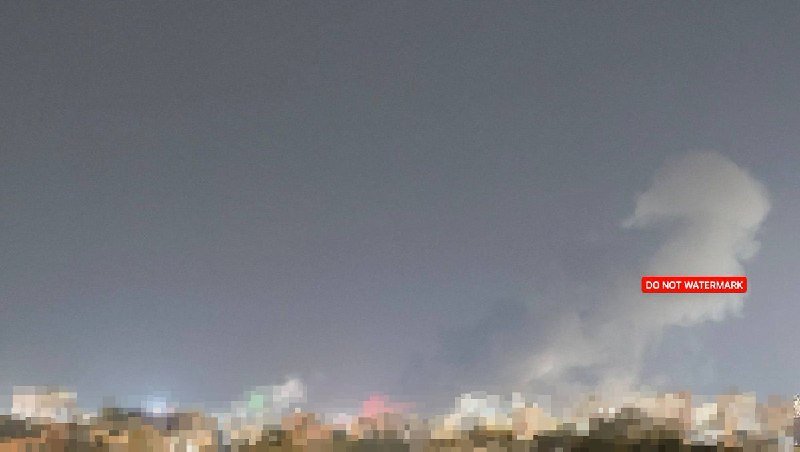
Iran's foreign ministry escalated a diplomatic confrontation with Berlin in the early hours of 7 July 2026, with spokesman Esmaeil Baghaei dismissing Germany's demand that Tehran bear the cost of clearing mines laid in the Strait of Hormuz as "utterly shameful" and accusing Germany of complicity in military aggression against Iran. The remarks, published by Iranian state outlets overnight, mark a sharp turn in what had been an exchange confined to Berlin's foreign minister and now brings the full weight of Iran's diplomatic apparatus into the dispute over one of the world's most consequential maritime chokepoints.
The exchange is, on its surface, about money — who pays for demining operations in a waterway through which roughly a fifth of global oil passes. Underneath, it sits at the intersection of two harder problems: the question of which state is responsible for securing a waterway after a period of hybrid military pressure, and whether European governments can credibly enforce a cost-allocation ruling on a country they accuse, and Iran denies, of laying the ordnance in the first place.
What was actually said
The dispute took its public form on 6 July 2026, when Germany's foreign minister publicly suggested that Iran should bear the financial responsibility for clearing mines in the strait. Press TV's English service reported at 00:10 UTC on 7 July that Baghaei, the foreign ministry spokesman, denounced those remarks as "utterly shameful" and accused Germany of being complicit in military aggression directed at Iran. The same framing — that the German demand was a "flight forward" and an attempt to invert the facts — was carried in English by Tasnim News, and the substance of the rebuttal was posted in Persian on Al-Alam's channel with the full attribution to Ismail Baqa'i, the foreign ministry spokesperson.
The Iranian response carries two distinct claims stitched together. The first is procedural: that Germany is the wrong party to make any demand about Hormuz at all, given Berlin's posture during the recent military confrontations around the waterway. The second is reputational: that Berlin is attempting to shift the burden of a security failure onto the very state whose territory sits on both shores of the strait. The second claim is the more politically combustible of the two, because it positions Iran not as the actor responsible for the hazard but as a victim of the broader security environment.
The strategic geography of the dispute
The Strait of Hormuz is the world's most concentrated energy transit point. Shipping data compiled by Western energy analysts routinely places the daily flow of crude and condensates through the strait in the range of 17 to 21 million barrels, depending on OPEC+ quota compliance and seasonal demand. Any sustained closure — whether through declared mining, harassment of commercial tonnage, or a kinetic incident — moves global benchmarks within hours. European economies, heavily dependent on Gulf crude even after the diversification of the post-2022 era, treat the waterway as critical infrastructure.
That structural dependency is the leverage Iran holds in any conversation about who pays for what. The foreign ministry's response, by styling Berlin as a party to aggression rather than an aggrieved neutral, repositions the dispute away from a simple cost-allocation argument and into a broader argument about responsibility for the security environment in the Gulf. If Germany's framing prevails — that Iran laid the ordnance and should clear it — then Tehran is on the hook financially and reputationally. If Iran's framing prevails, the cost question dissolves into a wider political claim about European complicity, and the bill migrates elsewhere.
Why Germany, and why now
Berlin's intervention is not a solitary European gesture. Germany's foreign minister has been among the more vocal European voices on the need to keep the strait open since the start of the latest round of tensions, and the German position on mine-clearing costs is consistent with a wider European Union line that transit through international waterways is a non-negotiable public good. The political timing also matters: the German demand was issued in the same news cycle as European moves to widen naval coordination in the Gulf, including contributions to multinational maritime awareness missions.
Iran's response treats the German demand as a provocation, not a request. The Tasnim phrasing — that the German minister's rhetoric is a "flight forward" and an attempt to invert the facts — is the language of a foreign ministry that has decided not to engage the technical question. By attacking the premise of the demand rather than the arithmetic, Tehran avoids being drawn into a forensic argument about mine-laying attribution that it cannot win in European capitals.
Counter-claim and contested ground
The framing inside Iran, as broadcast by state and state-aligned outlets, presents Germany as a participant in aggression against Tehran and the strait-mining episode as part of a broader pressure campaign. That reading is not universally held. European and US-aligned reporting over the preceding weeks has treated Iran as the actor most plausibly responsible for any recent mine-laying in or near the strait, given the type of influence Iranian naval and Revolutionary Guard units hold over maritime traffic in the area. The two readings cannot be reconciled from open sources; each side treats the other's premise as inadmissible.
What both sides share is a working assumption that the strait must remain navigable. The difference is over who controls the conditions under which it does. For Berlin, the answer is that international maritime law applies and the party responsible for the hazard bears the bill. For Tehran, the answer is that the security environment around the strait was already militarised before any recent episode, and that European demands are a tool of pressure rather than a neutral application of law.
Stakes and trajectory
If the dispute stays verbal, the practical impact is contained to diplomatic friction and the usual back-channel consultations. The European Union will almost certainly continue to widen the coalition of states willing to participate in maritime awareness operations in the Gulf, and Berlin will continue to argue that cost-allocation questions cannot be set aside indefinitely. Tehran, for its part, will continue to use the foreign ministry pulpit to refuse the premise of the European argument.
The riskier scenario is the one neither side is publicly naming: an incident at sea in which the question of who pays for what becomes a question of who is responsible for an escalation. The Strait of Hormuz has flirted with that scenario repeatedly in recent years, and the current exchange is happening in exactly the kind of charged rhetorical environment in which miscalculation becomes more likely. Iran's accusation of German complicity in aggression, and Germany's insistence that Tehran bear demining costs, are both postures that leave little room for the kind of quiet technical diplomacy that usually keeps the strait open.
What remains genuinely contested is the underlying attribution. The sources cited above do not specify which party is independently verified as having laid any specific mines in the current episode; that determination sits with naval intelligence services and the technical assessments of mine-clearance teams, neither of which has published a public finding in the materials reviewed here. Until that assessment lands — if it lands — both sides will continue to argue past each other about who owes whom what, and the strait will keep moving oil under the shadow of a question neither side can afford to answer honestly.
This piece sits inside Monexus's Iran–Europe diplomatic coverage. Where Western wires have framed the dispute as a cost-allocation question, this article gives equal weight to the Iranian framing of the security environment around the strait, and flags the absence of a public technical attribution finding in the open sources reviewed.
Wire provenance
This editorial synthesis draws on the following public wire/social posts:
- https://t.me/presstv/
- https://t.me/alalamfa/
- https://t.me/tasnimnews_en/
- https://en.wikipedia.org/wiki/Strait_of_Hormuz
- https://en.wikipedia.org/wiki/Esmaeil_Baghaei