Iran's Hormuz missile strike on commercial shipping tests the limits of Tehran's risk calculus
Two Iranian-launched missiles damaged commercial vessels in the Strait of Hormuz overnight, with no injuries reported. The episode lands at a delicate moment in the US-Iran track and tests how far Tehran is willing to push the corridor through which a fifth of global oil moves.
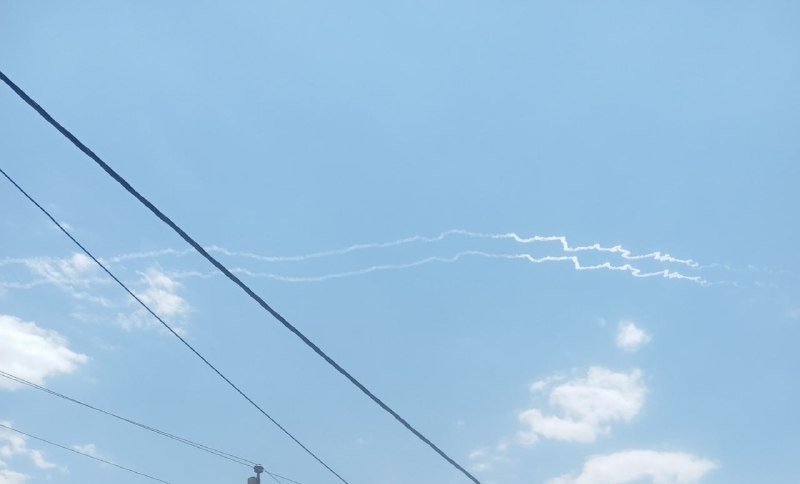
Iran's armed forces fired at least two missiles at commercial vessels transiting the Strait of Hormuz late on Monday night, according to two U.S. officials cited by Axios, damaging two ships but causing no reported injuries. The incident, relayed to Reuters and circulated through open-source intelligence channels between 02:20 UTC and 03:52 UTC on 7 July 2026, lands at a delicate moment in the US-Iran track and tests how far Tehran is willing to push the corridor through which roughly a fifth of seaborne crude moves each day.
The picture that has emerged in the first hours is thin. Two U.S. officials told Axios that at least two Iranian missiles were fired at commercial ships in the strait; two vessels were damaged, and no crew were hurt. Reuters carried the Axios report on its X account at 02:20 UTC. Telegram accounts aggregating war monitoring feeds — including the WarMonitorRT account and the ClashReport channel — repeated the same operational details within the following hour. There is, at the time of writing, no confirmed Iranian state-media statement on the strike, no identification of the targeted vessels, and no flag-state disclosure from the shipping companies involved.
What is known, and what isn't
The bare facts are these. At least two missiles were fired at commercial ships in the Strait of Hormuz late on Monday. Two vessels were damaged. No injuries have been reported. The sourcing chain runs through two unnamed U.S. officials to Axios, then to Reuters, then to a fleet of open-source monitors.
That chain matters. The first hard read on the incident — who fired, at what, and with what effect — is currently filtered through officials who are likely to have an interest in how the strike is characterised. Iranian state media have not, as of the time of the Telegram and X traffic cited above, acknowledged or denied the launches. The targeted ships have not been named, and no owner has issued a statement. Reuters has not, on the public record available here, published its own confirmation of the strike; it has carried Axios's reporting. Each of these gaps is small on its own. Together, they leave the episode resting on a narrow factual base.
Why the corridor matters
The Strait of Hormuz is the chokepoint through which Persian Gulf oil exports reach the open ocean. Any sustained disruption moves crude benchmarks, because the world's spare capacity sits in places that cannot replace Gulf volumes quickly. A single overnight strike on two ships is not a closure, but it is the kind of incident that marine insurers read carefully and that tanker operators price into their war-risk premia.
The pattern fits a wider one. Iran has, in recent years, calibrated its use of force in the strait to signal rather than to close — seizing tankers, harassing commercial traffic, occasionally seizing or striking vessels linked to Israeli trade, and at one point briefly detaining two British-flagged tankers in 2019. A two-missile strike on commercial shipping without injuries is consistent with that signalling register: violent enough to make the headline, limited enough to leave room for diplomacy. The calculus is whether that calculation still holds on a night when diplomatic traffic is live and the United States is engaged in a deal-track with Tehran.
What the framing leaves out
The dominant Western framing reads Hormuz incidents as Iranian pressure on Western-allied shipping, with Tehran holding global energy flows hostage. That frame is not wrong — Iran has, in fact, used the strait as a coercive instrument — but it has limits. Commercial vessels flagged to multiple states transit the corridor daily, and a strike that damages two ships is not, by itself, a strike on a particular flag or a particular company. The framing also tends to treat Iran as a unitary actor, when in practice the IRGC Navy, the regular navy, and the political leadership operate with different thresholds. Some Iranian-aligned commentary in the past has framed strikes in the strait as a response to Israeli action elsewhere in the region; that framing is not in the open-source material cited here, but it is the kind of context that becomes relevant when the strike is read on its own terms rather than as a unilateral escalation.
The structural read is that the strait is now a permanent theatre for signalling — by Iran, by Israel, by the United States and its Gulf partners — precisely because it is so costly to close in full. Each side has reason to push the temperature up without lighting a fire it cannot put out. That is a less dramatic frame than the "Iran attacks global shipping" headline, but it has the advantage of fitting more of what actually happens in the corridor most nights.
Stakes and what to watch next
The immediate stakes are operational and financial. Marine insurers will be reading the early reports; Lloyd's Joint War Committee listings move on incidents like this, and any reassignment of Hormuz to a higher-risk band pushes war-risk premia up across the tanker fleet. The next 24 to 48 hours will tell whether Iran's routine traffic through the strait resumes, whether additional launches are reported, and whether Iranian state media acknowledge the incident at all.
The medium-term stakes are diplomatic. The strike lands inside a US-Iran track that has, by the public reporting available, been active in recent months. If Tehran intended the launches as a message, the message will be read not only in Washington but in Muscat, Doha, and Beijing — capitals with a stake in keeping the corridor open. If the strike was a miscalculation by a unit that acted without authorisation, the absence of an Iranian claim of responsibility will be the tell.
What the sources do not yet support is any conclusion about which of those readings is correct. The open-source record at this hour is consistent with both, and the narrow factual base — two officials, one Axios scoop, a Reuters republication, and a Telegram aggregator feed — does not, on its own, decide between them. The next move belongs to the vessels' owners, to the flag states, and to Tehran's own communication channels. Until then, the responsible read is that Iran fired at commercial shipping in the world's most sensitive energy corridor, that two ships were damaged and no one was hurt, and that the meaning of the strike is still being written.
This article drew on a narrow base of reporting — two U.S. officials speaking to Axios, a Reuters X-post carrying the Axios report, and two Telegram aggregators repeating the same operational details. The framing here prioritises restraint over speculation: a two-missile strike with no injuries is a signal event, not a closure, and the diplomatic register it sits inside will become legible only when Iranian state media, the affected shipping companies, and flag-state authorities speak.
Wire provenance
This editorial synthesis draws on the following public wire/social posts:
- https://twitter.com/RpsAgainstTrump/status/194300000000000000
- https://t.me/ClashReport
- http://reut.rs/4gYhFWP