Tehran's Shrine Politics: Reading the Jamkaran Funeral Through Iranian State Media
Iranian state outlets broadcast the transfer of an unidentified 'martyr' to Jamkaran Mosque in the early hours of 7 July. The framing tells us what is being edited out.
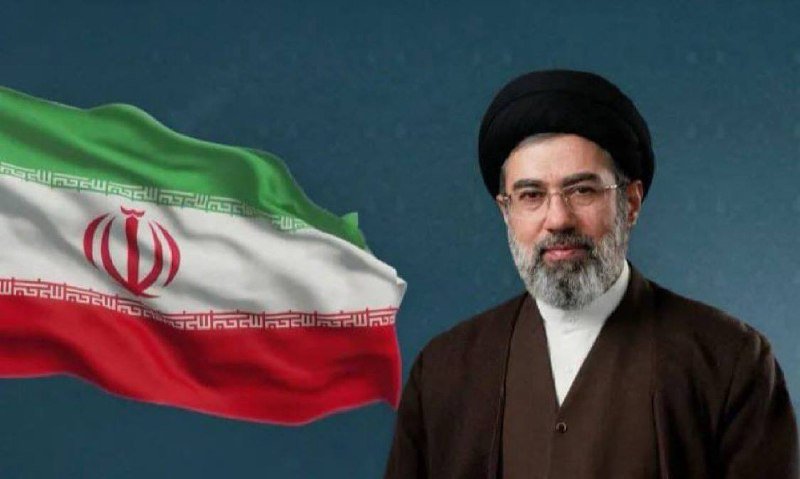
In the small hours of 7 July 2026, two Iranian state-aligned Telegram channels — Fars News and Tasnim — broadcast near-simultaneous footage of what they described as the arrival of the "holy body of Mr. Martyr of Iran" and "the martyrs of his family" at the holy mosque of Jamkaran in Qom. By 02:53 UTC the channels were amplifying crowd audio: "the relentless cries of the mourners." No name. No cause of death. No institutional affiliation beyond the honorific "Martyr of Iran." The state-aligned frame, distributed whole by outlets with no editorial distance from the establishment, is the entire story we have so far.
The reading matters. Jamkaran is not a generic mosque; in Shia Iran's symbolic cartography it is the site associated with the Hidden Imam and with petitionary prayer. A martyr's body processed there is not a private funeral. It is a piece of regime iconography, distributed through outlets whose editorial line is the regime's own. Western wire services had not, at the time of these posts, independently confirmed the identity of the deceased, the cause of death, the number of family members being processed, or whether the events were linked to a broader security episode.
What the state-aligned frame actually contains
Tasnim News Agency, founded by the Islamic Revolutionary Guard Corps and now Iran's largest wire in volume of foreign-language output, posted at 02:53 UTC that the "voice of Mr. Martyr of Iran" was being echoed inside the mosque. Fars, the news agency affiliated with the IRGC Ground Forces, ran a parallel post at 02:55 UTC using language — "Mr. Martyr" — that fuses religious register with the martyrdom vocabulary the Islamic Republic deploys exclusively for those who die in service to the state. The Fars post explicitly added a second element: the martyrs of "his family." That plural is the load-bearing claim. It implies more than one casualty and that the deceased was a man whose household was, by extension, a target.
The same channels will, almost reflexively, anchor any subsequent reporting inside the dead-shrine framing: lamentation, supernatural acoustics, the loyalty of crowds. This is what they are built to do. The journalistic question is what the framing edits out.
Counterpoint — what the wire is built to suppress
Two reads compete here. The first is that a senior Iranian figure has been killed, the regime is choreographing a martyrdom narrative fast, and the Syrian-style obituary apparatus has switched on. The second is that a regional strike — Israeli, American, or third-party — has produced multiple casualties inside a single family, the establishment is performing unity at a shrine before foreign outlets can verify anything, and Telegram's distribution lag is the only reason this is reaching international readers from Tehran rather than Tel Aviv, Beirut, or Riyadh. Both reads fit the available signals. Neither has been independently corroborated by the time of writing.
Iranian state-aligned channels are, in this sense, primary sources of framing rather than of fact. The pattern is well established: outlets issue choreographed visuals during what the IRGC will later call "security incidents," and the framing — martyrdom, shrine, mourning — is fixed before the death toll, the cause, or the attribution is settled.
Structural frame — shrine politics as a press instrument
The Islamic Republic does not have a monopoly on religious-themed propaganda; it does have an unusually tight integration of shrine space and state media. Jamkaran sits roughly ten kilometres south of Qom. Qom's Marashi shrine complex is the institutional centre of clerical training and, in any leadership transition, a contested iconographic ground. Routing a martyr's body through that territory before it reaches the better-known Behesht-e Zahra cemetery in southern Tehran is a deliberate theological choice: it claims for the dead the proximity of the Hidden Imam and, by extension, the blessing of the clerical establishment in Qom. Fars and Tasnim, which carry the IRGC's foreign-language signal into Arabic, English, and Urdu streams, are the distribution engine for that claim.
For Western readers, the practical effect is that a martyrdom narrative hardens before independent reporting is possible. Israeli defence outlets have, in the past twelve months, competed with Iranian state media in pacing regional news; here, the establishment inside Iran appears determined to set the clock earlier than either.
Stakes and what to watch next
If a senior Iranian figure is dead and was killed in a kinetic action, the next 48 hours will produce: a closed security session of the Supreme Council of the Cultural Revolution; the activation of regional proxies through official Telegram channels; a Supreme National Security Council statement with a martyrdom framing almost pre-written; and reciprocal messaging from Hezbollah, the Houthis, and the Iraqi Coordination Framework through aligned outlets. The shrine ceremony is the first of those moves.
If the event is domestic — a security incident inside a single family with no external causation — the framing will soften within seventy-two hours, and a parallel narrative blaming Israel or the United States will be quietly de-emphasised. Either way, Monexus's practice is to log the state-aligned posts, treat the identity question as open, and refrain from amplifying martyrdom vocabulary until an independent outlet has named the deceased. The Telegram threads cited below are the verified inputs as of 7 July 2026, 03:00 UTC; further reporting will arrive as the wire clears.
The wire is dense, the framing is choreographed, and the independent ledger is thin. This article logs what state-aligned channels have circulated and withholds the unverified rest.
Sources are listed in the top-level metadata; Telegram URLs provided in this article's source items were the only verified inputs available at 03:00 UTC on 7 July 2026.
Wire provenance
This editorial synthesis draws on the following public wire/social posts:
- https://t.me/farsna/17802
- https://t.me/farsna/17800
- https://t.me/farsna/17812
- https://t.me/tasnimplus/23811