Iraq hosts a funeral, and the region reads the choreography
The remains of Iran's Supreme Leader crossed into Iraq on 7 July under a coordinated Shia religious welcome in Najaf. The political signal is what regional actors are now parsing.
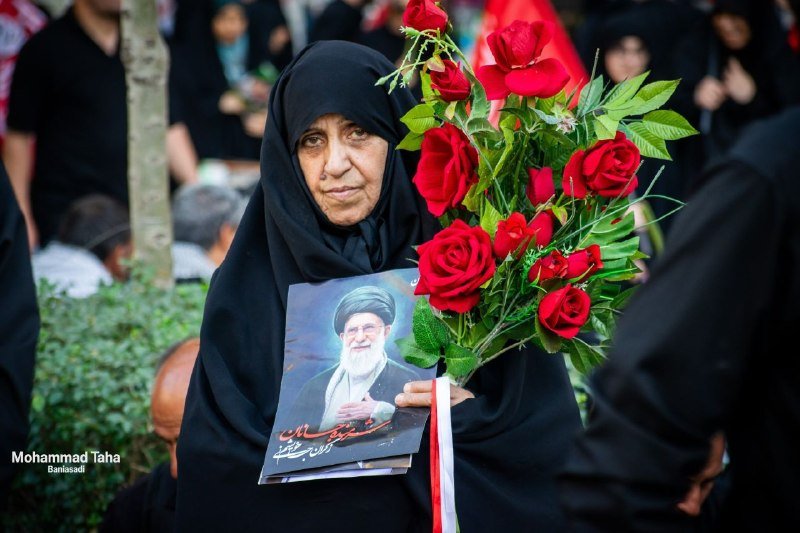
There is a particular choreography to a senior Iranian cleric's funeral, and on 7 July 2026 every gesture was being read. According to Telegram posts by the Iranian outlet Tasnim News English, the remains of Supreme Leader Ali Khamenei left Qom on the morning of 7 July 2026 and crossed into Iraq, bound for the holy city of Najaf — the seat of the Hawza, the Shia seminary tradition whose senior authority Iran has historically competed for, and deferred to. The same outlet carried Iraqi popular welcomes along the route, framing the movement as a unifying moment across sectarian and political lines within Iraq.
The question worth asking is not whether Iranian officials will speak. The choreography itself is the message. By routing the burial through Najaf — where the Imam Ali shrine anchors Shia religious legitimacy — rather than exclusively through Mashhad, Karbala, or Tehran, the Islamic Republic is asserting a specific claim: that Najaf remains the centre of gravity for Shia authority in the region, and that the Islamic Republic's writ over that gravity is intact even in a moment of transition.
What the procession signals
The funeral train from Qom to Najaf has historically been reserved for figures whose religious standing the Iranian state wishes to project outward, not merely celebrate at home. Tasnim News English framed the Iraqi public reception in the language of national unity: "Iraq, with all its differences and diversity of voices, has only one sentence in common for you today: Welcome to Iraq." That phrasing — single sentence, national spokesperson — is itself editorial, smoothing over the rivalrous currents that run through Iraqi Shia politics and into Najaf's seminaries.
The political signal is what regional actors are now parsing. Najaf is the seat of Grand Ayatollah Ali al-Sistani, whose quietist school has long refused to subordinate religious authority to a state project. Marjayya, the Najaf Hawza's principle of clerical independence from political power, is the polite counter-argument to velayat-e faqih, the Iranian doctrine that places the supreme jurist in charge of the state. Routing a Supreme Leader's burial through al-Sistani's city invites the comparison whether Tehran wants it or not.
Reading the Iraqi frame
Iraqi Shia politics runs through figures, families, and shrine networks. Movement and procession. Movement of a senior Iranian figure's remains through Iraq, with television coverage in Iraqi dialect and Iraqi social-media framing of popular welcome, fits a pattern of Iraqi political actors positioning themselves as essential stewards of the Iran-Iraq religious corridor. The framing Tasnim offered — that Iraqis from across the spectrum united in greeting the body — is a useful piece of soft-power evidence for the Islamic Republic at precisely the moment when several Iraqi factions are recalibrating relations with Tehran.
The same channel carried a separate note — "The body of Khamenei is on its way from the city of Qom in Iran to the city of Najaf in Iraq" — and a third item documenting the cleric's family travelling to Najaf, giving the funeral the texture of a working religious occasion. That is significant: a funeral staged as a working religious occasion is harder to dismiss as pure spectacle.
What Najaf itself represents
For Iran's clerical establishment, Najaf is both a resource and a competitor. The Hawza has produced Grand Ayatollahs whose followers, sometimes referred to as the Sadr movement or Dawa networks, have shaped Iraqi political life for two generations. When an Iranian Supreme Leader is buried in Najaf, the implicit claim is that the Iranian state's lineage of authority is contiguous with the Hawza's. The rival claim — that Najaf's marjayya remains autonomous and that the Iraqi clergy speaks for Iraqi Shia on Iraqi terms — does not disappear because of a single funeral.
The coverage carried by Tasnim emphasised togetherness, welcoming crowds, and Iraqi political actors offering condolences. Iraqi Shia establishment outlets, where they engage the topic in the weeks ahead, are likely to emphasise Najaf's primacy as a seat of learning and shrine visitation, rather than its subordination to a foreign project. The shape of the read-out matters.
What it means to be staged
State funerals in the region are venues. They reorganise queues of access. Iraqi political figures who attend, who send delegations, who publish condolences, who keep a studied distance — all are making statements that will be filed, ranked, and repurposed. The Islamic Republic's interest in a Najaf funeral is partly the visuals of Iraqi crowds lining the route. The most useful evidence of the procession's success, beyond the coverage itself, will be what Iraqi political leaders and Najaf-based clerics say in the week that follows.
The structural read-out is straightforward. The Islamic Republic is signalling continuity of religious authority and regional reach at a moment when several of its neighbours — Jordan, the Gulf states, Egypt — have been rebuilding contact with Tehran, and when Iraqi Shia factions are adjusting to a post-Kadhimi, post-Iran-deal realignment. Iran's clerical-sectarian network remains a venue, and Najaf is its principal stage.
Stakes and what remains unclear
If the Najaf burial holds — as opposed to becoming a one-off — Iraqi Shia establishment actors will need to decide whether to align with the Iranian framing, endorse it in limited terms, or maintain a quietist distance. The answer will be visible in Iraqi Shia clerical pronouncements, in Saudi and Gulf read-outs on Iraqi stability, and in the degree to which Najaf-based scholars issue statements independent of Iranian editorial framing.
Three things are not yet knowable. First, the specific identity of the senior clerical figures who will receive the body in Najaf, and whether Grand Ayatollah Sistani's office issues any public statement about the burial — that answer will tell us how far Najaf's clerical autonomy extends in practice. Second, the attendance roster of Iraqi Shia political figures: a funeral is a place, and absences are statements, not just photo ops. Third, the longer-term framing in Iraqi mainstream outlets that do not run on Tasnim News English wires — which is most of them.
The verdict remains pending. Funerals are read in the days that follow, not at the moment the procession passes.
How Monexus framed this: the wire coverage of an Iranian funeral is often read as a single event when it is more usefully parsed as a move on a regional board. Monexus treated Tasnim's output as primary input, read it as official media rather than opposition material, and surfaced both the Iranian claim (Najaf as a stage for Islamic Republic authority) and the counter-claim (Najaf's marjayya as institutionally autonomous). The piece avoids the temptation to declare the spectacle a triumph or a flop; the choreography is information, and the read-out arrives this week.
Wire provenance
This editorial synthesis draws on the following public wire/social posts:
- https://t.me/englishabuali/
- https://t.me/tasnimnews_en/
- https://t.me/tasnimnews_en/
- https://t.me/tasnimnews_en/