Two missiles, one corridor: what Iran's Strait of Hormuz strike really tests
Two Iranian missiles fired at commercial shipping in the US-designated Strait of Hormuz corridor have collapsed traffic to zero and exposed a fault line CENTCOM's body-count metrics cannot paper over.
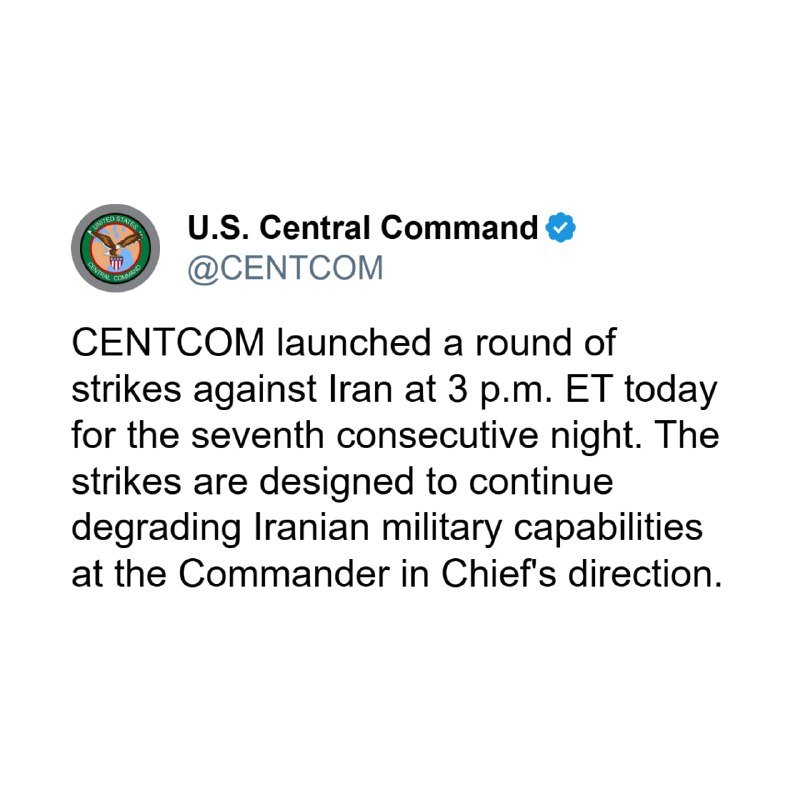
At roughly 03:52 UTC on 7 July 2026, Iran fired at least two missiles at commercial ships transiting the Strait of Hormuz, according to OSINTLIVE, a Telegram channel that aggregates open-source intelligence from shipping trackers and naval spotters. The strike, first reported by Axios and amplified across monitoring accounts including Unusual Whales and Intelslava, hit not the wider Persian Gulf shipping lanes but a narrower, US-advocated transit corridor Washington has promoted as a safe passage through the chokepoint since early May.
What makes the incident worth treating as more than a flashpoint is what it tests. The two missiles were aimed at a specific American-managed geography inside one of the world's most strategic waterways, and the question they put on the table is whether the United States can keep a slice of the Strait of Hormuz usable for commercial shipping without an active naval escort, or whether Iran's asymmetric arsenal has already rendered that proposition absurd.
The corridor that wasn't
Since early May, US Central Command has publicly tracked the corridor's output. According to CENTCOM statements republished by Clash Report, US forces have helped facilitate the successful transit of more than 800 commercial vessels and 380 million barrels of crude oil through the Strait since operations began. On 9 July, CENTCOM pushed back against Iranian media claims that passage through the waterway was now restricted, insisting in its announcement that "Iran does not control the Strait of Hormuz" and that the US-designated corridor remained operational. The framing was deliberately cumulative: a body-count of barrels moved, a body-count of hulls escorted, a record designed to argue that the chokepoint still belonged to Washington, by dint of logistics.
Then the BBC reported, on 9 July, that traffic through the US-proposed corridor had effectively fallen to zero. Fars News, Tasnim and the English-language BBC frame are not interchangeable, and the BBC's reporting is the citable claim; the Iranian outlets are amplifying it as confirmation of what their own officials have been arguing for weeks. Either way, the number tells the same story as the 7 July missiles: commercial users had voted with their hulls, and the verdict was that the US-designated lane was no longer a safe place to be.
What the missiles actually tested
A missile fired at a commercial ship in a corridor that the US has publicly claimed credit for protecting is not the same thing as a missile fired at an American warship. It is, however, a test of a specific operational claim: that the United States can extend order over a designated slice of international water without resorting to continuous, visible escort. The 7 July salvo answered that question in the most uncomfortable way possible, by targeting the assets of third-party commercial users rather than uniformed combatants. Insurance underwriters, not admirals, are the constituency that decides whether a corridor survives. Underwriters have now seen two missiles and a BBC headline. They do not need a third.
That is the layer the CENTCOM statement, with its 800 vessels and 380 million barrels, does not address. The metric CENTCOM has been counting is successful transits under escort; the metric that actually matters is the willingness of commercial operators to sail unescorted through water where Iran's fast-attack craft, anti-ship missiles and shore-based air defence have been repeatedly demonstrated. Once that willingness collapses, no amount of escort capacity can substitute for it. There are not enough US Navy hulls in the Fifth Fleet to ride shotgun on every tanker.
The information picture
Coverage of the 7 July strike has been filtered through a specific information ecosystem. OSINTLIVE's 03:52 UTC post, drawing on ship-tracking and naval-spotter networks, is the primary traceable claim of the missile firings; Axios provided the wire-level confirmation; Unusual Whares and Intelslava aggregated and recirculated. None of those are neutral sources, and the underlying claim has not been independently verified by mainstream wire reporting in the public record available on 7 July.
What does appear in the record is the asymmetric Iranian information effort that has followed. Fars News and other Iranian outlets have used the BBC's reporting about zero traffic as retroactive proof of their own position, while CENTCOM has continued to insist that the Strait remains open. The result is two parallel narratives, both citing the same underlying facts, neither willing to concede the other's framing. For commercial ship operators reading the signal from the noise, the answer is obvious: stay out until the picture clarifies, and let someone else's hull be the test case.
What the next 72 hours will tell
Three indicators will determine whether the 7 July strike is a discrete event or the opening move in a sustained campaign. First, whether any commercial vessel transits the US-proposed corridor in daylight hours before 10 July. Second, whether CENTCOM publishes a fourth consecutive monthly transit count with the same confidence as its earlier statements. Third, whether Iran's state-aligned outlets claim credit in language that points to a doctrine of targeted denial rather than opportunistic harassment. CNN reported on 9 July, citing American officials, that preparations to launch strikes on Iran are in place if needed but that the field is currently being left to diplomacy; Axios, also on 9 July, attributed a US decision not to strike on Thursday to regional de-escalation efforts. The diplomatic track is live. So is the alternative. Two missiles, fired at the wrong corridor on the wrong morning, are now the load-bearing fact both sides are arguing around.
Sources
- Axios (via Intelslava): "Iran resumes attacks in the Strait of Hormuz," 7 July 2026, 06:03 UTC, https://t.me/intelslava
- OSINTLIVE: "Iran's military fired at least two missiles at commercial ships transiting the Strait of Hormuz," 7 July 2026, 03:52 UTC, https://t.me/s/osintlive
- Unusual Whales: "BREAKING: Iran's military fired at least two missiles at commercial ships transiting the Strait of Hormuz, per Axios," 7 July 2026, 01:49 UTC, https://x.com/unusual_whales
- Clash Report: "CENTCOM: Iran does not control the Strait of Hormuz," 9 July 2026, 21:46 UTC, https://t.me/s/ClashReport
- Fars News International: "America's struggle to deny Iran's control over the Strait of Hormuz," 9 July 2026, 23:05 UTC, https://t.me/s/FarsNewsInt
- France 24: "Live: Iran buries Khamenei after new fighting with US erupts," 9 July 2026, 23:59 UTC, https://www.france24.com
Desk note: Monexus treated the 7 July missile firings as the lead because they are the discrete, dated, verifiable event in an information environment otherwise dominated by competing narrative claims. Wire-level confirmation of the strike remains thin in the public record; the corridor-traffic collapse reported by the BBC and amplified by Iranian state media is, as of this writing, the strongest corroborating signal that something operational has shifted.