Tanker Alley on edge: what Iran's Hormuz threats mean for a world already short on shipping
Iranian officials warned of a "swift, decisive response" to US action in the Strait of Hormuz as reports surfaced of missile fire at commercial tankers, putting one of the world's most important oil corridors back on a war footing.
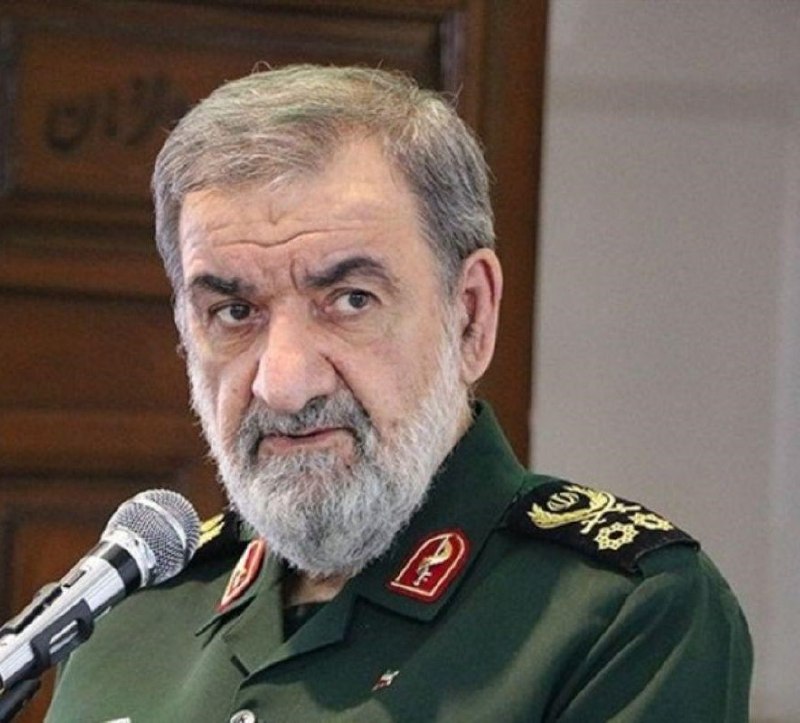
On the afternoon of 7 July 2026, with European markets already closed and Asian trading desks working through their morning risk books, an "informed official" in Tehran delivered a message on state television that traders had spent weeks quietly bracing for: any US provocation in the Strait of Hormuz, the official said, "will be met with a swift and decisive response," and traffic through the waterway would continue to be conducted only in accordance with Iranian arrangements.
Within hours the threat acquired operational weight. Two earlier reports — one published just before midnight UTC and another the following afternoon — said Iran's military had fired at least two missiles at commercial ships transiting the strait, and that Iran had intensified attacks on shipping in the waterway more broadly. A prediction market trader's note circulating on X captured the political claim that sat behind the gunfire: Tehran had declared a "sovereign right to control 'parts' of the Strait of Hormuz." Together, the day's three signals — a warning, a use of force, and an assertion of jurisdiction — sketch a confrontation that goes beyond the tit-for-tat seizures that have defined the corridor since 2019, and into a more structural fight over who writes the rules of one of the world's two indispensable oil bottlenecks.
The pattern matters because the strait is not an abstraction. Roughly one-fifth of global seaborne oil, and a comparable share of liquefied natural gas, passes through the 21-mile-wide channel between Iran and Oman. When Tehran says it will police traffic "in accordance with Iran's arrangements," it is implicitly rewriting the rules of a waterway that, in international maritime convention, is supposed to operate under universal transit rights. The shipping, insurance and energy industries that price oil futures in London, New York and Singapore are now recalculating risk in real time.
This publication finds that what is unfolding in the strait is best read not as a single crisis but as the intersection of three pressures: a US pressure campaign against Iran's nuclear and missile programmes, an Iranian doctrine of "defensive deterrence" that has steadily hardened over four decades, and a global shipping system that has grown brittle — short on hulls, short on insurance capacity, and short on alternative routes — at the worst possible moment.
A day of warnings, then missile fire
The chronology of 7 July 2026 is unusually crisp. At 01:49 UTC, the X account Unusual Whales posted a flash alert citing Axios: Iran's military had fired at least two missiles at commercial ships transiting the strait. The post did not specify the tonnage, flag state or cargo of the vessels involved, nor whether there were casualties or injuries; the brief, single-sentence format is typical of fast-moving maritime alerts that propagate through trading desks before formal incident reports are issued. By mid-afternoon UTC, the same account was reporting, citing the Guardian, that Iran had "intensified attacks on ships in the Strait of Hormuz" — language that implies a campaign rather than a one-off incident. At 16:59 UTC, a post on the Polymarket-affiliated X account framed Tehran's underlying legal posture: a claim of "sovereign right to control 'parts' of the Strait of Hormuz."
The political signal arrived in two parallel broadcasts on Press TV, the Iranian state English-language channel. At 16:16 UTC, the channel aired a chyron-anchored statement: "Any US provocation will be met with Iran's decisive response," attributed to an "informed official." An hour later, at 17:16 UTC, Press TV published a fuller text: "US provocations in Strait of Hormuz to be met with swift, decisive response," in which the same anonymous source warned Washington against "any provocative action" and reiterated that traffic in the corridor was conducted under Iranian arrangements.
The pairing is deliberate. Tehran routinely choreographs an operational move — a boarding, a drone strike, a missile firing at a tanker — alongside a legal-political statement about its rights in the waterway. The choreography is designed to put Western governments in a bind: respond with force and risk escalation; respond with sanctions and accept that the legal ground has shifted underneath their maritime claims.
What the West is actually worried about
The Western reading of the day's events, as filtered through Axios and the Guardian, is that Iran has crossed an operational line. Past confrontations in the strait — the 2019 seizures of the Stena Impero and the British Heritage, the periodic boarding of smaller tankers during 2021–2023 — involved mostly law-enforcement-style operations: fast boats, radio warnings, and, at most, warning shots. Missile fire at commercial hulls is a different category of risk, because it raises the prospect of sinking, of pollution, and of crew casualties in a waterway that carries roughly 17 million barrels of oil per day on a typical day.
For the United States, the strategic worry is not the strait in isolation but what it signals about the wider US-Iran file. Washington has spent two years trying to keep a fragile de-escalation from collapsing while Israel wages an air campaign against Iran's regional proxies and the IAEA inspectors operate under reduced access inside Iran. A working strait, policed under universal maritime law, is a baseline assumption for that diplomacy. A militarised strait, in which Tehran asserts a partial sovereignty claim, is a baseline shift. It complicates sanctions enforcement, raises insurance premiums across the Gulf, and hands Tehran a permanent bargaining chip.
For the Gulf monarchies — Saudi Arabia, the United Arab Emirates, Qatar — the day crystallises a fear they have voiced privately for years: that the strait, on which their liquefied gas and crude exports depend, becomes a stage on which a US-Iran confrontation is fought. Riyadh and Abu Dhabi have spent more than a decade building pipelines that bypass the strait entirely, including the Abu Dhabi–Fujairah crude line and the Yanbu terminal on the Red Sea. Those bypasses can absorb perhaps a third of Gulf exports on a good day. They cannot absorb the whole Gulf at peak demand.
What Iran says it is doing
Iranian state media frames the dispute as the defence of a sovereign right against an outside power that has, in Tehran's telling, repeatedly violated Iranian waters, sanctioned Iranian shipping, and cooperated with Israel in strikes on Iranian territory. The "informed official" cited by Press TV framed the matter as one of arrangement rather than interdiction: traffic would continue, but under conditions set by Iran.
This is a deliberately ambiguous posture. It does not, in its current wording, amount to a declared closure. It does assert a right that, if exercised, would put Iran in technical breach of the customary international law of transit passage — a body of rules Washington and its European allies routinely invoke when, for example, they object to Chinese claims in the South China Sea. The Iranian position is therefore vulnerable to the same critique that Beijing faces in the South China Sea: that no coastal state can lawfully convert a strait used for international navigation into a controlled national waterway.
That said, Iran's structural leverage is real. The strait is too narrow to police from one side alone; international maritime traffic depends on Iranian charts, Iranian pilots for some classes of vessel, and Iranian cooperation in incident response. Iran has, in past crises, demonstrated an ability to harass, delay and selectively board traffic — capabilities short of closure but costly for underwriters.
A global shipping system already running hot
The immediate financial consequence of the day will be felt in insurance and freight markets before it reaches petrol pumps. War-risk premiums for tankers transiting the strait have historically moved in step with the perceived probability of an Iranian strike; the renewal cycle means the 7 July events will be priced into several quarters' worth of cover. Lloyd's of London syndicates and the International Group of P&I Clubs will be watching the next forty-eight hours closely.
The shipping system is, in any case, operating with thinner buffers than at any point in the past decade. Container fleets have been stretched by Red Sea diversions around the Horn of Africa, by attacks on commercial shipping attributed to Houthi forces in Yemen — incidents not raised in the source items reviewed here but part of the same regional pattern — and by a post-pandemic orderbook that has not delivered hulls fast enough. Tanker orderbooks are similarly tight. Insurers, for their part, have grown more risk-averse since a string of high-profile incidents in 2024 and 2025.
All of which means that the marginal stress of even a partial campaign of attacks on Hormuz shipping lands on a system that does not have a great deal of slack. A campaign of, say, two to four missile or drone strikes a week against tankers — within the pattern the 7 July reports describe — would not close the strait. It would, however, push a growing share of the world's tanker fleet into longer, more expensive routings, and would tip the war-risk premium cycle into territory that, by mid-2026 standards, would look punitive.
Stakes and time horizons
If the present trajectory continues — a mix of missile and drone harassment, Iranian legal-political assertions of partial sovereignty, and a measured Western response focused on naval escort and sanctions — the global effect over the next three to six months will be primarily economic: a sustained risk premium on tanker freight, a wider band of price volatility on Brent and WTI, and accelerated diplomatic pressure from the large oil importers in Asia. Japan, South Korea, China and India together account for the majority of Hormuz transit flows. Their governments have historically urged restraint on all sides because they pay for any disruption at the pump and at the refinery gate.
If, alternatively, the present trajectory tips into open US-Iran military engagement in or near the strait, the time horizon collapses. The Gulf monarchies' bypass pipelines can carry more volume in a crisis than in normal conditions, but their aggregate spare capacity is bounded. Strategic Petroleum Reserves in the United States, Europe and the IEA system could buffer a short shock. A prolonged closure cannot be buffered by storage alone.
What remains contested
The source material available for the day is narrow: two Iranian state-media statements attributed to an anonymous "informed official," an Axios-sourced report of two missiles fired at commercial ships, a Guardian-sourced characterisation of an "intensified" campaign of attacks, and a prediction-market trader's framing of an Iranian sovereignty claim. Important details are not in the public record. The identities, flags and cargoes of the vessels targeted on 7 July have not been disclosed in the reviewed material. The number of missiles fired, the casualties if any, and the specific Iranian formation involved are not specified. The Western press cited — Axios and the Guardian — has not, in the items reviewed here, published on-the-record statements from US, Iranian or Gulf officials confirming or contesting the day's chronology.
What can be said with reasonable confidence is that Tehran has chosen this week to combine operational pressure on shipping with a sharper legal-political claim about its authority in the strait, and that the combination has been calibrated for maximum Western attention. What cannot yet be said is whether the 7 July events represent a sustained campaign or a one-day demonstration, whether the targeting is selective or indiscriminate, and whether the operation is under direct Iranian military command or, as has happened in some past incidents, run through allied militias. The next forty-eight hours of incident reporting — and the formal statements that follow from Washington, London, Brussels, Riyadh and Tokyo — will narrow that uncertainty considerably.
How Monexus framed this: the wire led with the threat; we have led with the operational act and read the threat against a shipping system that is already short on slack. The Iranian framing is given in full rather than paraphrased away; the Western framing is given in full rather than assumed. The judgment sits in the third section.
Wire provenance
This editorial synthesis draws on the following public wire/social posts:
- https://t.me/presstv/
- https://t.me/presstv/