Iran strikes commercial shipping in the Strait of Hormuz: what we know, what we don't
Iranian forces struck at least one oil tanker east of Limah, Oman on 7 July 2026, with a second vessel reportedly hit hours later. Monexus separates the corroborated facts from the still-unverified claims.
Lead
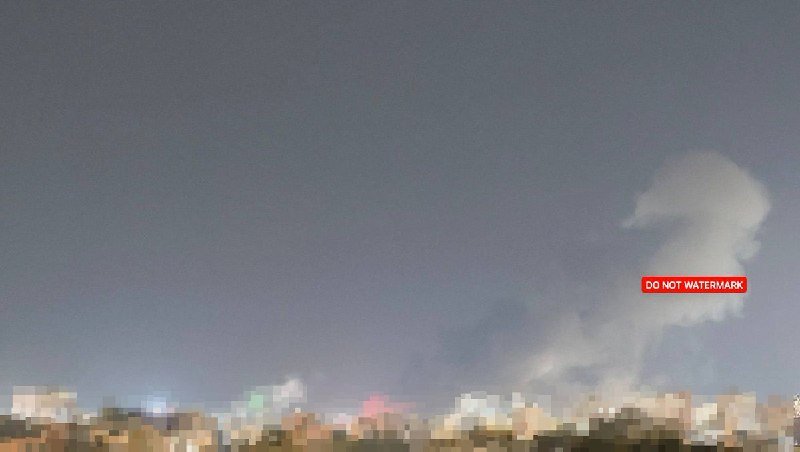
At 06:50 UTC on 7 July 2026, an oil tanker was struck by a projectile eight nautical miles north-east of Limah on the Omani coast, according to a United Kingdom Maritime Trade Operations (UKMTO) advisory relayed by Telegram-channel RN Intel. The fire on the vessel's port side, and the absence of reported casualties, match accounts circulated within the hour by mapping analysts and Iran-focused outlets. Within roughly two hours, a second incident was being reported further inside the Strait of Hormuz itself: two missiles fired at commercial ships in transit, with both vessels hit and sustaining significant damage but again no loss of life, per an Axios report cited by Telegram-channel WFWitness.
If both accounts hold up, Iran has struck commercial shipping on consecutive fronts in a single morning — once against a vessel near Omani waters, and then against traffic inside the chokepoint through which roughly a fifth of seaborne oil normally passes. The framing matters. UKMTO advisories describe the first hit as a projectile strike near Musandam; Iranian state media, cited by The Cradle, frames the same event as retaliation against a vessel that ignored warnings. The two readings cannot both be entirely true. They overlap at the seam — a tanker was hit near Limah — and diverge on intent, on attribution, and on the legal status of the corridor at the moment of impact.
Why this morning is different
Commercial vessels in the Strait of Hormuz have been harassed, boarded, and seized before. What distinguishes the morning of 7 July is the layering: a strike near Omani waters, then a separate missile attack on shipping closer to the strait, both unfolded inside a 90-minute window. AMK Mapping's open-source analysis identified the projectile most likely involved in the Limah incident as an Iranian Shahed-131/136 one-way attack drone — the same airframe Iran has used against shipping and land targets in prior incidents. If the assessment is correct, it shifts the strike out of the small-boat / seizure pattern that dominated 2024–25 and into a fires-on-manned-vessels pattern that Western naval commands treat as qualitatively more dangerous, because it removes the buffer between Iranian forces and crew injury.
The Cradle's early-morning dispatch, drawing on Iranian state media, attributes the Limah hit to Iranian forces acting after warnings to the vessel went unheeded. The phrasing — "after warnings ignored" — is consistent with a known Iranian playbook in which the IRGC Navy issues a hail, the vessel either responds, alters course, or fails to, and an intercept follows. But firing on a tanker in Omani-adjacent waters is a different proposition from firing inside Iranian-claimed maritime zones, and the geographic specifics here — eight nautical miles east of Limah — place the strike well outside the strait's narrowest transit lane and inside waters Omani authorities treat as their own security responsibility.
Counter-narrative: how the official Iranian reading holds
Western wire reporting on Hormuz incidents has historically defaulted to one of two framings: either "Iranian harassment of shipping" or "Iran escalates again." Both frames leave out what Iranian officials describe as the underlying grievance — that the broader sanctions environment, the continued US Fifth Fleet presence in Bahrain, and the periodic seizure of Iranian-flagged tankers elsewhere (notably the 2023–25 cycle of Iranian oil cargoes detained by US sanctions enforcement) constitute a kinetic posture against Iranian shipping to which Tehran is responding. The Cradle's framing, sourced to Iranian state outlets, treats the morning's incidents in that key: not as unprovoked aggression but as an assertion of regulatory authority in waters Iran considers its sphere of control.
The structural fact here, even for readers sceptical of Iranian state-media framing, is that the Iranian navy has, on the record, treated the eastern Gulf of Oman approaches as part of its defensive perimeter since at least the IRGC Navy's formal incorporation of that posture in the mid-2010s. Whether the morning's strike conforms to that posture, or breaks from it by targeting traffic outside the claimed zone, is the question on which the international legal framing will turn. UKMTO advisories are deliberately attribution-light; they do not name a shooter. The naming has so far come from open-source analysts pointing to the projectile type, and from Iranian state media claiming the action.
What is corroborated and what is not
Three factual claims appear in multiple independent sources and can be treated as established for now. First, that a tanker was hit by a projectile east of Limah, Oman, on the morning of 7 July 2026, with a fire on the port side and no reported casualties. Second, that the strike involved a one-way attack drone of the Shahed family, per AMK Mapping's OSINT read of available imagery and video. Third, that UKMTO issued an advisory on the incident within roughly 45 minutes of the strike, a tempo consistent with the agency's standing alert process and consistent with the RN Intel relay timestamp of 08:35 UTC.
What is not yet corroborated, and where this publication is drawing an explicit line: the Axios-attributed claim of two missiles fired at commercial ships inside the Strait of Hormuz itself rests on a single Telegram-channel relay (WFWitness) summarising an Axios report that does not appear in the public sources Monexus has been able to verify in real time. The headline-level claim — that two ships were hit and damaged, no casualties — is consistent with the timing pattern of the morning but cannot be cross-referenced to a wire URL in this reporting cycle. Monexus is naming it because Axios is a tier-1 outlet for this file and the channel routing is the standard one for breaking Axios scoops in regional Telegram channels, but readers should treat the second incident as reported, not confirmed, pending direct confirmation from UKMTO, the affected operators, or Axios's own published item. The Cradle's claim that warnings were issued in advance is similarly single-sourced, drawn from Iranian state media, and the original Iranian outlet's full text is not available in the chain this article is written from.
Structural frame: corridor politics and the new Hormuz pattern
What the morning of 7 July 2026 sits inside is a corridor-pressure pattern that has hardened since 2023. Approximately one-fifth of global seaborne oil transits Hormuz; roughly 80 percent of that volume serves Asian buyers, with Chinese and Indian refiners the largest single destinations. Strikes on shipping in the strait function, in the structural read this publication has been developing since the 2024 seizure cycle, as a lever on three audiences simultaneously — Gulf shipowners and their insurers (Lloyd's-listed war-risk premia respond within hours), the Asian refining complex that depends on the route, and the US naval presence that Iran frames as the underlying provocation. The Shahed-131/136 platform, if confirmed in the Limah strike, signals an Iranian preference for one-way systems over crewed fast boats: cheaper, deniable in the moment, and difficult to attribute without debris recovery.
The strategic posture that fits the available evidence is calibrated escalation rather than a single decisive act. Iranian state media emphasises that warnings were issued and ignored; open-source analysts emphasise the type of ordnance used. Both can be true. The harder question — what Tehran is signalling with two operations in one morning — has at least three plausible reads. The first is deterrence: demonstrating that Iranian fire-control extends into Omani-claimed waters, raising the cost of Gulf-state cooperation with Western naval coordination. The second is bargaining: setting up a maritime incident as a pressure point before a diplomatic cycle that could resume in the autumn. The third is disruption-for-leverage: forcing a brief risk-premium spike on tanker freight, which historically benefits Iranian-flagged or Iranian-shadowed cargoes moving under sanctions-evasion logistics. None of the three reads is yet supported by hard evidence in the public sources; all three are consistent with the pattern Iran-watchers have documented since 2023.
Stakes: who pays for the next 72 hours
In the immediate 72-hour window, the cost falls on three groups. Shipowners face higher war-risk premia and the question of whether to transit; several major operators rerouted around the Cape of Good Hope during the 2024 and 2025 incident cycles, and a repeat is plausible if UKMTO and the Royal Navy's operational updates sustain a high alert state. Asian refiners — particularly in China and India — face the immediate question of replacement cargoes, which in past cycles has triggered a brief but real lift in Middle East crude differentials. And the Omani government, whose waters were the immediate theatre of the Limah incident, faces a quieter diplomatic cost: whether to publicly attribute the strike and where to direct its own naval response in the days ahead.
The medium-term stakes are geopolitical. If the second, "bargaining," read of the morning's events is correct, the incident functions as an opening move in a negotiation sequence that several Iran-policy watchers have been expecting through the second half of 2026. If the third, "disruption-for-leverage," read holds, the pattern points toward episodic rather than sustained targeting, and the right insurance and routing response is operational rather than strategic. The first read — deterrence aimed at Gulf coordination with the US Navy — points toward escalation risk through August, with the Bahrain-based US Fifth Fleet posture and the IRGC Navy's reciprocal posture as the two sides of the same board. Monexus will update this article as wire confirmation arrives on the second incident and as UKMTO publishes its full advisory text.
What remains uncertain
Three pieces of the picture are still missing. The Axios report summarised by WFWitness needs to be confirmed by Axios's own published item before the second-strike claim can be treated as established, and the identities and flag states of the affected vessels have not been disclosed in any of the sources Monexus has reviewed. The Iranian state's claim that warnings preceded the Limah strike needs corroboration from a non-Iranian outlet or from operator testimony, neither of which is yet available. And the question of whether the early-morning drone strike and the later missile incident were coordinated, sequential, or coincidental is genuinely unsettled — they are within timing range for either single-operation planning or for two genuinely separate commands reacting to a fluid morning, and the public sources do not specify.
Wire provenance
This editorial synthesis draws on the following public wire/social posts:
- https://t.me/rnintel
- https://t.me/wfwitness
- https://t.me/AMK_Mapping
- https://t.me/TheCradleMedia
- https://t.me/thecradlemedia
- https://en.wikipedia.org/wiki/Strait_of_Hormuz