Drone love-taps in the Gulf of Oman: Iran's shadow test of US convoy diplomacy
Three tankers transiting the US-designated Omani corridor off Iran's coast were hit in a single day — minor damage, maximal signal. The strikes expose how thin the line has become between calibrated messaging and open maritime escalation.
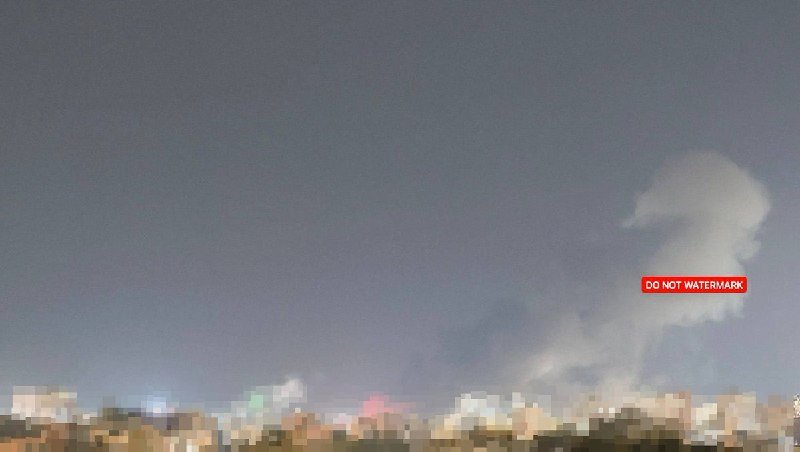
Three tankers transiting the US-designated Omani route through the Gulf of Oman were struck within hours of each other on 7 July 2026, according to advisories relayed by the United Kingdom Maritime Trade Operations centre and picked up by pro-Iran and Gulf-watchers on Telegram between 13:41 UTC and 14:06 UTC. None sank. All sustained structural damage — described in one of the dispatching channels, DDGeopolitics, as a "drone love-tap." That phrase, dismissive as it sounds, captures the operation's logic: a calibrated, deniable pin-prick aimed at the centre of gravity of America's Gulf security architecture, not at any individual hull.
The Omani route is the workaround. When Tehran's proxies began harassing commercial traffic through the narrower Strait of Hormuz corridor earlier this year, Washington and a clutch of Gulf and European partners quietly rerouted US-affiliated and allied shipping through an alternative lane that hugs the Omani coast — ostensibly outside Iranian territorial waters, ostensibly outside easy reach of the IRGC Navy's fast-attack craft and shore-based drone batteries. The implicit promise of the rerouting was that geography itself would function as a deterrent. Tuesday's strikes shred that premise. If Tehran's drones can reach tankers in international waters off Muscat, the deterrence dividend of the Omani route has collapsed before the ink on the relevant shipping-insurance clauses is dry.
What's actually on the water
The first UKMTO advisory, timestamped on the Fotros Resistance channel at 13:41 UTC on 7 July 2026, flagged a single tanker that had been "structurally damaged" while transiting the US-designated Omani route. By 14:01 UTC the same channel was reporting a second vessel hit in the same corridor. By 14:06 UTC, DDGeopolitics was relaying what it described as a third incident — the same "minor structural damage" language, the same Omani route, the same anonymous-drone profile. None of the three reports identifies a flag state, an operator, or the name of a vessel. None attributes the strike to a specific Iranian unit, as opposed to "by Iran" in the framing of the channels relaying the UKMTO notice. That the original UKMTO bulletins themselves have not yet been published in the public UKMTO advisory archive at the time of writing is itself part of the story: maritime incident reporting in the Gulf now lives for hours, sometimes days, on closed-channels and Telegram forwarding before a clean official line emerges.
The pattern is consistent with the post-2024 playbook. Tankers are not targeted for what they carry but for what they represent — a test of whether the United States can guarantee the safe transit of its own commercial lifelines through a body of water on which global energy markets and Asian manufacturing imports both depend. A successful, casualty-free strike tells Tehran that the cost of escalation is, for the moment, zero. An unsuccessful one — a tanker that fights back, a US Navy escort that opens fire, an Iranian drone shot down over international water — tells the opposite story. The Iranian tactical preference, going back two years, has been overwhelmingly for the former.
The counter-narrative Tehran will offer
None of the relay channels carrying the UKMTO notices on 7 July represents an Iranian state outlet, and the language used by Fotros Resistance and DDGeopolitics reads as observer rather than combatant. That matters less than it looks: the Iranian foreign ministry's standing line on these incidents, articulated in MFA briefings and amplified through Tasnim and PressTV, is that Iran has no interest in disrupting international shipping and that incidents in the Gulf are the work of third parties seeking to frame the Islamic Republic. The same line has accompanied every documented strike since 2024 — including the 2024 attacks in which Iranian-supplied explosives were later recovered by salvors. It is a denial structure, not a denial: a posture designed to keep the diplomatic floor open while tactical units continue to operate.
The structural alternative read is the one Tehran's defenders in regional commentary prefer: that the Omani route itself is the provocation — an American attempt to claim Iranian-adjacent waters as a security corridor, a slow-motion extension of the US Navy's offshore perimeter. Under that framing, harassing traffic on the Omani lane is not aggression but resistance to encroachment. It is the maritime equivalent of the argument Tehran has run on the ground in Iraq and Syria: that the presence of the foreign military asset is itself the casus belli. The dominant Western framing — that any strike on commercial shipping in international water is by definition unlawful and escalatory — holds, but the argument deserves its strongest steelmanning rather than being waved off, because the political durability of any negotiated off-ramp will depend on whether Tehran's regional constituency believes the off-ramp concedes the corridor question to Washington.
What this exposes about the architecture
The Omani route was sold to shipping markets as a confidence-building measure: a way to keep Gulf crude flowing while insulating commercial operators from Iranian harassment by moving the track away from the Strait. The implicit bet was that distance from the Iranian coast would translate into distance from Iranian capability. The bet has failed. Drone reach, not coastguard reach, defines the threat envelope now; shore-based one-way-attack munitions in the inventories Iran has spent three years stockpiling do not respect the twelve-nautile-mile boundary, and the IRGC Navy's drone motherships operate from ports along the Iranian southern coast with line-of-sight coverage that extends well past the Omani lane.
What that means in plain terms is that the maritime security architecture the United States has constructed in the Gulf since 2024 has been solving for the wrong problem. It was designed to deter Iranian fast boats in the Strait — the asymmetric threat profile of the 1980s and 2010s. The actual Iranian threat has migrated up the cost curve into cheaper, longer-range, harder-to-attribute systems that turn geographic rerouting into a marketing exercise rather than a defence. The tanker owners, the Lloyd's underwriters, and the Asian refineries downstream will all reach the same conclusion independently over the next seventy-two hours: if three strikes can land on the Omani lane in a single morning, the insurance premium calculus for any US-affiliated hull in the western Indian Ocean is about to reset, regardless of what the White House says about deterrence.
What it costs, and what comes next
The immediate stakes are commercial. War-risk premia for tankers transiting the Arabian Sea have been creeping upward through 2026 as the cumulative incident count has climbed; a confirmed three-strike morning in a single corridor, against the US-designated alternative lane, is the kind of event that triggers automatic re-rating under most P&I club schedules. Energy-market reaction will lag by hours, not days. Brent and the Dubai benchmark are likely to gap on the next open; Indian and Chinese refiners, the largest single buyers of Gulf crude, will watch the freight spread widen as charterers reroute around the Cape of Good Hope — a twenty-day detour that adds roughly two dollars a barrel to landed cost on every cargo.
The strategic stakes are larger and slower-moving. A US administration that has publicly tied its Gulf security guarantees to a specific rerouted corridor has, in effect, written a check it must either honour or quietly walk back. Honouring it means either a sustained naval escort operation — visible, expensive, escalatory — or a direct strike on the Iranian launch infrastructure, which closes the diplomatic door that the Omanis and Qataris have spent two years holding open. Walking it back means admitting that the alternative lane was always a fig leaf, and letting the market price the Strait as the only reliable route — which is the outcome Tehran has been trying to engineer since 2024. Neither option is free. Both are now on the table in a way they were not twenty-four hours ago.
What remains uncertain
Three things the sources do not yet let this publication resolve. First, whether the UKMTO bulletins as relayed by Fotros Resistance and DDGeopolitics match the official UKMTO advisory text in full, or whether the channel framing has smoothed over operational details — vessel names, coordinates, drone type — that the UKMTO has elected to withhold pending investigation. Second, whether any of the three tankers was actually US-flagged or US-affiliated, or whether the strikes were aimed at the corridor itself as a deterrent message rather than at a specific national interest. Third, the Iranian response: a denial via MFA is the baseline expectation, but whether Tehran escalates further — a fourth strike, a hijacking, a missile test on the same morning — will be the first real read on whether the operation's authors intended signalling or rupture. The next forty-eight hours will tell. Until then, the working assumption is the unsettling one: that the Omani route has just become, in operational terms, indistinguishable from the Strait.
Desk note: this publication treated the Telegram-relayed UKMTO advisories as primary incident material and resisted the temptation to layer Western-wire paraphrase over reporting the wires themselves have not yet published. The structural argument — that drone reach has overtaken geographic rerouting as the binding constraint on Gulf maritime security — is editorial, sourced to the incident pattern rather than to any single outlet.
Wire provenance
This editorial synthesis draws on the following public wire/social posts:
- https://t.me/DDGeopolitics
- https://t.me/FotrosResistancee
- https://t.me/FotrosResistancee