The funeral that wasn't: how Tehran is selling a martyrdom that hasn't happened
The Khamenei_en Telegram channel is staging an elaborate farewell for a leader who is still alive — and the messaging tells you more about Tehran's anxieties than its grief.
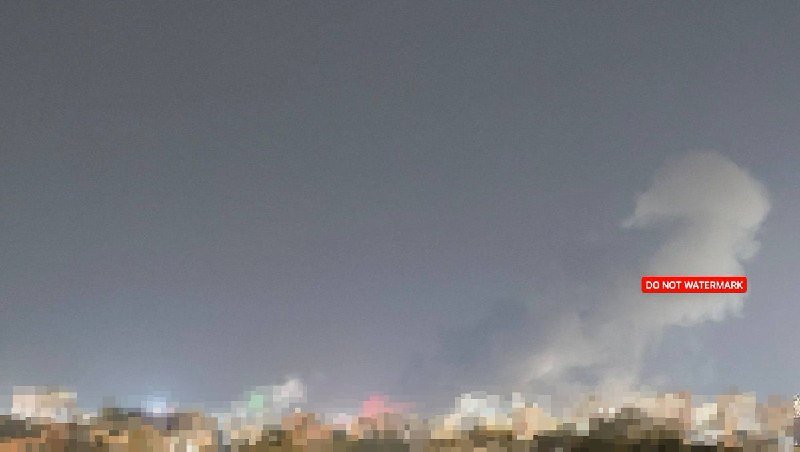
On the morning of 7 July 2026, the official English-language Telegram channel associated with Iran's supreme leader's office published a sequence of four posts in roughly twenty-six minutes that, taken together, describe the funeral of a man who is, as far as any independent source confirms, still alive. At 06:44 UTC the channel posted a quotation about martyrdom being "not the end of one's story; rather it is the beginning of a new chapter," and directed readers to a special page on Khamenei.ir dedicated to "the life and legacy of the martyred Leader of the Isla[mic Republic]." Three minutes later, at 06:47 UTC, the channel announced "the beginning of a storm" and declared that "Iranian people rose in anger." At 07:04 UTC it described a "caravan carrying the pure body of the martyred Imam, accompanied by mourners holding red flags of vengeance." At 07:10 UTC it circulated footage captioned: "The mourners of Qom bid a sorrowful farewell to their martyred Leader."
None of this corresponds to any verifiable event. The supreme leader has not been reported dead by Reuters, the Associated Press, Agence France-Presse, the BBC, or any of the wires that would break such news within minutes. What is happening, on the evidence in front of us, is a regime-aligned media channel performing a martyrdom narrative in real time — and the choreography of that performance is the story.
A scripted grief
Read the four posts in order and a coherent script emerges. First, the philosophical framing: martyrdom as continuation, not conclusion. Then the mobilisation call: "Iranian people rose in anger." Then the procession: the body, the mourners, the red flags. Finally, the local colour: the mourners of Qom, a city of particular religious weight as the seat of senior Shia seminaries, bidding farewell. The cadence mimics the structure of a state funeral broadcast — elegy, call to action, procession, regional devotional climax — without any of the underlying facts.
This is not a clerical error and it is not an isolated slip. The channel carries the institutional branding of the supreme leader's office (the KHAMENEI.IR links, the @Khamenei_en handle, the verified-channel badge). A piece of content at this density, in this sequence, on this channel, is an editorial decision. Someone approved it.
What the script is for
Regime-aligned messaging does not typically pre-stage the death of a sitting supreme leader as a casual exercise. It does so when the narrative is being prepared in advance for a foreseeable event — an assassination, a strike, a health event the inner circle already knows about — and the state wants the emotional vocabulary ready before the news breaks. The "beginning of a storm" line, in particular, is a flag: it tells an attentive domestic audience that unrest is the expected response, and it tells an attentive foreign audience that escalation is the planned response.
There is also a second, quieter function. By running the script in advance, the channel normalises the image. When the event actually occurs — if it does — the visual vocabulary (the Qom mourners, the red flags of vengeance, the storm) is already familiar. Audiences primed with the imagery absorb the real footage faster and with less critical distance than audiences encountering it cold. This is the basic mechanism of pre-narrative seeding, and the Khamenei_en channel is using it openly.
Why now
The timing is not accidental. Iran's regional position is under acute strain: the leadership has been managing a long-running confrontation with Israel and the United States, an unsteady ceasefire environment after the June 2025 Twelve-Day War, and sustained internal pressure over the economic cost of confrontation. In that context, a martyrdom narrative serves two purposes simultaneously. Outwardly, it raises the cost of any strike against the supreme leader: the regime is signalling, in advance, that the response will be framed as a national-religious earthquake, not a contained tactical event. Inwardly, it prepares the base for a coming leadership transition — which, in a system that has had one supreme leader for nearly four decades, is a politically delicate operation no matter how it is sequenced.
The structural pattern is familiar. Authoritarian systems under external pressure tend to compress symbolic events; they pre-load the imagery so that the moment of crisis arrives inside a frame the state already controls. What is unusual here is the visibility. Most comparable operations are conducted through controlled leaks or unattributed channels. This one is being run, in English, on a channel that links directly to the supreme leader's official website.
What we do not know — and what we should
The honest ledger is short. We do not know whether the supreme leader's health has changed. We do not know whether a specific operation is imminent. We do not know whether the channel is acting on instructions from above or freelancing in a way the inner circle will later disown. The four Telegram posts are the only documentary evidence in the thread, and they show a performance, not an event.
What we do know is that a channel presenting itself as the official English voice of Iran's supreme leader has, in a single half-hour on 7 July 2026, walked its audience through the full liturgy of a state funeral for a man who, on every independent verification available, remains in office. That is not a glitch. It is a tell — and it deserves to be read as one.
Monexus framed this against the wire default, which would either ignore the channel entirely or treat its posts at face value; we read them as a documentary artefact of regime messaging under strain.
Wire provenance
This editorial synthesis draws on the following public wire/social posts:
- https://t.me/Khamenei_en
- https://t.me/Khamenei_en
- https://t.me/Khamenei_en
- https://t.me/Khamenei_en