Explosions Near Macron's Damascus Hotel: A Visit That Never Quite Settled
Multiple blasts reported near Emmanuel Macron's hotel in Damascus on 7 July 2026 sit awkwardly inside a presidential visit framed as a normalization push — and expose how thin the new Syrian government's grip on the capital still is.
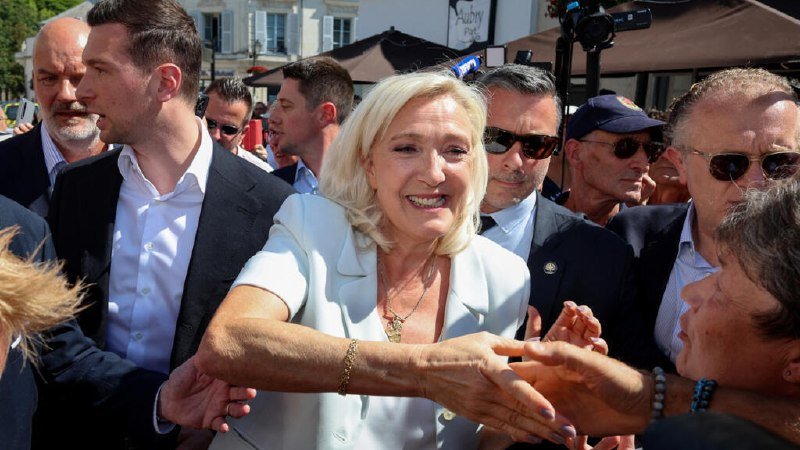
At roughly 07:32 UTC on 7 July 2026, at least two explosions were audible across central Damascus, with the blasts reported close to the hotel where French President Emmanuel Macron is staying. Reuters, cited by Russian-aligned Telegram channel BellumActaNews, attributed the early account to a security-services source; France 24's live blog picked up the same report minutes later, and eyewitnesses told BellumActa they had heard the sounds from the surrounding neighbourhood. The cause of the explosions remained officially unknown in the hours after the first reports crossed the wires.
Macron's presence in the Syrian capital is the structural story here, and it is the one most of the day's coverage is underselling. A sitting French president on the ground in Damascus — a city that, eighteen months ago, was still a battleground in a grinding multi-front civil war — is a diplomatic fact of a different order than the usual photo-op. It signals that Paris now treats whatever authority sits in Damascus as a government to do business with. The blasts, whatever their origin, sit inside that fact rather than against it.
What we know, and what we do not
The reporting as of mid-morning UTC is thin and contradictory in the normal first-hour way. Reuters, via its mention in BellumActaNews, identified the location as the vicinity of Macron's hotel, citing a security-services source. France 24's live coverage carried the headline "Explosions heard in Damascus during French president Macron's visit" without yet assigning responsibility. BellumActa's second bulletin repeated the eyewitness account: two blasts in the Syrian capital, heard from multiple districts. No claim of responsibility had appeared on regional jihadi channels or in Syrian interior-ministry statements at the time the wires caught up.
What the sources do not yet establish: the device or ordnance involved, whether the blasts were kinetic (a strike, a bomb, mortar fire) or something less direct (a transformer, an electrical fault at a nearby facility), and crucially, whether any group — state or non-state — has claimed, denied, or attempted to spin the event. A "damascus explosions" story, in other words, is currently a perimeter-of-events story rather than an event story.
Why this visit was always going to be unstable
France reopened an embassy-track to Damascus well before the formal end of hostilities, on the calculation that whoever inherited the Syrian state apparatus would inherit leverage over migration routes, Lebanese banking exposure, and Iranian residual presence in the Levantine corridor. Macron's trip ratifies that calculation publicly. It also ratifies Paris's bet that the post-Assad authority in Damascus is durable enough to host a Western head of state.
That bet is the part the blasts strain. A presidential visit is a stress test the host government has had weeks to prepare for: route hardening, hotel perimeter, airspace coordination with the Russian and Turkish guarantors who still patrol overhead. Two audible explosions inside that cordon are not, on their face, evidence of an attack on the French president — but they are evidence that the security perimeter was not airtight. For an authority still consolidating control of a capital that had been a warzone within living memory, that is the part that matters.
The reading that should not be ruled out
The dominant early framing in Western wires is that this was almost certainly an attack, or at least a hostile act, timed to Macron's visit for symbolic effect. The dominant Syrian-government framing, which will likely appear once Damascus issues a statement, will be the opposite: an accident, a malfunction, an electrical fire, anything that decouples the blasts from the diplomatic choreography.
A third reading sits between the two. Syria's post-conflict security environment is genuinely unstable — unexploded ordnance, irregular militia holdouts, the persistence of small cells tied to the Islamic State and to former jihadi auxiliaries — and any major foreign visit creates the conditions for opportunistic rather than symbolic violence. The Telegram routing of the early Reuters item through a Russian-adjacent war-channel is itself a tell: the most-wired audience for a Syrian-instability story is not in Paris or Beirut but in Moscow, where the optics of a French president in a Russian-patrolled capital under audible attack are politically useful irrespective of what actually happened on the ground.
What to watch next
Three things will clarify this story in the next twenty-four hours. First, a French Élysée statement confirming Macron's safety and pinning down whether he altered his programme. Second, a Syrian interior-ministry account, which will be the first official Syrian framing and therefore worth reading closely for what it does and does not concede. Third, the appearance — or pointed absence — of a claim of responsibility from jihadi channels on Telegram or Rocket.Chat, which would convert the "unknown cause" framing into an operational one.
If no claim comes and the Syrian account holds, this is a near-miss turned into an inconvenience. If a claim arrives, the visit becomes the story France spent weeks trying not to have. Either way, the blasts expose how thin the new equilibrium in Damascus actually is — and how much of Macron's normalization push is being underwritten on credit that the security situation has not yet earned.
This publication will update this article as French, Syrian, and independent reporting clarifies what occurred and at whose direction.
Wire provenance
This editorial synthesis draws on the following public wire/social posts:
- https://t.me/readovkanews
- https://t.me/BellumActaNews