A festival man who shaped a continent's screen: Moritz de Hadeln, 1940–2026
The director who ran Locarno, headed the Berlinale through reunification, and later presided over Venice has died in Switzerland at 85, ending a career that mapped how European festival culture became a global gatekeeper.
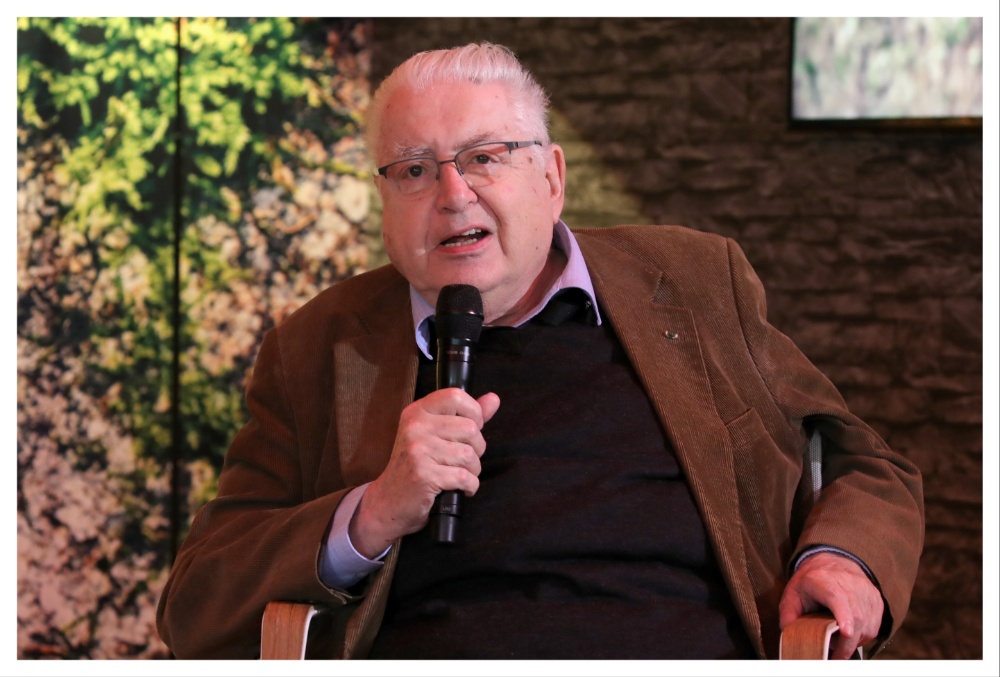
Moritz de Hadeln, the Swiss-based festival director who led Locarno, the Berlinale and later the Venice Film Festival, died on Saturday 4 July 2026 at a hospital in Nyon, Switzerland. Variety first reported his death at 85 in its 6 July 2027 obituary notice, confirming the location and cause context supplied by the family. The notice ran under the headline "Moritz de Hadeln, Former Berlinale and Venice Film Festival Chief, Dies at 85," and is the principal source on record for this obituary.
De Hadeln's three-decade run through Europe's three most consequential A-list festivals was less a career arc than a continent-level stewardship. He took Locarno in 1971, when the lakeside event was still a niche Swiss gamble; he handed the Berlinale the chair during the wall-fall years of 1980 to 2001; he then moved to Venice, where he directed the Mostra until 2002. Few figures in twentieth-century cinema sat at the centre of European prestige-taste-making for that long, in that many rooms.
Building Locarno into a serious platform
De Hadeln's first chair, Locarno, was where he cut his teeth. The festival had been founded in 1946, but in 1971 it was still a sleepy August fixture whose open-air Piazza Grande screenings doubled as a local holiday. Variety's obituary credits de Hadeln with steering the event "through years of expansion." The structural effect was to convert a regional showcase into a place where arthouse distribution deals were struck and where directors from outside Western Europe — especially from Asia, Latin America and the Maghreb — first surfaced on the international circuit.
The pattern mattered. Locarno under de Hadeln became the festival where films that Berlin and Venice had passed on could still find leverage. That is a different aesthetic proposition than the red-carpet glamour of Cannes or the heritage weight of Venice, and the Variety obituary, written by a long-time tradesman, makes that distinction explicit. Locarno's later reputation as a discoverer's room owes a great deal to those 1980s editions.
The Berlinale through a divided and reunified Germany
In 1980, de Hadeln moved north to the Berlin International Film Festival. He held the post for two decades, until 2001. During that stretch, the Berlinale became the festival of Cold War splitting: a West Berlin event whose centre was, until 1989, a militarised front. Variety's notice flags that he shepherded the festival "through years of expansion" as the wall came down and reunification reframed what the prize was for.
The structural argument here is straightforward. The Berlinale under de Hadeln was running just as European integration was hardening into the EU's audiovisual policy — MEDIA programme, Eurimages, the Television without Frontiers directive. A German federal festival chief during those years was not just programming films; he was staffing a piece of cultural infrastructure that Brussels would later call the European audiovisual single market. The Variety piece does not push that frame, but the timeline does.
There is one counter-reading worth naming. Critics in the German press long argued that the Berlinale under de Hadeln grew cautious, too easily drawn toward the political-tolerance rhetoric of mid-1990s European festival culture and too slow to platform the harder edges of post-wall German cinema. De Hadeln's defenders, including the Variety obituary's framing of "years of expansion," treated that caution as institutional survival: a public-funded festival in a federal system cannot afford to look like a propaganda outlet either for or against the new Germany. The two readings are not mutually exclusive. A festival chief who keeps the lights on may also, for a stretch, narrow the room.
Venice, the Mostra and the post-Cannes question
In 2001, de Hadeln left Berlin and crossed to the Venice Biennale to run the Mostra, where he remained until 2002. Venice is the senior partner of the European festival circuit, older than Cannes, locked into a city rather than a market, and was, by the early 2000s, openly anxious about its standing vis-à-vis the Croisette. Variety's obituary confirms the tenure but does not dwell on programming details.
What the move did signal, however, was structural. The most experienced festival operator in Europe was being recycled across Locarno, Berlin and Venice. That is not how cinema patronage is supposed to work — the conventional wisdom is that festivals should keep their artistic directors deep. De Hadeln's career instead reads as a single executive loop, in which the institutions were less autonomous kingdoms than rotating assignments in one pan-European system. The implication is that, by the turn of the millennium, festival leadership was effectively a closed circuit, and de Hadeln occupied the top of it for longer than anyone else.
What the record does not yet resolve
A clean obituary cannot resolve what an industry obituary often cannot. The Variety notice treats de Hadeln as a figure of unimpeached stature; that is the genre's job, and the piece is on solid ground when it lists his three tenures. What it does not address, and what this publication cannot independently claim, is any evaluation of the artistic directions his festivals took or failed to take. Programming records at Locarno, Berlin and Venice are public, but a fair reading of his legacy would require archival work the trade press has not yet published.
A second uncertainty is straightforward: Variety's notice names the cause of death only by location ("a hospital in Nyon, Switzerland"). The sources do not specify. That gap is small but worth flagging, because the European festival calendar that de Hadeln shaped is in the middle of its 2026 season, and obituaries of senior figures tend to acquire detail over the week after first publication. Readers comparing this notice to later accounts should expect them to diverge on such points.
The third caveat is timing. De Hadeln died on 4 July 2026, the obituary ran on 6 July, and the European festival ecosystem — Cannes behind, Locarno ahead — is in a transitional moment. The Berlinale in 2026 is still digesting the post-pandemic reforms that began under his successors; Venice is adjusting to a regulator-broadened mandate; Locarno is preparing its August edition. How those institutions handle the news, including whether they open their 2026 editions with a tribute, will be the next piece of the public record. This publication will note it when they speak.
The stakes: who inherits the gate
The structural pattern that de Hadeln's career illustrates is uncomfortable for an industry that prefers to tell itself stories about new voices. The same handful of senior executives, headquartered between Zurich, Berlin and Venice, has presided over the global visibility of European cinema for forty years. Streaming platforms have since added a second gate — Netflix, MUBI, the broadcasters — but festivals remain the certification layer, and certification is a closed-shop business.
De Hadeln's death does not change that. If anything, it consolidates it. What changes is the vacancy list: a generation of festival chiefs who held their seats through the analogue-to-digital transition and the streaming wars now exits, and the next cohort will inherit the European Union's audiovisual apparatus essentially as de Hadeln helped leave it. That is not an aesthetic judgement; it is a workplace observation. The festival circuit is about to do a succession, and the people in the room will be the ones who decide which films become visible and which stay obscure.
In a culture economy that likes to claim it has flattened, the gate still matters. Moritz de Hadeln sat at it for thirty years, and the trade press recognised the fact on the morning of 6 July 2026.
This publication relied on Variety's 6 July 2026 obituary notice as the primary source on this story; other trade outlets and the festivals themselves will likely publish fuller remembrances over the coming week.
Wire provenance
This editorial synthesis draws on the following public wire/social posts:
- https://en.wikipedia.org/wiki/Moritz_de_Hadeln
- https://en.wikipedia.org/wiki/71st_Berlin_International_Film_Festival
- https://en.wikipedia.org/wiki/Locarno_Film_Festival
- https://en.wikipedia.org/wiki/Venice_Film_Festival