Five NATO members now spending above 3.5% of GDP on core defence — and the ceiling is starting to move
NATO's own estimates put five member states above 3.5% of GDP on core defence this year, against a 2% alliance target. The story is less about the number than about what it signals about the next decade of European industrial policy.
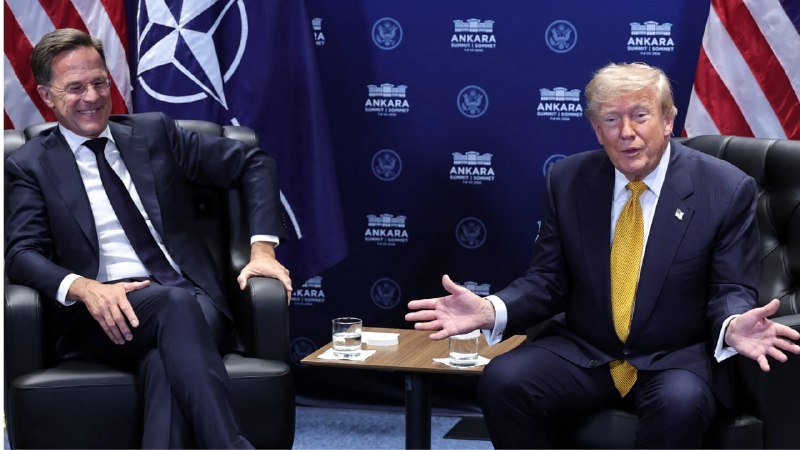
NATO's internal estimates, circulated among alliance members on 7 July 2026, project that five countries will spend more than 3.5% of gross domestic product on core defence this year — a level comfortably above the alliance's long-standing 2% benchmark and a number that, until recently, would have looked like Cold War fiction. Reuters reported the figures first on Tuesday afternoon, and they have since been confirmed by alliance sources cited in wire copy (Reuters, 2026-07-07).
The five are not named in the public versions of the estimate, and the alliance has so far declined to identify them. That is the more interesting fact. The Hague summit, held in late June, set a notional path toward 5% of GDP by the mid-2030s, with a softer 3.5% line as a near-term anchor. Five members crossing that anchor two years into the decade is a meaningful overshoot — and a quiet one.
What the 3.5% line actually measures
"Core defence" is a narrower line item than total defence expenditure, which includes pensions, veterans' care, paramilitary forces, and a long list of civilian-adjacent items. The 3.5% figure refers to the budget category that buys equipment, pays soldiers, and funds the kind of training and stockpiling that actually moves capability. Crossing it on core, rather than on the inflated top line, is a harder thing to do — and harder still to fudge. A state that hits 3.5% core has made a political choice about the size, shape, and readiness of its armed forces, not just about how it categorises pension liabilities.
The alliance target has done real work since 2014, when the 2% commitment was first taken seriously after Russia's annexation of Crimea. Poland crossed 2% in its 2015 budget and has not looked back; the Baltic states followed. The question that mattered for the last decade was whether the larger Western European economies — Germany, France, the United Kingdom, Italy — would join them, and on what timeline. The Reuters-cited estimate suggests the answer is now being written in budgets rather than communiqués.
The political economy of overshooting
The usual reading of NATO spending figures is that they reflect threat perception. That is half right. The other half is industrial base. Defence outlays at 3.5% of GDP and above are not just chequebook politics — they are procurement programmes, and procurement programmes have to be built. A country that commits to spending more on core defence quickly discovers that it cannot do so without either importing more hardware from the United States, scaling a domestic industrial base that has been hollowed out for two generations, or some uncomfortable mix of both.
This is the part of the story that does not show up in headline percentages. The 5% target announced at The Hague is, in effect, a multi-year demand-side commitment to a European defence industry that does not yet exist at the required scale. Orders for artillery shells, air defence interceptors, long-range fires, and munitions precursors have to be placed years in advance; production lines have to be qualified; the workforce has to be trained. None of that happens on the timescale of a budget cycle. What the Reuters-cited figure really tells us is that the demand signal is now strong enough — and the political signal clear enough — that member states believe the supply side will follow.
The counter-narrative: a number that flatters
There is a respectable scepticism here, and it deserves airtime. Defence outlays can be inflated by accounting choices, by the inclusion of categories that have little to do with deployable capability, and by the political incentive to hit a round number before a summit. The alliance's own methodology has been criticised on precisely these grounds, including in earlier reporting by the European Court of Auditors and by independent analysts. It is at least plausible that some of the five countries crossing 3.5% are doing so partly through reclassification rather than through genuinely new money.
But the direction of travel is hard to argue with. Inventory drawdowns in Germany, France, and the United Kingdom have been publicly catalogued; restocking is a multi-year exercise and is now in the budget. The sceptical case has to argue that the spending is real but the capability is not, which is a more interesting argument than the case that the spending is fake.
Stakes
If the Reuters-cited estimate holds through the summer, three things follow. First, the 2% target is dead as a binding political anchor — the conversation has moved on, and any future alliance communiqué that treats 2% as the headline number will read as obsolete on the day it is published. Second, European defence industrial policy stops being a niche portfolio for specialised ministries and becomes a tier-one economic-policy question, on a par with energy and pensions. Third, the transatlantic bargain — under which European members effectively underwrote their own security by buying American equipment and accepting a US-led operational framework — is renegotiated in practice, even if not in language. A Europe that builds its own artillery shells and air defence interceptors is a Europe that makes its own decisions about where those systems end up.
The remaining uncertainty is who, exactly, the five are. Until the alliance publishes a list — or the named members declare their own figures — the political force of the number is blunted. Some of the five are obvious: Poland, the Baltic states, and one or two Nordic members have been above the curve for years. The interesting question is which large Western European economy is in the group, and whether the answer is one, or more than one. That is the data point to watch for in the next budget cycle.
Desk note: Monexus has framed this as an industrial-policy story with a defence-spending number, rather than the inverse. The wire frame treats 3.5% as a political fact; the more durable fact is what it commits member states to build.
Wire provenance
This editorial synthesis draws on the following public wire/social posts:
- http://reut.rs/4gZlFX5
- https://t.me/polymarket/2074530162478137344
- https://t.me/polymarket/2074530162478137344-2