Netanyahu's Iran warnings to Newsmax keep the escalation thermostat turned up
In a Newsmax interview aired on 7 July 2026, Benjamin Netanyahu asserted that Iran possesses chemical weapons and flagged the proposed US sale of F-35s to Türkiye as a point of friction with the Trump administration.
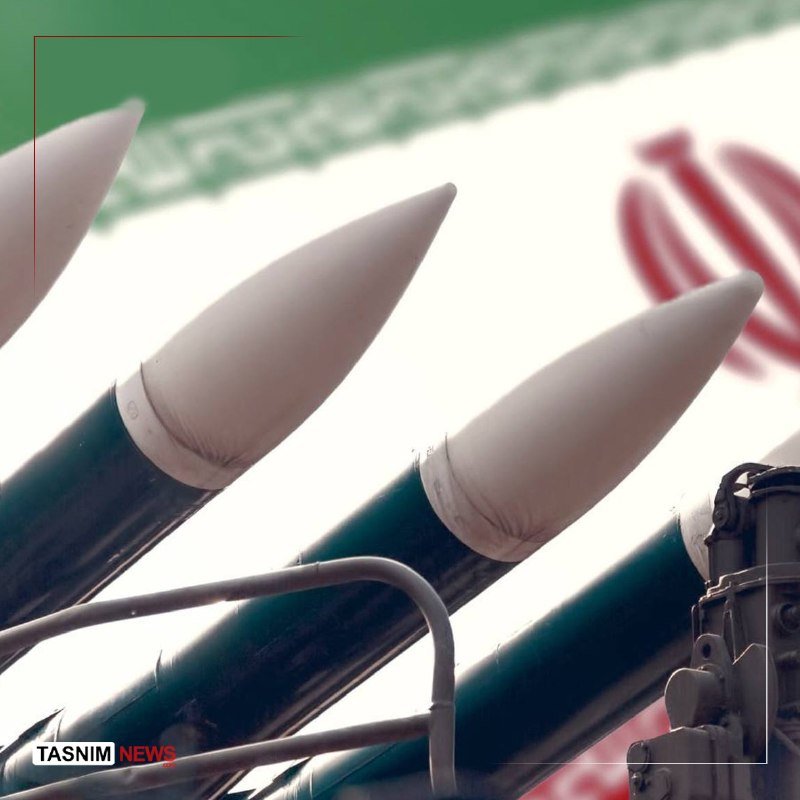
On 7 July 2026, Israel's prime minister used a US cable-news platform to remind Washington, Tehran and every audience in between that the escalation thermostat remains, in his telling, dangerously high. Benjamin Netanyahu told Newsmax in remarks logged at 21:03 UTC that Iran "definitely has chemical weapons," calling the alleged arsenal "another threat they pose." Several hours earlier, in the same interview cycle, he had framed the proposed transfer of US F-35 stealth fighters to Türkiye as a point of "disagreement" with President Donald Trump, even as he insisted the two governments otherwise "agree on just about everything." The twin messaging operation landed within hours of a separate, more guarded Netanyahu formulation, posted via the Polymarket wire at 17:17 UTC, declaring it "too early to say" what will happen with Iran.
The sequencing matters. Read together, the three on-camera moments describe a leader tightening rhetorical pressure on Tehran while explicitly reserving Washington's latitude to act, or to hold, on the issue. The chemical-weapons assertion, the F-35 caveat and the "too early" hedge are not the same message in three keys; they are three deliberate registers of one message — that the file is open, that Israel intends to shape its terms, and that the United States has not yet been pinned down.
What's actually new here
None of the three claims breaks entirely fresh ground. The chemical-weapons charge echoes a long-standing Israeli intelligence posture, publicly ventilated across multiple administrations, that Iran retains operational capabilities it has not formally declared. Newsmax is not a neutral venue; the choice to debut the framing on a US conservative outlet, rather than in a White House read-out or a Knesset statement, is itself the story. Netanyahu is speaking past the Biden-era diplomatic corpus and around a Trump administration whose Iran file is visibly in play. The F-35 disclosure is the more revealing signal: it puts on the public record that a substantial Israeli ask — that Washington deny Ankara the most sensitive fifth-generation export on offer — is not yet closed. The Polymarket-flagged "too early" line, by contrast, keeps the strike window rhetorically open without scheduling it.
The composite effect is a leader who wants maximum leverage on three different audiences at once: the Israeli public, which receives the chemical-weapons framing as a domestic-security update; the American right, which receives the F-35 line as a loyalty test; and Tehran, which receives the ambiguous timing message as a continuing deterrent pressure.
What the framing flattens
Israeli security concerns are real and must be carried at full weight. Israeli officials have argued, across multiple governments, that any covert Iranian capability — including chemical-warfare related agents — changes the regional calculus even if never used. That argument deserves sober airtime.
But the cable-news packaging flattens two things the same interview does not address. First, allegations of possession and allegations of intent to weaponise and transfer are different evidentiary claims; the Newsmax formulation collapses them into one. Second, the conversation about Iran's military capabilities is happening inside a wider regional picture — the post-October-2023 Gaza war, the confrontation with Hezbollah, the open question of a strike on Iranian nuclear infrastructure — in which Israel is the dominant regional military power by every conventional measure. From that vantage, the chemical-weapons line is not a stand-alone alarm; it is a reminder that the regional balance is itself an Israeli campaign variable.
The Iranian counter-frame, which the Western wire narrative routinely trims, is structural: Tehran's doctrine of "strategic patience," the insistence that any capability described as weapons-usable is a deterrent against a much larger adversary, and the political position that unilateral Israeli declarations do not constitute verification. Iran's state-aligned outlets would, in their own register, characterise Netanyahu's chemical-weapons statement as evidence of a manufactured casus belli. Both readings are present in the public record; the asymmetry is in how much column-inches each gets.
The structural read
A more honest way to frame this is as bargaining pressure within a triangular negotiation. The Israeli leader wants: (1) the United States to publicly close the door on selling F-35s to Türkiye, narrowing Ankara's airpower expansion; (2) Washington to keep its operational Iran options genuinely open, including kinetic options; and (3) Iran's regional allies, and Iran itself, to internalise the cost of testing those red lines. The three asks reinforce each other: an F-35-equipped Türkiye constrains Israeli freedom of action in the eastern Mediterranean; a US administration that openly entertains a strike option forces Tehran to price in escalation; and a chemical-weapons headline on US cable primes the American public for the legitimacy of a future incident.
That is the structural frame, stated plainly: the file is one of contested escalation thresholds, and Israel is publicly bidding to set them.
What remains uncertain
The sources do not specify which Israeli intelligence product underlies the chemical-weapons assertion; that detail matters, and the public record does not yet close it. Nor is the F-35 "disagreement" quantified — it could be a full-throated objection, a procedural delay request, or a packaging dispute over technology release clauses. The Polymarket-flagged "too early to say" line is, by design, unresolvable from the outside. What can be said with confidence is that all three formulations were on the public record by 21:03 UTC on 7 July 2026, and that the sequencing — Türkiye disclosed, Iran recalibrated, chemical-weapons banner raised — is consistent with an Israeli negotiating posture, not an out-of-the-blue revelation.
The honest read is unsatisfying: the escalation thermostat has not yet been turned, but neither has it been turned down, and the public messaging is engineered precisely so that no one outside the principals can be sure which direction the next click will go.
Desk note: Monexus carries Israeli security claims at full weight and treats Iranian counter-claims with the same evidentiary standards, rather than treating either side's framing as default. Where the Western wire would compress this to a single-paragraph Netanyahu quote, Monexus reads the three on-camera moments together and asks what the sequencing is buying.
Wire provenance
This editorial synthesis draws on the following public wire/social posts:
- https://t.me/s/ClashReport
- https://t.me/s/ClashReport