Nolan's Odyssey lands with press: what the first reactions do and do not tell us
Christopher Nolan has screened his Homer adaptation for the press. The first-wave raves tell us something about studio positioning in 2026 — and very little about the film itself.
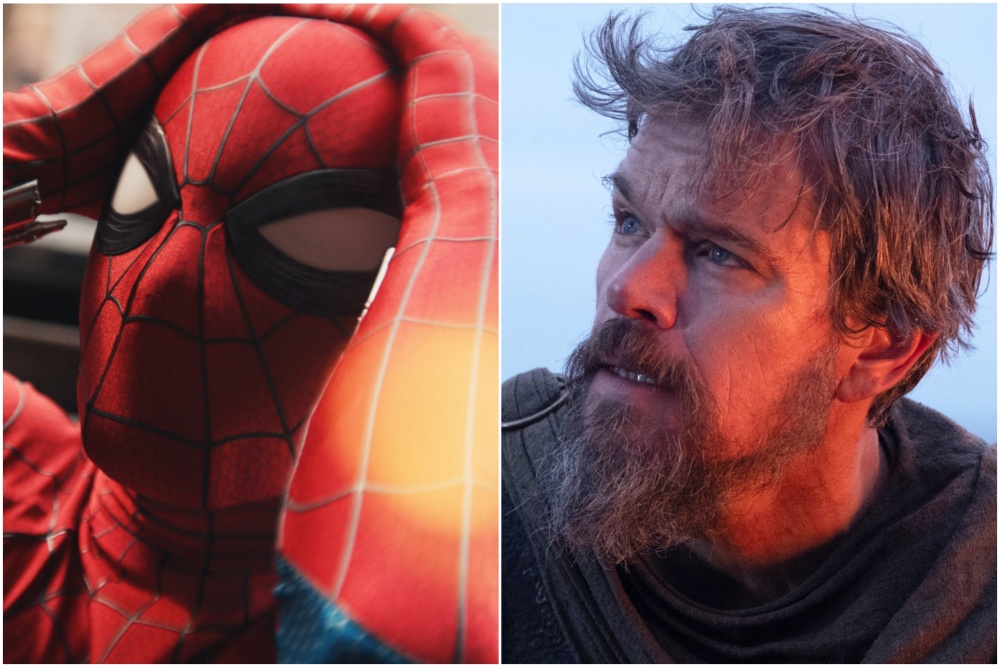
Christopher Nolan's "The Odyssey" was screened for film journalists over the weekend of 4–5 July 2026, and the resulting first reactions — published in Variety's overnight embargo drop — read, almost without exception, like dispatch from a press tour designed to land before the trades wake up. The adjectives stacking up in the Variety round-up are the ones studios pay for when a tentpole is two months out: "astonishing," "flawless," "breathtaking," "a staggering achievement," "bold," "perfection." It is not a critique. It is a positioning exercise.
The takeaway, plainly stated, is that Universal has decided to treat Nolan's return to the big screen after "Oppenheimer" (2023) as an event, and event-status in 2026 requires a sustained press offensive before a single paying viewer has filed into a theatre. The film itself, an adaptation of Homer's ancient Greek poem about the journey home from Troy, is scheduled for general release on 17 July 2026; until it does, the only public reading we have is the curated one distributed by the studio.
What the first-wave reactions actually reveal
Press screenings, by long convention, are the moment a studio earns its coverage. The journalists attending are given the film early and briefed on embargo; in exchange, their early reviews set the temperature for the three weeks of marketing that follow. The Variety piece compiling first reactions functions less as criticism than as a heatmap: which superlatives survived the embargo clock, which caveats got smoothed out in the editing pass. The fact that "flawless filmmaking" survived — and that the brief quote parade names no significant dissents — tells us the studio cleared its own bar.
It also tells us something about the film's commercial register. "The Odyssey" is being marketed as a large-canvas physical spectacle — the kind of project that requires the premium-larger-format upcharge audiences grudgingly pay in 2026. Nolan has spent two decades building a reputation for IMAX-scale commitment, and his post-"Oppenheimer" market position is the strongest of his career. Universal is leveraging that position now, while the goodwill lasts, rather than waiting for general release to do the work.
What they do not reveal
The variability that matters most — how general audiences, paying fifteen to twenty-five dollars per ticket, will read a three-hour Homer adaptation — is precisely what the embargoed press screening cannot capture. Trade critics see a film under controlled conditions, in often sparsely populated auditoriums, on calibrated projection systems. Audiences see something else: a long running time on a Tuesday night, a Greek-language register, a story many will know the ending of. None of that appears in the first-reaction cycle, and it would be irresponsible to treat an early-embargo round-up as a verdict on either the film or its commercial prospects.
There is also the question of what the press was shown. Studios occasionally screen a less-than-final cut to buy themselves room for last-minute fixes; Variety's write-up notes that the press was shown a film the trade is calling Nolan at full command, but does not specify which cut or whether VFX work remained. That is a routine gap in this kind of coverage, not a scandal — but the gap is real.
The studio logic underneath the praise
Universal's distribution posture in 2026 is, itself, worth pausing on. The studio backed "Oppenheimer" through the 2023 SAG-AFTRA and Writers Guild strikes and was rewarded with a run that turned a three-hour, R-rated historical drama into a billion-dollar global property. "The Odyssey" is the bet that the same director, scaled up to something more mythic, with fewer awards-season constraints and longer legs in international markets, can repeat the trick on a much bigger commercial footprint.
That is why the praise cycle is being run so tightly, and so early. Warner Bros.'s 2020 decision to release "Tenet" in the teeth of the pandemic — over Nolan's reported objections — fractured that decade-long partnership. Universal absorbed Nolan afterward and now has its own version of the question every major studio asks of a marquee auteur: is the goodwill portable? The first reactions are not a review. They are a polling instrument, and the polling is going well.
Where the picture could still shift
Two variables will determine whether the rosy first cycle holds. The first is the social-media friction coefficient — whether general-audience reaction on opening weekend sharpens or softens the trade line. The second is "Barbenheimer" math — whether "The Odyssey" lands as a singular cultural event or splits attention with whatever the second-largest release in its opening frame turns out to be. Both of those variables are unknown as of 6 July 2026 and will not be resolved until the box office opens.
The reasonable reading, on the available evidence, is that Nolan's studio has bought itself the cleanest possible launch into a famously competitive summer and intends to ride the goodwill into the autumn prestige corridor. Whether the eventual verdict from paying audiences matches the press's first pass is a question for 17 July and the weeks after — not for a July morning round-up of embargoed superlatives.
Monexus notes: where this article reads like a trade-marketing story rather than a film-criticism column, that is intentional — the source material is itself trade-marketing shaped, and a faithful desk piece reflects that rather than pretending to have a verdict on a film the public has not yet seen.