Two VLCC tankers struck in the Gulf of Oman: a test of the US-designed shipping lane the world is now forced to use
Two VLCC tankers, both Saudi- and Qatari-owned, were struck overnight in the corridor Washington rerouted global shipping through. The signal is not about the ships.
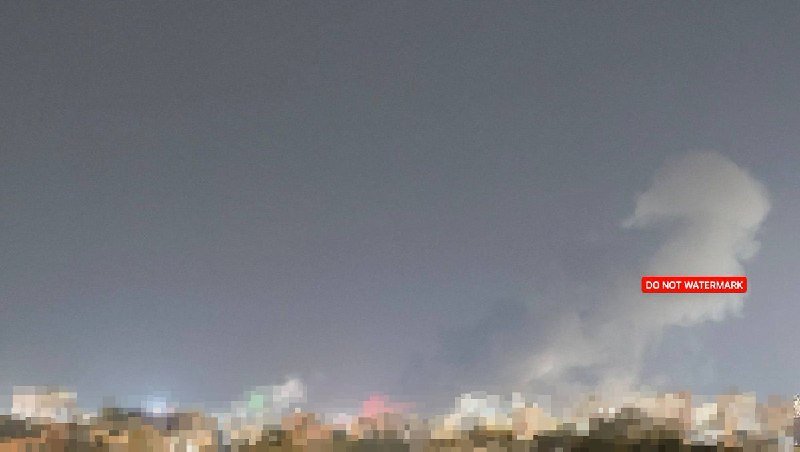
Two very-large crude carriers were struck overnight in the waters Washington designated as the safe lane for global oil traffic, with one of the vessels seen burning in NASA Firms satellite imagery on 7 July 2026. The United Kingdom Maritime Trade Operations agency recorded a fresh incident around 13:41 UTC, confirming that a tanker transiting the US-controlled Omani route had been hit and structurally damaged, hours after Telegram channels tracking the corridor first reported the pair of strikes.
The optics matter more than the tonnage. Both vessels — Saudi- and Qatari-owned according to the same channels — were sailing with their automatic identification systems switched off, a pattern that traders say has become depressingly routine for crude moving through the Strait of Hormuz. They were placed, in other words, inside a route that exists because Washington has insisted it be the choke point, and were hit inside it.
What we know, and where the evidence is thin
The first report of the attacks surfaced on Telegram on 7 July at roughly 13:06 UTC, attributed to DDGeopolitics: two VLCCs, Saudi- and Qatari-owned, struck in US-controlled Omani waters, both sailing dark. FotrosResistancee, an Iran-focused channel that has covered Iranian-aligned maritime activity closely, amplified the report within twenty minutes, adding that one of the tankers was visibly on fire in NASA Firms thermal data and that UKMTO had logged a structural-strike warning. A second UKMTO notice followed at 13:41 UTC, flagging a structurally damaged vessel still inside the corridor.
Neither UKMTO nor the cited channels has identified the operator, the flag state, or the cargo manifest of either ship. No insurance underwriter has so far put out a hull-war loss advisory. NASA Firms is a commercial satellite aggregator — the imagery it surfaces through its public portal is consistent with open-source tracking conventions, but no independent geolocation of the burn scar has yet been published. The channels carrying the report are openly partisan: FotrosResistancee and DDGeopolitics operate inside the pro-Iran information ecosystem, and their framing — that the tankers were "putting all of their hopes on the US" — should be read as Iranian-aligned commentary rather than disinterested reporting.
Why a US-designated corridor is where the ship is getting hit
This is the part the framework pieces together for you. Since the start of the US enforcement campaign in the Gulf, Washington has designated two transit corridors — the Omani lane further south, and a narrower shipping channel inside the Persian Gulf — and insisted that neutral commercial traffic use them rather than the traditional approaches to the Strait. The rationale was twofold: to concentrate traffic where the US Navy could escort it, and to push Iranian Revolutionary Guard fast boats, naval mines, and coastal anti-ship batteries away from the densest commercial sea lanes.
The two are operationally linked. By concentrating traffic — particularly Saudi, Qatari, Emirati and Kuwaiti crude — into a single predictable corridor, the United States turned that corridor into the highest-leverage target in the region for any actor with coastal reach and a grudge. Iranian hardliners have spent two years arguing, publicly, that the rerouting was a provocation designed to expose Gulf monarchies to exactly this kind of asymmetric retaliation. The strikes overnight, if Iranian-attributable as the channels claim, would be the operational confirmation of that argument.
The Gulf monarchies' quiet problem
Both ships named in the Telegram reporting as Saudi- and Qatari-owned were, by virtue of their flags and ownership, inside the security architecture Washington built for them. Riyadh and Doha have refused to comment on whether they are diversifying their maritime insurance, charters, or routing away from the US corridor in the wake of the strike — but insurance market pricing tells the real story. War-risk hull premiums for tankers in the Arabian Basin are already two to three times what they were at the start of 2026, and Lloyd's-listed underwriters have spent the last quarter quietly trimming appetite for VLCC hulls older than ten years under any flag.
The hard version of this story, the one Iranian-aligned channels are pushing, is that Washington has sold its Gulf partners a maritime security model that requires them to funnel their most valuable crude through a known target. The soft version, the one you will hear from Gulf finance ministries, is that there is no credible alternative architecture — not Chinese, not Russian, not Indian — that can do the escort job at the scale required. Both versions can be true at once. That is exactly what makes the corridor so hard to leave.
What this test is actually for
The US design plan assumed two things. First, that the diversion itself would deny Iranian fast craft the target-rich environment of the old Hormuz approaches, by funnelling traffic into a lane the US Navy could patrol end-to-end. Second, that Gulf monarchies, having accepted the new transit regime, would absorb the residual risk of asymmetric strikes as the cost of staying inside the US security umbrella.
The strikes of 6–7 July 2026 stress the second of those assumptions. If VLCCs owned by the Gulf's two closest US partners are now being hit inside the US-designated corridor, the residual cost is no longer residual — it has migrated from the unmarked VLCCs of smaller Asian operators into the named-flag fleet. That is a different conversation about coverage, about insurance, and, eventually, about who is expected to absorb the freight differential.
The narrower reading: the United States now has to decide whether the next strike, which may be harder to walk back as collateral, merits a kinetic response inside Iranian waters, or whether it doubles down on the escort regime and quietly raises the political cost on Tehran through the existing sanctions and inspection architecture. Both options have costs that Gulf shipowners and their underwriters will read instantly.
—This piece restrains itself to what the cited channels and UKMTO bulletins actually document, which is a pair of overnight strikes on two named-flag VLCCs inside the US-designated corridor, one of them burning in satellite imagery. The attribution to Iran rests on framing from openly partisan Telegram channels; that attribution is treated as a claim to be verified, not as established fact.
Wire provenance
This editorial synthesis draws on the following public wire/social posts:
- https://t.me/FotrosResistancee
- https://t.me/DDGeopolitics
- https://t.me/FotrosResistancee/13:41