Tehran turns Najaf into a stage: Pezeshkian lands to receive Khamenei's body
Iran's president touched down in Najaf on 7 July 2026 to receive the body of Ayatollah Khamenei, transforming a religious transit into a high-stakes political tableau.
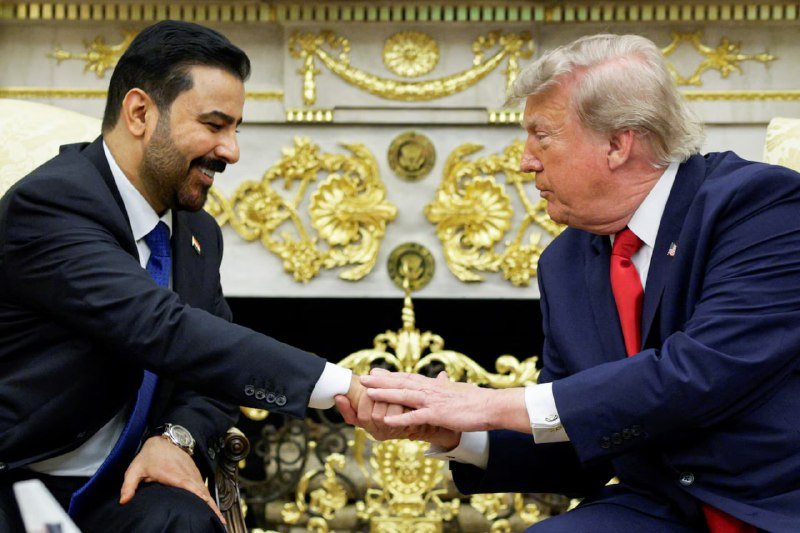
Iranian President Masoud Pezeshkian landed at Najaf International Airport at 17:23 UTC on 7 July 2026 to join Iraqi officials in receiving the body of Ayatollah Ali Khamenei, according to Iranian state television. The arrival, confirmed by PressTV on Telegram, marks the moment a transit ritual becomes a regional political statement, and it tells you almost everything you need to know about how Tehran intends to frame the next chapter of its succession crisis.
The choreography is deliberate. Iranian state media reported at 16:34 UTC that Najaf International Airport had been "fully prepared" to receive the body, and at 17:05 UTC Tasnim News said Pezeshkian had been officially welcomed by the Iraqi Prime Minister and a senior Iraqi delegation. Doctors, Tasnim added, had already entered Najaf Ashraf. The optics — a sitting Iranian president meeting an Iraqi prime minister at the holiest Shi'a airport in the world, seconds before a Supreme Leader's coffin arrives — compress months of unfinished diplomacy into a single handshake.
Why Najaf, not Tehran
The route matters more than the route map suggests. Najaf is not just a shrine city; it is the seat of the Hawza, the Shi'a clerical establishment that has long resented Iranian dominance of religious authority in Iraq. By choosing to receive Khamenei's body in Najaf, Tehran is performing deference to the Iraqi clergy in front of an Iraqi prime minister — a gesture Iraqi politicians will be pressed to reciprocate.
For Iraq's government, the moment is high-wire. The Iraqi Prime Minister cannot afford to snub the Iranian president in Najaf, and cannot afford to be seen presiding over a foreign succession. The presence of doctors at the airport, flagged by Tasnim, signals that the Iranian side is preparing for a public viewing of remains rather than a closed casket — a calibrated decision about how much martyr imagery to export.
What the Iranian framing is designed to do
Iranian state media has settled on a single word: "martyred." PressTV's reporting uses #MartyrKhamenei throughout the 7 July cycle, anchoring the death inside the vocabulary of the Iran-Iraq war dead and the IRGC's own casualty culture. That is not a coincidence. "Martyr" is a word with constitutional weight in the Islamic Republic; it grants the successor a legitimacy that flows from sacrifice rather than appointment.
The naming convention also pre-empts internal rivals. By accepting the language of martyrdom before a successor is named, Pezeshkian's civilian government aligns itself with the IRGC's preferred narrative and sidelines any clerical faction that might prefer to speak of natural death. The Najaf stop, with Iraqi prime ministerial honors, gives that framing an external witness.
The Iraqi counter-read
There is a second interpretation, and it should not be flattened. From Baghdad's vantage point, hosting an Iranian Supreme Leader's body is an exercise in damage limitation. Iraq's clerical establishment in Najaf has its own succession questions; an Iranian coffin processed under Iraqi state honors risks being read, in the Sunni Arab street and in Washington, as Iraqi subordination to Tehran.
The Iraqi government's decision to send the Prime Minister personally — not a deputy, not a religious attaché — therefore reads as a price paid to keep the optics from sliding into outright Iranian ownership of the ceremony. The same handshake that gives Tehran its frame also locks Iraq into co-authorship of it. That is a cost Baghdad will measure in the weeks ahead.
What the sources do not yet settle
The thread of Iranian state reporting on 7 July confirms movement, timing, and the Iraqi welcoming party, but leaves three things open. The reports do not specify the cause or date of Ayatollah Khamenei's death, do not name a successor, and do not list which other heads of state have been invited to follow Pezeshkian to Najaf. PressTV's framing as "martyred" is repeated, not explained; readers should treat the language as a political signal rather than a confirmed forensic finding until independent reporting catches up.
The structural picture, even on a thin source set, is clear enough. Tehran is exporting its succession narrative into Iraqi sacred space, using a state funeral as a regional tour. Whether Iraq can extract a domestic return from hosting it — or whether Najaf becomes, once again, a stage on which Iranian power writes its own script — will be the story of the next seventy-two hours.
Desk note: Monexus sourced this article exclusively from Iranian state-media Telegram channels (PressTV, Tasnim) acknowledged as such in-line; readers should treat the "martyrdom" framing as Tehran's preferred register, not an established fact, and watch independent wire reporting to fill the gaps on cause, date, and succession.
Wire provenance
This editorial synthesis draws on the following public wire/social posts:
- https://t.me/presstv/
- https://t.me/tasnimnews_en/
- https://t.me/presstv/