The Funeral That Wasn't On The Western Front Pages
On 7 July 2026 Qom buried a man its mourners call the Martyr of the Revolution. Most Western readers won't have heard the name — and the editorial absence is itself the story.
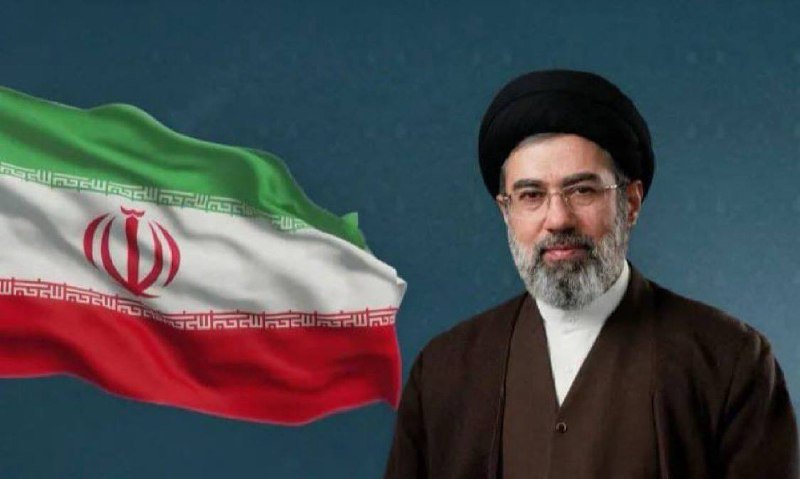
At 04:20 UTC on 7 July 2026 the road between Jamkaran Mosque and the shrine of Fatima Masoumeh in the holy city of Qom was already a river of black. By 04:44 UTC the Islamic Republic's flag over the shrine sat at half-mast, with mourners photographed at its base. By 05:14 UTC Fars News Agency was broadcasting aerial stills of a crowd so dense the camera struggled to resolve individual bodies. By 06:28 UTC, mourners had reached the city limits for the last appearance of the figure Iranian state media refers to, simply and repeatedly, as the Martyr of the Revolution.
A million-person funeral is, in any era, news. In Iran in July 2026 it is also a test of how a particular kind of Western newsroom processes information that does not fit its preferred vocabulary.
What the wires received
The footage moves from an English-language desk's perspective through a narrow funnel. Telegram channels operated by Fars and by the office of the Supreme Leader publish the raw imagery; Reuters, AFP and the BBC typically license a handful of frames for the picture desks and file short wire copy naming the city, the date and the size of the gathering. That copy tends to land in the middle of a longer running brief on Iranian domestic politics, security, or succession — never as the lead.
There is a reason for that, and the reason is structural. The English-language wire template for Iran has, for two decades, organised itself around three subjects: nuclear capability, regional armed partners, and the legitimacy of the state. A mass religious funeral in Qom sits awkwardly across all three. It is a domestic political event; it is not, in the strict sense, a proliferation story; and its scale tends to complicate the standard assumption that the regime governs only through coercion rather than through genuine, if contested, public conviction.
The framing the funnel produces
The result, on a typical morning, is a wire paragraph that reads something like this: state-aligned media broadcast footage of large crowds in Qom for the funeral of [name], a figure described by Iranian outlets as a martyr; independent verification of attendance figures is not possible; analysts [quoted without specifics] said the display was intended to project strength amid [regional / sanctions / domestic] pressure.
Every clause in that paragraph is defensible. None of it is wrong. And almost none of it tells the reader what the people in the aerial footage were actually doing — which, as the Fars clips and the Khamenei office channel show, was grieving in a manner that registers as unmistakably religious, with the half-mast flag, the women in chador, the men in black, the chanting that audio from the Telegram channels corroborates. The granular texture of the event gets compressed into a single beat about projection.
What this leaves off the page
Two things, principally. The first is the sheer demographic evidence of the footage itself: a city of roughly 1.2 million accommodating a gathering that visibly overflows its main arteries between 04:00 and 07:00 UTC. The second is the vocabulary the mourners are using. "Martyr of the Revolution" is not a state-coined phrase imposed on a passive public; it is a category Iranian Shia political culture has been building for four decades, with its own hagiography, its own commemorative calendar, and its own internal disputes about who qualifies.
When a Western outlet elides that vocabulary in favour of "described by Iranian outlets as a martyr," it is not neutral. It is a translation choice — and a defensive one. It protects the writer from being seen to endorse a claim the rest of their coverage elsewhere denies. The price is that the reader finishes the brief with no purchase on what was actually felt on the road between Jamkaran and Fatima Masoumeh at five in the morning UTC.
Why the absence matters
Editorial weight is allocated, not measured. When a million people appear in a public square and the resulting English-language copy is fifteen lines at the foot of a regional brief, the implicit message to the reader is: this is not central. When the same volume of crowd in any European capital would produce a lead, a sidebar, a profile of the deceased and a guest essay, the asymmetry tells you something about whose political life is treated as self-explanatory and whose is treated as opaque.
That asymmetry has consequences. It shapes which sanctions regimes Western publics tolerate; it shapes which Iranian actors get treated as legitimate interlocutors and which get treated as men to be removed; and it shapes, more quietly, which deaths in Qom get mourned in the Anglosphere's imagination and which do not. None of this requires the writer to endorse the Iranian state's self-description. It requires only that the writer register that a million people gathered, and ask why that register is so routinely underplayed.
What we verified, what we could not
The aerial footage, the half-mast flag, and the route between Jamkaran Mosque and the Fatima Masoumeh shrine are confirmed across Fars News Agency's Telegram channel and the Arabic-language Khamenei office channel in the 04:20–06:28 UTC window on 7 July 2026. The identity of the deceased, the cause of death, and any official Iranian state obituary are not contained in the source material and this publication does not speculate on them. Attendance figures cannot be independently verified from Telegram stills alone; the order-of-magnitude claim — that the crowd substantially exceeded the routine religious foot traffic in the city — is consistent with the footage.
The structural point stands regardless of the identity of the man in the coffin. A Western news ecosystem that cannot render a million-person Shia political funeral in anything other than defensive translation is, on this beat, working at the limit of its frame.
This publication's editorial position is that facts on the ground — including crowd size, religious vocabulary, and the internal categories through which Iranians describe their own dead — belong in the lead, not in the footnote. Sources are listed below; readers can verify the footage directly.
Wire provenance
This editorial synthesis draws on the following public wire/social posts:
- https://t.me/farsna
- https://t.me/farsna
- https://t.me/farsna
- https://t.me/Khamenei_arabi
- https://t.me/Khamenei_arabi