Samsung's 19-fold profit jump lands with a thud: inside the AI memory squeeze
Samsung Electronics posted a 19-fold year-on-year surge in second-quarter operating profit on the back of an acute memory shortage, yet its shares slid as investors questioned whether the AI-led boom can sustain itself beyond a single cycle.
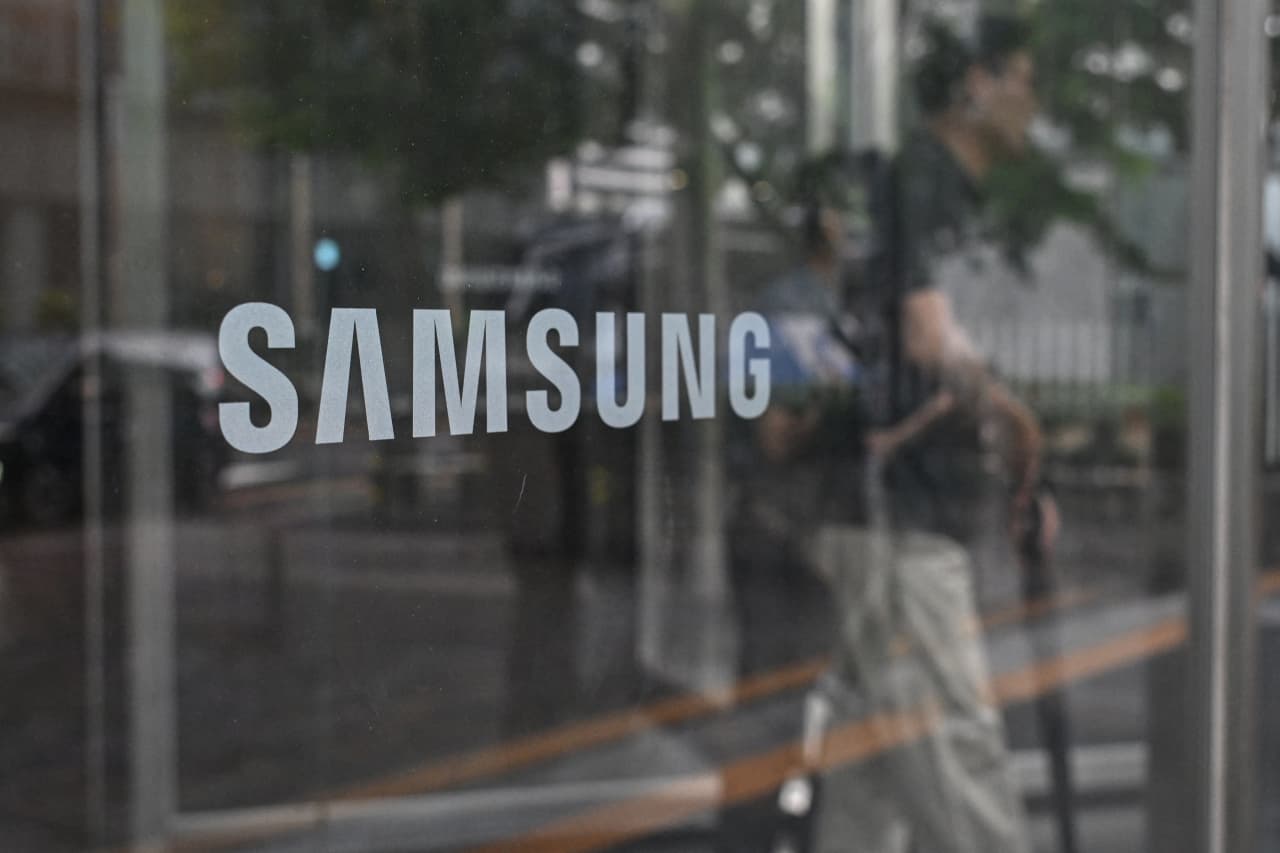
At 05:05 UTC on 7 July 2026, Reuters moved a short, telling paragraph across the wires: Samsung Electronics had flagged a 19-fold jump in second-quarter operating profit from a year earlier, surpassing the combined earnings of the previous three years. Within minutes, Nikkei Asia, citing the same guidance, put a number on it — 89.4 trillion won, or roughly $58.4 billion. By the close of the Seoul session, the stock was lower. The headline number, the kind that ordinarily sends a hardware bellwether through the roof, instead dragged it down. The market had been primed to celebrate, and celebrated briefly. Then it began to ask the obvious question: what comes after this quarter?
That reaction is the story. Samsung's results are not a freak event. They are the clearest read yet on a memory market that has, over the past eighteen months, slid from chronic oversupply into a structural shortage driven by the build-out of artificial-intelligence infrastructure. DRAM and high-bandwidth memory — the unglamorous commodities that nonetheless sit inside every modern AI accelerator — have become the new chokepoint. The same pattern that lifted foundry rivals and the small set of advanced-packaging houses now lifts the memory incumbents, with the twist that a memory cycle is historically more violent, and more reversible, than a logic cycle. The market is pricing that volatility back in.
The numbers, and the gap behind them
Samsung's second-quarter operating profit of 89.4 trillion won is, on the face of it, a once-in-a-generation print. Reuters, citing the company's preliminary guidance, framed it as a 19-fold year-on-year increase and one that exceeds the company's combined earnings across 2023, 2024 and the first nine months of 2025. Nikkei Asia's dispatch at 00:31 UTC on the same day carried the figure directly, alongside the working hypothesis that a continuing memory-chip shortage is the proximate cause.
Two features of the print stand out. First, the magnitude. In a single quarter, Samsung has earned more from memory than it did across three lean years. Second, the price action. The shares slid on the news — a pattern that, in mature technology markets, almost always signals that the headline beat already sat inside expectations. Reuters's reporting explicitly noted that the result "failed to ease concerns about the durability of the AI-driven chip" rally. Read carefully, that is a confirmation that the buy side had already moved past the second-quarter beat and was interrogating the slope of the curve into the second half of 2026 and beyond.
The Korean conglomerate is not, on this evidence, misreporting. Its customers — hyperscalers, AI-server OEMs, consumer-electronics brands rebuilding inventory — are paying elevated prices for the memory products they cannot do without. The shortage is real. The question is how long a shortage induced by demand pull can persist once customer inventories normalise and capacity additions come back online.
The squeeze is upstream, not downstream
The framing that comes most readily to Western wires — and that Samsung's own communications echo — is that the company is a primary beneficiary of the AI build-out. The framing that gets less attention is that Samsung, alongside SK hynix and Micron, is also the bottleneck that determines how fast that build-out proceeds. High-bandwidth memory, in particular, is the constraining input for the accelerators sold by Nvidia and AMD and for the custom silicon designed in-house at the largest cloud platforms. Each generation of accelerator raises the HBM content per unit, and the qualifying capacity for advanced-stack HBM is concentrated in three vendors globally.
This is not a temporary mismatch. It is a function of how few fabs have the precision lithography, the advanced-packaging throughput, and the yield maturity needed to ship HBM3E and the next generation at the volumes hyperscalers are willing to underwrite. Samsung, after a slower qualification cycle than some rivals, is now back in the mix at the high end. That is the source of the 89.4 trillion won. It is also the source of the volatility: a single disqualification at a single hyperscaler, or a faster ramp at a competitor, can swing the trajectory inside two quarters.
The Nikkei-led reporting on the shortage frames it as "continuing" rather than peaking. Reuters's framing emphasises durability concerns. The two are not in conflict; they are describing the same curve from different ends. The shortage continues, and that is why the print is what it is. The shortage is also widely understood to be finite, and that is why the share price fell.
The cycle question
Memory has always been the most cyclical corner of semiconductors. DRAM in particular has run through boom-bust cycles roughly every three to four years, each one erasing the prior peak before the next peak arrives higher still. The current cycle is unusual in two respects. First, the demand driver — AI training and inference workloads — is qualitatively different from the PC and smartphone cycles of the past. Second, the supply side is more consolidated than at any point in two decades, with three vendors controlling effectively all advanced-node DRAM and HBM.
That consolidation does not, on its own, break the cycle. It changes the shape of it. With fewer competitors, price discipline tends to hold for longer at the top. With more concentrated customer demand from a handful of hyperscalers, however, the bargaining power at the bottom of the cycle can flip faster than the historical pattern suggests. The market is, in effect, trying to price a cycle that has the demand profile of a structural shortage and the supply elasticity of a concentrated oligopoly. The two features point in opposite directions.
The Reuters reporting flags the durability question without resolving it. The Nikkei reporting flags the shortage without committing to its duration. The honest read is that both can be true simultaneously: the shortage continues into the second half of 2026, and the durability of the cycle beyond the next twelve to eighteen months remains an open question that the second-quarter print alone cannot settle.
Stakes and the reader take-away
The stakes for the Korean conglomerate are immediate. Samsung's device business — smartphones, consumer electronics — has spent years competing on volume in categories where Chinese vendors have grown market share and where component costs matter more than brand premium. The memory windfall does not repair that business; it subsidises it. The question for the company's management, and for Seoul policymakers, is whether the windfall is reinvested into next-node capacity and into the custom-foundry partnerships that would let Samsung compete at the leading edge of AI silicon, or whether it is returned to shareholders and consumed in the up-cycle.
The stakes for the broader industry are no less pointed. Hyperscalers building multi-year AI capacity plans are now exposed, in a way they have not been since the early-2020s foundry crunch, to memory pricing and allocation. Memory is, after a long period of being treated as a commodity input, reasserting itself as a strategic chokepoint. That reassertion is happening against a backdrop in which Beijing's industrial policy is funnelling state support into domestic memory and foundry capacity, and in which Washington's export-control regime has, over the past three years, restructured which firms can sell what to whom. The Korean incumbents sit in the middle of that geometry.
The reader take-away is this: the 89.4 trillion won quarter is real, and the underlying shortage is real. The market reaction — the share-price slide on the news — is the more informative signal. It tells you that the smart money has already moved on from celebrating the beat and is now pricing what happens when capacity catches up, or when a single hyperscaler decides to dual-source, or when the next geopolitical export-control announcement lands on a Friday afternoon. None of those contingencies are visible in the second-quarter numbers. All of them are visible in the share-price reaction.
Desk note: This piece treats the Samsung print as a window onto the AI memory cycle rather than as a corporate-earnings story in isolation. The wire ledes (Reuters, Nikkei Asia) carried the number and the share-price reaction; the structural reading — cycle shape, customer concentration, geopolitical exposure — is Monexus's frame. The central counterpoint, that the print is a one-off beat already priced in, is given equal weight to the structural shortage thesis; the judgment is that both are operating simultaneously, and that the share-price reaction is the cleaner signal of where the market has landed.
Wire provenance
This editorial synthesis draws on the following public wire/social posts:
- https://x.com/reuters/status/2074354160829353984
- https://t.me/NikkeiAsia
- https://t.me/nikkeiasia
- https://en.wikipedia.org/wiki/Samsung_Electronics
- https://en.wikipedia.org/wiki/High_Bandwidth_Memory
- https://en.wikipedia.org/wiki/Semiconductor_industry
- https://en.wikipedia.org/wiki/SK_Hynix