Strait of Hormuz flashpoint: who owns the chokepoint when a deal is breaking
Iran is warning it will fully control the Strait of Hormuz. Washington is calling Iranian moves unacceptable. With a deal apparently unravelling on both sides, the world's most important oil chokepoint is again a stage for escalation.
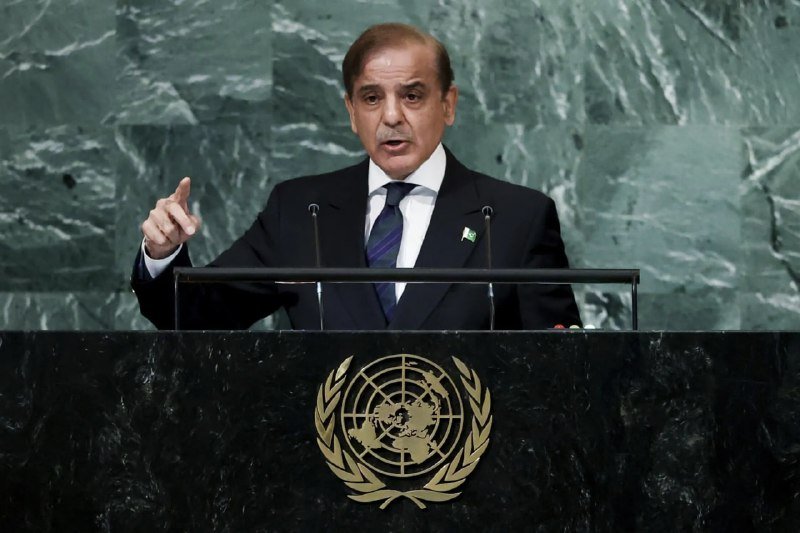
A long-simmering confrontation over the Strait of Hormuz broke into the open on 7 July 2026. By mid-afternoon, US officials had declared Iranian actions in the waterway "unacceptable" and warned of consequences; by evening, Iranian commentary asserted that Tehran, not Washington, would set the rules for passage — and that any breach of an underlying memorandum of understanding would void both the nuclear track and the prospect of normalisation. The shipping lane that carries a substantial share of seaborne oil and liquefied natural gas is once again a stage for escalation.
For two decades, the Strait of Hormuz has been the single most consequential energy chokepoint on the planet. Roughly a fifth of global oil passes through it on most days, alongside flows of LNG from the Gulf to Asian and European buyers. That concentration is why every administration in Washington — and every ruler in Tehran — treats the waterway less as a maritime commons than as a card to be played. The events of 7 July 2026 are the latest hand.
The MOU is the pivot
The immediate flashpoint is an agreement that neither side is willing to describe in detail. According to statements posted on X by Iranian political analyst S. M. Marandi at 18:42 UTC on 7 July 2026, "if the Trump regime refuses to uphold every one of its commitments under the MOU, then Iran will not abide by its own either," adding that any collapse of the understanding would mean "no nuclear deal — and no normalisation." Earlier in the day, at 19:44 UTC, Marandi wrote that "Iran will control the Strait of Hormuz, not Trump's regime," a sentence that reads as a claim of jurisdiction rather than a tactical threat. The framing in both posts is consistent: the memorandum is presented as a binding bilateral compact, and Washington is cast as the violator.
Washington's version of the same events is materially different. A Telegram channel aggregating diplomatic reporting, BRICS News, reported at 18:54 UTC that the US had termed "Iran's actions in the Strait of Hormuz" "unacceptable" and warned of "consequences." The same channel, at 18:30 UTC, said the threat level for the strait had been raised to "severe" following "Iranian attacks on oil tankers despite using US Navy-protected routes" — a characterisation that puts Iranian forces squarely in the role of aggressor against commercial traffic under American escort.
Who is doing what to whom
The substantive dispute turns on a single question: does the MOU give Iran a coordinating role over commercial shipping in the strait, or does it merely preserve freedom of navigation? Marandi's posts, sent at 19:53 UTC on 7 July 2026, assert the former: "all ships must coordinate with Iran in order to travel through the Strait of Hormuz," and accuse the Trump administration of having "violated the MOU" by "opening a route for ships to undermine" the arrangement. If that reading is accurate, Iran's recent moves — the tanker attacks referenced by BRICS News — are a unilateral enforcement of an agreement Washington has been quietly evading. If it is not, Iran is extracting concessions on the water that no sovereign right entitles it to.
The asymmetry of disclosure leaves both readings in play. The MOU's text has not been published in full. Iranian messaging, delivered through commentators rather than official spokespeople, makes maximal claims about its scope. American messaging, delivered through aggregators and brief remarks, makes maximal claims about Iranian aggression. Neither side has produced documentary evidence on the central question.
Why this matters beyond the Gulf
The structural stakes run through the price of crude and the architecture of sanctions. A sustained closure or sustained harassment of the strait would tighten the seaborne market, lift freight and insurance rates across Asia and Europe, and hand Tehran leverage over the same buyers who have spent three decades building alternatives. For the United States, allowing Iran to set the terms of passage through international waters would mark a quieter but more durable defeat than any single sanctions round: it would mean that the guarantor of maritime commons in the Gulf can be deterred, ship by ship, without a shot at a major platform.
There is also a diplomatic layer. The nuclear track, whatever its current temperature, is tethered in Marandi's telling to "normalisation" — a word that implies re-entry into the global financial system, unfreezing of reserves, and the political rehabilitation of the Islamic Republic. Treat the strait as a separate file and the deal can survive a tanker incident. Treat it as collateral, as the Iranian commentary suggests Tehran now does, and the entire edifice is one provocative convoy away from collapse.
A serious paragraph on the stakes
If the dominant framing — Iranian aggression against escorted shipping — holds, the US faces a choice between escalation and acquiescence that no president welcomes in an election cycle. If the Iranian framing holds — Washington as MOU violator — the regional cost of any American response climbs, because Gulf partners will read enforcement as protection of a US-imposed order rather than defence of a shared maritime norm. Either reading makes a miscalculation in the waterway unusually cheap for one side and unusually expensive for the other. That is the worst ratio for stability.
What we do not know, and what to watch
Three things remain genuinely uncertain on the evidence available. First, the text and binding scope of the MOU itself. Both sides are talking about it; neither has shown it. Second, the operational reality on the water: were tankers attacked while under US Navy escort, as the aggregator reporting suggests, or were they diverted and then boarded, as the Iranian framing implies? The two accounts cannot both be literally true. Third, whether the BRICS News channel, which is acting as a wire in this thread, has access to official US readout or is relaying commentary attributed to officials; the channel's provenance is unclear and its single-sentence framing is consistent with paraphrase rather than direct quotation.
The thread to watch next is the wording of any official Iranian foreign ministry statement, and any movement of US Central Command naval task forces in the Gulf. Until then, the strait sits at "severe" threat level, the nuclear file sits adjacent to the tanker file, and the world prices the oil accordingly.
Monexus framed this as a structural dispute over a chokepoint, not a morality play: the same wire that published "unacceptable" also published "severe," and the Iranian counter-frame is given equal weight and equal scrutiny. The aim is to let a reader see both hands before deciding which one is bluffing.
Wire provenance
This editorial synthesis draws on the following public wire/social posts:
- https://x.com/s_m_marandi/status/2074542742416371713
- https://x.com/s_m_marandi/status/2074541998870610312
- https://t.me/BRICSNews/20745411223344556677
- https://x.com/s_m_marandi/status/20745409876543211234
- https://t.me/BRICSNews/20745398765432109876