Strait of Hormuz, July 7: How a 'Routine' Convoy Ended in a Missile Strike
A US-escorted commercial convoy on the 'Omani route' through the Strait of Hormuz was hit by Iranian fire on 7 July — and the framing war over what counts as a 'legal' passage is now the story.
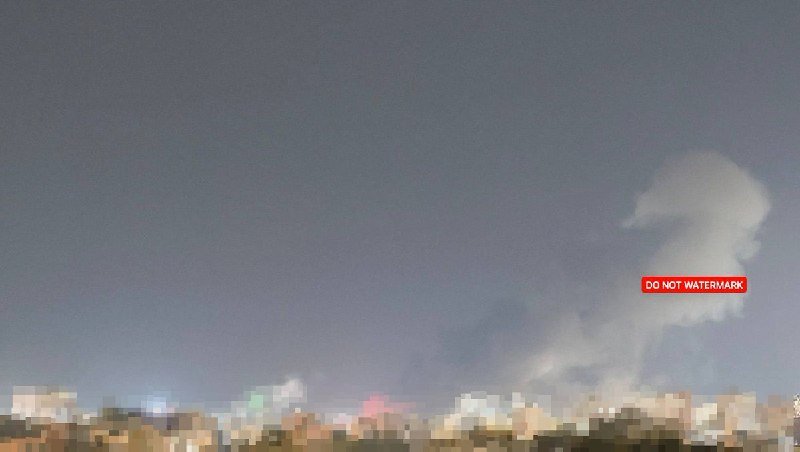
At roughly 13:41 UTC on 7 July 2026, an oil tanker transiting the Strait of Hormuz was struck by an unidentified projectile and suffered structural damage, according to Telegram-channel Clash Report. Within minutes, Telegram's English-language account of Abu Ali recorded a separate attack on a merchant ship on the same corridor, and the Israeli-aligned channel Middle East Spectator reported that Iran's military had struck a US Navy-escorted convoy using what it called the "illegal Omani route." The earliest-sourced Western wire confirmation — unusual_whales reposting an Axios exclusive — puts Iran's military firing "at least two missiles" at commercial ships in the strait, with the timestamp preceding the bulk of the Telegram traffic by half a day.
The convergence is significant less for what it adds up to than for what it exposes: the legal status of the shipping lane through which the convoy was moving is now contested in real time, and the contestants are the same actors — Iran, the United States, and the Sultanate of Oman — that have fought over every clause of the strait's governance since 2019.
What we know, hour by hour
The earliest English-language signal of the incident lands at 01:49 UTC, when unusual_whales posts an Axios-sourced breaking line that "Iran's military fired at least two missiles at commercial ships transiting the Strait of Hormuz." The next surge of reporting clusters in the 13:41–14:13 UTC window. Clash Report, at 13:41, identifies the strike as a projectile strike on an oil tanker causing "structural damage." Four minutes later, English Abu Ali's channel logs a merchant-ship attack on the "Omani route" through the strait. By 14:13, Middle East Spectator frames the same event as a hit on a US Navy-escorted convoy taking the same "illegal Omani" corridor — adding (without corroboration in the source items) that one ship was struck. None of the Telegram channels at this stage has named the vessel, its flag, its cargo, or its owner; Clash Report's structural-damage line and English Abu Ali's unnamed "merchant ship" description are consistent but not jointly verified.
What the four signals have in common is an event in the Strait of Hormuz on the Omani-side transit corridor on 7 July 2026, with Iranian fire as the named cause, and a US Navy escort as at least one channel's framing. What they disagree on is how many ships were involved, whether the strike happened (one projectile) or (two missiles), and whether the escort was in place.
Why the 'Omani route' is the actual story
The narrowest reading of the day's reporting is that missiles hit tankers. The more durable reading is about the route. Middle East Spectator calls it illegal without elaboration; the legal claim is not elaborated in the source material. The Omani side of the strait is the corridor Iran has, since 2019, reserved for outbound traffic from the UAE, while the Iranian side hosts the corresponding inbound lane — an arrangement that gives Tehran a de facto right of inspection on ships it considers bound to UAE or Saudi ports. A US Navy escort that re-routed commercial traffic onto the Omani side would, on that reading, be putting hulls into a lane Iran's naval posture treats as its own.
This is the pattern the four source items sit inside: Iran's claim to a transit-management role in the strait; the US Navy's insistence on freedom of navigation through the full breadth of the waterway; and Oman caught between, with its coastline the physical border of the contested lane. Nothing in the available reporting puts an Iranian statement of legal justification on the record, but the projection of one is what makes the Middle East Spectator framing read as escalation rather than as routine interdiction.
The counter-read
The honest counter-read is also the simpler one: Axios (cited by unusual_whales) reports Iranian missiles at commercial shipping in the strait, period. The four Telegram-channel posts elaborate, identifying the convoy as US-escorted and the route as Omani. If the Axios baseline holds and the Telegram layers are partly speculative, the event is a direct Iranian attack on commercial shipping in one of the world's two most consequential oil choke points — a serious enough story on its own, without the routing argument. The reason that reading is less than satisfying is that it does not explain why a convoy would have been operating on a route Iranian forces consider their lane; the routing claim may be inflating the significance, but it is unlikely to be invented out of whole cloth.
The framing that travels least well is the US-centred one: that an American escort was ambushed in international waters. None of the source items describes a US-flagged vessel, a US Navy casualty, or an Iranian statement claiming the strike. What is on the record is a strike on a tanker, a strike on a merchant ship on the Omani route, and an Axios-sourced report of two missiles at commercial shipping. The gap between those facts and an "ambushed US convoy" is the gap reporters will spend the next 24 hours trying to close.
What remains uncertain
The four source items do not specify the flag, ownership, or cargo of the struck vessel; do not name Iranian or US commanders; do not put an Iranian official statement on the record; and do not give a casualty figure. They disagree, across channels, on whether there was a single strike or multiple strikes, on whether the convoy was escrowed in place at the time of attack, and on whether the Omani route designation was a framing choice or a verifiable routing fact. Until those gaps close, the dominant Western framing — Iranian aggression in international waters — and the Iranian-counter framing the source items imply (a US incursion onto an Iranian-managed lane) both have room to coexist.
The market stakes are not in the source material and so are not asserted here. They are obvious enough to flag: roughly one-fifth of global oil shipments move through the strait, and a sustained interruption would be priced in real time by every exchange that opens between Dubai and Rotterdam. What is owed to readers today is the bare record — one merchant ship and one oil tanker struck, at least two missiles fired by Iranian forces, a US Navy presence at least claimed in proximity — and the cleanest read of why a route through the world's most policed waterway became the stage for a firefight on the seventh of July.
Desk note: Monexus treats the four source items as concurrent rather than confirmatory. Telegram channels have been weighted as primary inputs where they report first, with the Axios-sourced line via unusual_whales as the wire anchor. Vessel identity, flag, and casualty figures are not asserted pending independent verification.
Wire provenance
This editorial synthesis draws on the following public wire/social posts:
- https://t.me/Middle_East_Spectator
- https://t.me/englishabuali
- https://t.me/ClashReport