A Tanker Burns in the Strait of Hormuz, and the World Watches to See Who Lit the Match
An oil tanker was hit by an unknown projectile east of Oman overnight, with U.S. officials pointing the finger at Iran. The incident lands at the centre of a wider contest over a chokepoint that carries a fifth of global oil.
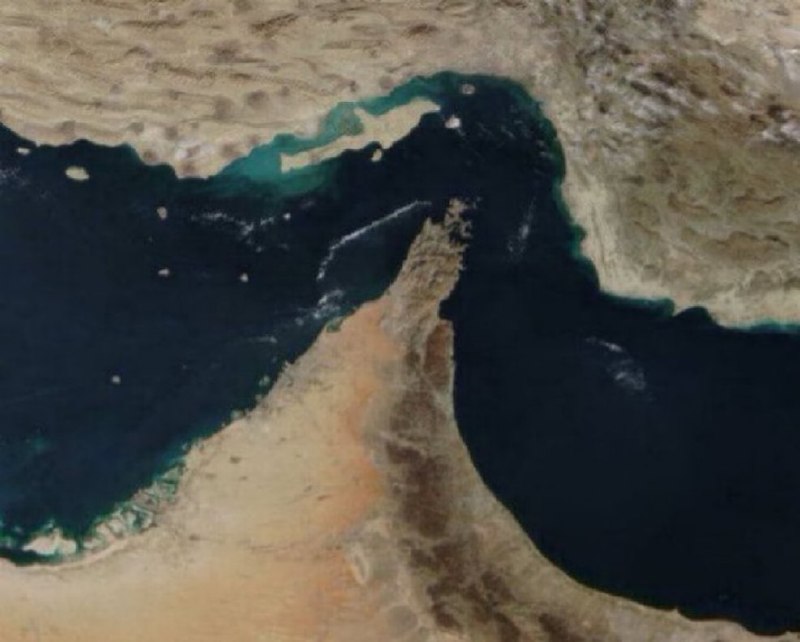
A southbound oil tanker took a projectile to the port side at roughly 23:50 UTC on 6 July 2026, about eight nautical miles east of the Omani port of Limah, in the Strait of Hormuz. The United Kingdom Maritime Trade Operations office confirmed the strike; the fire was later contained, and the crew emerged with no reported casualties. Hours later, U.S. officials told N12, Israel's main news outlet, that Iran's military had fired at least two missiles at commercial ships transiting the same corridor on Monday night.
The framing matters as much as the fire. A tanker hit by an "unknown projectile" is a maritime incident. A tanker hit by Iranian-fired missiles, on U.S. authority, is a casus belli — or at least the prelude to one. Which version the world accepts will turn on evidence that, as of Tuesday, neither UKMTO nor the Iranian side has put on the table.
What the wire says
The initial bulletin came from UKMTO, the British-run maritime security cell in Dubai that has been the de facto early-warning channel for shipping in the Gulf for two decades. The agency's guidance was deliberately minimal: a projectile, a fire, no casualties, the vessel continuing to operate. UKMTO does not assign blame; that is a feature, not a bug — its operational value to merchant crews depends on neutrality.
Blame arrived via Israel. N12, citing U.S. officials, attributed the firing to Iran's military and put the count at "at least two missiles." That sequencing — a thin UKMTO notice followed swiftly by a high-confidence attribution from a foreign ally — is familiar from the last several years of Gulf incidents. It also compresses the evidentiary gap into the few hours between the two reports.
Deutsche Welle's reporting on the strike ran with the UKMTO framing and the Limah waypoint, repeating the cautious language. The contrast is the point: the German broadcaster's account reads as a maritime event; the Israeli-led account reads as a deliberate act of war.
Why Hormuz still matters
Roughly a fifth of the world's seaborne crude transits the strait between Oman and Iran each day. The chokepoint is not a metaphor — it is a 21-mile-wide channel with two 2-mile-wide shipping lanes separated by a buffer. One in five barrels of oil moves through it; one-third of liquefied natural gas does the same. There is no pipeline alternative at scale.
That structural fact is what turns a burning tanker into a market-moving event. Brent crude, freight rates, war-risk insurance premiums, and the premium on Dubai crude relative to Brent will all move on the attribution, not just the impact. And the actors who gain and lose from that movement are not always the actors named in the early wire copy.
The contest over the corridor
The Strait of Hormuz has been a perennial theatre of undeclared pressure since the 1980s. Iran's Revolutionary Guard naval forces have seized tankers, shadowed vessels, and staged drone inspections. Western navies, including U.S. Fifth Fleet and a British maritime force based in Bahrain, have run escort operations through the corridor and pushed Iran-aligned Huthi attacks down into the Red Sea as a countervailing pressure route.
A missile strike on a commercial vessel would represent a step up that ladder. Drone and seizure campaigns are deniable; missile launches leave radar tracks, debris, and burn patterns. If the Iranian attribution holds, the regional response — coordinated through the Combined Maritime Forces and the United Arab Emirates' own intelligence channels — would not be limited to a sanctions round. Israel's navy sits within range, and the U.S. carrier presence in the Gulf has not been quietly drawn down.
What we cannot yet say
Until Iran's foreign ministry or military speaks — and that briefing, when it comes, is likely to be carried in full by Iranian state media — the attribution rests on the N12 report. Tehran has historically offered alternative explanations for incidents in the strait, including the framing that such attacks are staged to justify Western escalation. State-affiliated outlets are likely to surface a competing narrative within hours; whether it lands credibly depends on whether the wreckage and any recovered ordnance tell a consistent story.
The crew is alive. The tanker is intact. The fire appears to have been contained. These are the facts no party contests. Around them sit two competing readings: a dangerous but precedented Iranian escalation, or another staged pretext in a long corridor pressure campaign. The market will price the more alarming of the two until evidence dislodges it.
Desk note: Monexus leads with the UKMTO notice and the geographic specifics (eight nautical miles east of Limah, Oman), treats the Iranian attribution as a sourced attribution — not a fact — and surfaces the structural stakes of the chokepoint without naming Iran as aggressor or victim before the evidence settles. Where wire copy collapsed the timeline, we separated it.
Wire provenance
This editorial synthesis draws on the following public wire/social posts:
- https://twitter.com/Osint613/status/207430685
- https://t.me/s/osintlive