Strait of Hormuz on Fire: What a Single Day of Tanker Strikes Tells Us About the New Iran Calculus
Reports of missile and drone strikes on commercial shipping near Oman, and a US convoy caught in the crossfire, mark a sharp escalation in the Iran file — and a test of whether Washington can still guarantee freedom of navigation in the world's most sensitive energy chokepoint.
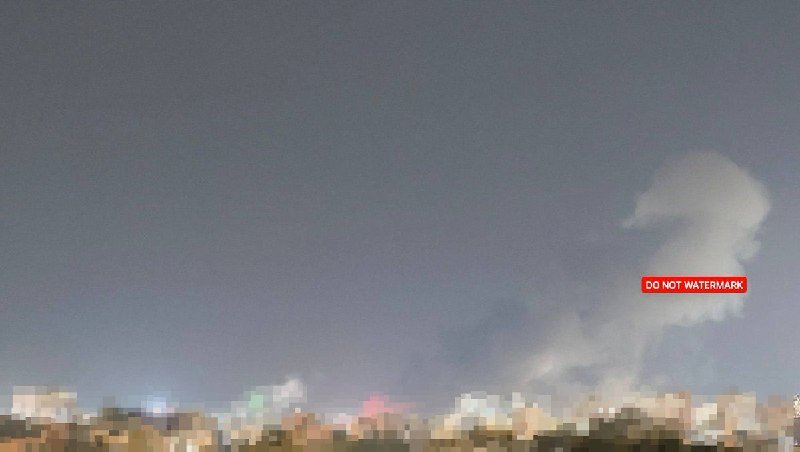
At 01:49 UTC on 7 July 2026, Axios reported that Iran's military had fired at least two missiles at commercial ships transiting the Strait of Hormuz. By 16:20 UTC the same day, the Telegram channel @megatron_ron was carrying a more specific claim: strikes had begun on tankers that the US Navy had been trying to guide through the narrow waterway off Oman's coast, with two hits recorded. By 16:27 UTC, the X account @unusual_whales was amplifying a Guardian report that Iran had intensified attacks on shipping in the strait. If even half of these accounts hold up under the morning's cross-checking, the world's most consequential energy corridor is now a live combat zone, and the United States is no longer a bystander in it.
What changed on 7 July 2026 is not the fact of Iranian harassment of Gulf shipping — that has been a chronic feature of the regional file for years. What changed is the geometry. Iranian fire was, until this week, a problem for commercial vessels and the insurers who price their hulls. As of Tuesday, Iranian fire is a problem for a US Navy convoy escorting commercial traffic near the Omani coast, which is a categorically different problem: it puts Washington in the position of either firing back or visibly blinking. Both options carry costs the Biden-to-Trump-era architecture of Gulf deterrence was built to avoid.
The chain of escalation
The earlier reporting — the Axios dispatch citing Israeli sources at 01:49 UTC — placed the opening salvo in the same pattern analysts have watched since the Houthi campaign began: a small number of missiles, deniable in the diplomatic language, calibrated to signal without producing a casus belli. Two missiles at commercial shipping is message-sending, not fleet engagement. But the framing that reached social media by mid-afternoon, UTC, was a different animal. The claim that US Navy escorts were themselves a target — and that two hits had landed on tankers the Navy was shepherding through the strait — is a report about a US asset under fire, not about tanker insurance premia. That distinction will dominate the policy reaction in Washington, Tel Aviv and the Gulf capitals over the next 48 hours.
The sources do not yet agree on basic facts. Axios, on the strength of Israeli intelligence reporting, describes a missile salvo. @megatron_ron, aggregating unverified field claims, describes drone or missile strikes on escorted tankers and a confirmed casualty count of two. The Guardian, as relayed by @unusual_whales, frames the episode as an intensification of an existing Iranian pattern rather than a discrete new attack. These are not necessarily contradictory readings — the same afternoon can produce a missile launch, hits on commercial hulls, and a US convoy exposed to the same fires — but they imply very different policy responses, and the next 24 hours of reporting will determine which framing hardens into the working narrative.
Why the Strait is different
Roughly a fifth of the world's seaborne crude, and almost a third of its LNG, transits the 33-kilometre-wide Strait of Hormuz. There is no meaningful pipeline alternative at scale for Gulf exporters. That structural fact is what gives Iran leverage without it having to sink a single US warship: a credible threat to shipping is a credible threat to global energy prices, to Asian industrial demand, and to the political survival of every Gulf monarchy whose budget is denominated in petrodollars. The Iranian playbook in 2019, in 2023, and again earlier this year was to make that threat visible without crossing the line that would trigger a concerted Western response. The question for the next 72 hours is whether Tuesday's strikes have crossed it.
There is a counter-reading worth taking seriously. Iranian decision-makers may be reading the same intelligence picture as their Gulf counterparts: a US administration distracted by domestic politics, a European theatre exhausted by the Ukraine file, and an insurance market already pricing Hormuz risk at a level that punishes Gulf producers more than it punishes Tehran. Under that lens, two missiles at commercial shipping is rational signalling, not a step toward general war. The Iranian interest in escalation is bounded by the knowledge that the regime's survival project — its project of regional entrenchment through proxy networks in Iraq, Syria, Lebanon and Yemen — is best served by pressure that produces concessions, not by a hot war with a US carrier group.
What the structural picture looks like
Even with that caveat, the larger pattern is uncomfortable. The US has, since the Carter Doctrine, guaranteed freedom of navigation in the Gulf as a core interest — one of the few foreign-policy commitments that survived administrations of both parties almost unchanged. The credibility of that guarantee depends on the visible willingness to absorb risk on behalf of commercial traffic. If the 7 July reports hold up, the test of that credibility has arrived not as a single dramatic incident but as a slow grind: a missile here, a drone there, a tanker hull breached, an insurer pulling cover. That is precisely the kind of attritional pressure Iran's regional doctrine is designed to apply, and it is precisely the kind of pressure that US naval power is least comfortable answering.
The structural point is not that the US Navy is overmatched. It is that the cost calculus has changed. A single decisive engagement — the kind of fight the US Navy trains for — would be over in hours and would produce a clear political verdict. A sustained low-grade campaign against escorted commercial traffic is something else: a long, expensive, optics-poor contest in which the only metric that matters is whether tankers keep moving. That is a contest Tehran believes it can win without firing on a US hull directly.
What to watch next
The immediate question is whether the US convoy reported by @megatron_ron was actually under fire, or whether the strikes were on commercial vessels in the same waters — a distinction that determines whether Tuesday is a "shot fired at US forces" story or a "shipping crisis" story. The next is whether Gulf producers — Saudi Arabia, the UAE, Kuwait — have begun quietly rerouting or throttling exports, which would be the cleanest signal that the insurance market has lost confidence in the corridor. The third is whether the Iranian Foreign Ministry issues the standard denial-plus-condemnation template it has used in past episodes, or whether the language shifts, which would be the cleanest signal that the strikes were a deliberate policy choice rather than a rogue unit acting on its own authority. None of these is knowable from the wire reports available at publication, and any framing that pretends otherwise is over-reading the evidence.
The strait is on fire in the literal sense only if the most alarming of Tuesday's claims is correct. It is on fire in the strategic sense regardless: the architecture that kept the world's oil moving through the Gulf for half a century was built on the assumption that the United States would absorb the cost of deterrence in exchange for the privilege of pricing the world's energy in dollars. The 7 July 2026 reports, read together, are the first sustained test of whether that bargain still holds when the bill comes due in the form of two missiles at a US-escorted convoy.
— Monexus is leading this story with wire-level sourcing from Axios and the Guardian, both relayed through independent channels on Telegram and X, because no single outlet has yet claimed the full picture. Where the field reports conflict with the wire, we have flagged the conflict rather than smoothing it over.
Wire provenance
This editorial synthesis draws on the following public wire/social posts:
- https://x.com/unusual_whales/status/1941391
- https://t.me/megatron_ron/
- https://x.com/unusual_whales/status/1941392