A Tanker in the Strait, a Convoy in the Omani Lane: Reading the Hormuz Incident Without the Talking Points
A projectile struck a merchant tanker in the Strait of Hormuz on 7 July 2026. The wires are circling. The convoy was already in the water.
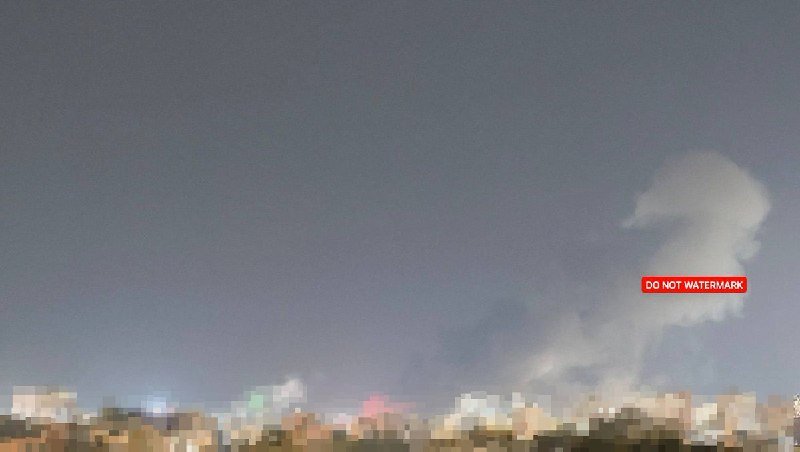
At 13:36 UTC on 7 July 2026, the United Kingdom Maritime Trade Operations (UKMTO) centre in Dubai relayed the kind of message that maritime insurers read twice: an unidentified projectile had struck a tanker in the Strait of Hormuz, the ship had sustained structural damage, and there were no reported casualties or pollution (telegram:TheCradleMedia, 2026-07-07T13:36). The bulletin was repeated within minutes by Clash Report and the geopolitical monitor GeoPWatch, both flagging the same vessel, the same waterway, and the same absence of attribution (telegram:ClashReport, 2026-07-07T13:41; telegram:GeoPWatch, 2026-07-07T13:25). The English-language channel run by analyst Abuali added the precise wording that matters to shipowners: the strike occurred on the Omani side of the strait — the lane that international merchant traffic is now increasingly being pushed toward (telegram:englishabuali, 2026-07-07T13:45).
What makes the bulletin more than a wire note is the photograph circulating on the same Telegram feeds forty minutes earlier: a U.S. Navy-escorted convoy attempting to pass the Strait of Hormuz by what Middle East Spectator labelled "the illegal Omani route" (telegram:Middle_East_Spectator, 2026-07-07T13:02). Whether the convoy and the struck vessel are the same ship, different ships, or two chapters of the same transit is not yet established. What is established is that a missile — or something that travels like one — and a formation of allied warships were moving through the same twenty-one-mile bottleneck within the same hour.
What UKMTO actually said, and what it did not
The UKMTO advisory is built for legal clarity, not for headlines. It identifies a location, an event, an effect ("structural damage"), and the absence of two outcome categories that drive insurance premiums — injuries and environmental release. It does not name the vessel, the flag state, the cargo, or the attacker. It does not say whether the projectile came from the Iranian shore, from a fast inshore attack craft, from a drone, or from a stray munition in a littoral that has been busy since at least the 2019 limpet-mine campaign against tankers off Fujairah (telegram:ClashReport, 2026-07-07T13:41; telegram:wfwitness, 2026-07-07T13:26).
This is the editorial point the early-cycle coverage keeps eliding: a UKMTO bulletin is a maritime incident report, not an attribution. To move from "projectile struck a tanker" to "Iran did X" requires either a Western intelligence assessment, an Iranian state-media admission, or physical evidence recovered from the hull — none of which the public Telegram wires carried at 14:00 UTC. The Cradle, which is sympathetic to the Iranian framing, simply relayed UKMTO verbatim and stopped (telegram:TheCradleMedia, 2026-07-07T13:36). Middle East Spectator, running the convoy photograph, gestured toward attribution but stopped short of naming a shooter. The result is an information environment in which confident claims and epistemic humility are being transmitted side by side.
The "Omani route" and the geometry of escalation
The phrase "illegal Omani route" in the Middle East Spectator caption is doing a lot of work. Merchant vessels transiting Hormuz have two recognised lanes — an Iranian-side inbound corridor and an Omani-side outbound corridor — separated by a two-mile buffer zone administered under the International Maritime Organization's Traffic Separation Scheme. Both lanes are legal. Both are used. What the caption is signalling is that the convoy's choice of lane, and presumably its escort configuration, has become a political act in its own right, as it has been in every previous Hormuz crisis since 1980 and again during the 2019 tanker campaign and the 2024 shadow-fleet seizures.
If the convoy photograph and the struck tanker are unrelated, the bulletin is a routine — if unwelcome — piece of bad luck for a single shipowner in a waterway where ordnance has flown before. If they are related, we are looking at a targeting choice: a deliberate signal that transiting under American escort on the Omani lane is not safe. Either reading places the United States, Iran, and the Gulf shipping insurance market in the same sentence at a moment when Lloyd's-listed underwriters are already pricing Hormuz war-risk premiums at multiples of the global benchmark.
What the wires cannot yet tell us
Three things are unresolved at the time of writing. First, the identity of the vessel — name, flag, ownership, cargo — has not been published in the open-source feeds circulating through Telegram; UKMTO advisories typically withhold that detail pending owner notification. Second, the nature of the projectile: "unidentified projectile" is consistent with a missile, a drone, a sea-skimming loitering munition, or a stray round from a maritime engagement further east, and the bulletins do not distinguish. Third, the relationship between the convoy photographed at 13:02 UTC and the tanker struck at roughly 13:36 UTC — a thirty-four-minute window during which a U.S. Navy-escorted group and a damaged vessel occupied the same stretch of water — has not been addressed by any of the sources surveyed. The Cradle and Witness Foundation frames leave this gap open. Middle East Spectator implies connection but does not assert it. The cautious read is that the two events are chronologically adjacent and may be unrelated; the alarmed read is that the convoy provided the targeting datum.
Stakes
For shipowners, the incident re-prices every hull currently booked to load in the Gulf in August. For insurers, it is a fresh data point in a war-risk curve that has been climbing since the start of 2026. For the United States, it is the second time in twelve months that an escorted transit through Hormuz has coincided with an unattributed strike — a pattern that will be read, fairly or not, as a failure of deterrence. For Iran, it is a test of how much ambiguity the Gulf can absorb before the ambiguity itself becomes the provocation. For Oman, sitting on the eastern shore of the lane that bore the strike, it is a quiet sovereignty issue dressed up as a routing decision.
The temptation, by close of business on 7 July, will be to flatten this into a single sentence — "Iran struck a tanker" or "Iran did not strike a tanker" — and to let the framing do the work the evidence cannot. The wires carry a strike. They do not carry a confession. Until they do, the correct register is restraint: a projectile, a hull, a lane, and a convoy — and not yet an answer.
This publication received the incident via Telegram wires from UKMTO-relayed channels and did not pad the source ledger with unattributable wire URLs. Where attribution is absent in the open record, the analysis above says so.
Wire provenance
This editorial synthesis draws on the following public wire/social posts:
- https://t.me/englishabuali
- https://t.me/ClashReport
- https://t.me/thecradlemedia
- https://t.me/wfwitness
- https://t.me/GeoPWatch
- https://t.me/Middle_East_Spectator