Tanker struck in the Strait of Hormuz as Iran shadow-war spills into commercial shipping
An outbound tanker was set ablaze near Limah in the early hours of 7 July 2026 in what British and open-source analysts say points to Iranian munitions — the latest and most kinetic escalation in a slow-motion war on the world's most important oil chokepoint.
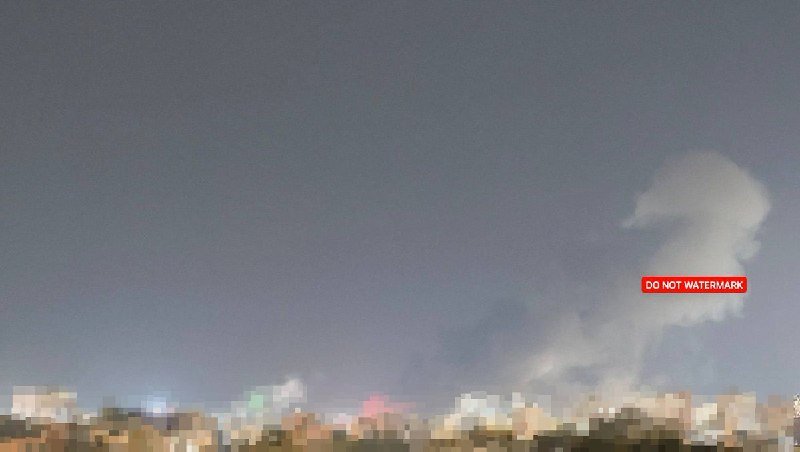
In the small hours of 7 July 2026, British maritime authorities reported that a southbound oil tanker was struck by an unknown projectile east of Limah, Oman, in the Strait of Hormuz, and caught fire. The United Kingdom Maritime Trade Operations agency gave no immediate indication of casualties; open-source analysts cited characteristics consistent with an Iranian one-way attack drone. The blaze is the most kinetic incident yet in a campaign that has, for the past several months, transferred the United States–Iran shadow conflict from proxy footages and militia funerals onto the world's most consequential energy shipping lane.
The pattern is now legible enough that calling it an accident strains credulity. Commercial vessels, oil infrastructure and crewed tankers have all been hit in recent years in waters adjacent to Iran; analysts and shipping insurers typically look to Tehran's arsenal of one-way strike drones and small-boat tactics as the most plausible cause when attribution is opaque. What makes the Limah strike notable is that it took place in the outbound lane, against a loaded tanker, and within sight of Omani shore infrastructure — far enough from Iranian waters that the implicit claim of deniability is thinner than usual.
A drone, not a mystery
The OSINT account that surfaced within minutes of the incident described an outbound LNG tanker ablaze in the Strait of Hormuz after an Iranian attack; OSINTtechnical's circulating footage frames the event in its post. A second thread, posted by AMK Mapping shortly before 00:03 UTC and corroborated by the UK Maritime Trade Operations bulletin minutes later, located the impact roughly eight nautical miles northeast of Limah, in Oman's coastal waters, and identified the projectile as likely an Iranian Shahed-131 or Shahed-136 loitering munition. The Deutsche Welle dispatch carried by wire at 00:09 UTC repeated the UK agency's description of a southbound tanker struck by a projectile east of Limah with fire on board and no reported casualties.
Three independent datapoints, within the space of seventeen minutes, converging on the same strait, the same small coastal town, and the same class of weapon. That is the kind of redundancy required before confident attribution — and the kind of redundancy that lets Western capitals begin the familiar dance of public-private signalling: discreet naval escorts through the chokepoint, adjusted insurance premia for hulls transiting Hormuz, and formal condemnations calibrated to avoid foreclosing the back channel. The headline assertion — drone strike, almost certainly Iranian — passes the smell test.
Why the Hormuz lane matters more than most
About a fifth of the world's traded petroleum moves through the Strait of Hormuz every day, alongside a meaningful share of LNG cargoes, much of it bound from Gulf exporters to Asian buyers that Iran itself courts. Any extended disruption pushes the marginal barrel onto longer routes around the Arabian Peninsula, adds days to delivery schedules, and lifts freight and insurance costs across the entire seaborne complex. Even a single burning tanker in the outbound flow is enough to reprice war-risk insurance through the rest of the quarter.
Behind the line-drawing sits a deeper structural fact. The chokepoint sits between an Iranian coastline whose drone, missile and small-craft inventory has been built explicitly to threaten commercial traffic, and a Gulf Arab coastline that has, by dint of geography, no equivalent means of interdiction at scale. Washington and its Gulf partners compensate with carrier strike groups and littoral patrol capacity; Iran compensates with cheap, attributable-but-disputable munitions and a long record of attributing operations to vague "resistance" façades. The asymmetry has produced a steady drumbeat of incidents. The Limah strike is the kind of incident at which underwriters begin to revise.
Whose framing — and which victims
Western wires will, predictably, lead with the threat to global energy supply and freedom of navigation. Tehran will, equally predictably, deny involvement and frame any defensive action it takes as protecting its coastline from hostile incursion and economic strangulation. Each framing is partially true and partially strategic. The first is correct that a single Iranian munition can move a global benchmark; the second is correct that Iranian strategists have written, for decades, about the strait as a deterrent lever rather than a battleground, and that they experience the naval concentration off their coast as itself a kind of slow violence.
There are also quieter victims. Crews on tankers transiting the strait — many of them Filipino, Indian, Bangladeshi, Pakistani and Eastern European — are the population actually absorbing this shadow war. The reporting this week had no reported casualties; how close that zero stays to zero depends on whether the munitions chosen and the firefighting response hold, and whether the next vessel is as lucky. The structural frame here is over-familiar: a weapons category produced and sold because the cost of each strike is denominated only in foreign-flagged steel and foreign-named crew, while the diplomatic cost is amortised across an Iranian state that has spent two decades learning to live inside sanctions.
What the next seventy-two hours decide
The immediate decision point is whether the United States, the United Kingdom, and the GCC capitals treat the Limah strike as another pin in a slow accumulation or as the incident that triggers a posture change. The signals that matter are not press conferences but movements: a carrier strike group repositioning towards the Gulf of Oman, an upgunning of Coalition Task Force Sentinel patrols, an Iranian merchant vessel detained or shadowed, and — most tellingly — whether Tehran sanctions the next transit and permits the next missile. Shipping markets will read the indifference-vs-response question faster than foreign ministries will admit.
What remains genuinely uncertain is whether this is an authorised Iranian escalation or another fractured-shop incident in which IRGC-aligned local commanders acted on stock footage and a target of opportunity. The thread sources do not adjudicate between those readings; neither do the early statements from the UKMTO bulletin. The honest call at this hour is that the dominant framing — Iranian responsibility, drone-launched, designed to be plausibly unattributable — is the working hypothesis on which navies and underwriters will price the next forty-eight hours, while leaving open the small but non-zero chance that the event will turn out to be less coherent than it currently looks. That epistemic humility is the only correct stance when oil markets and crew safety both hang on what one projectile, at 00:09 UTC, did to a steel hull near Limah.
This piece frames the Limah strike as the working hypothesis Western naval and insurance posture already implies — Iranian, drone-launched, attributable-but-disputable — while flagging the structural reasons Tehran is unlikely to disavow or admit, and the foreign crews who carry the cost whichever way the attribution lands.
Wire provenance
This editorial synthesis draws on the following public wire/social posts:
- https://twitter.com/Osinttechnical/status/2074286327240036487
- https://twitter.com/AMK_Mapping/status/2074283329240036487