Tehran sets terms for talks as Trump threats, Hormuz incident raise stakes
Iran says negotiations are conditional on Washington halting threats after a vessel was struck in the Strait of Hormuz and millions rallied behind the Supreme Leader.
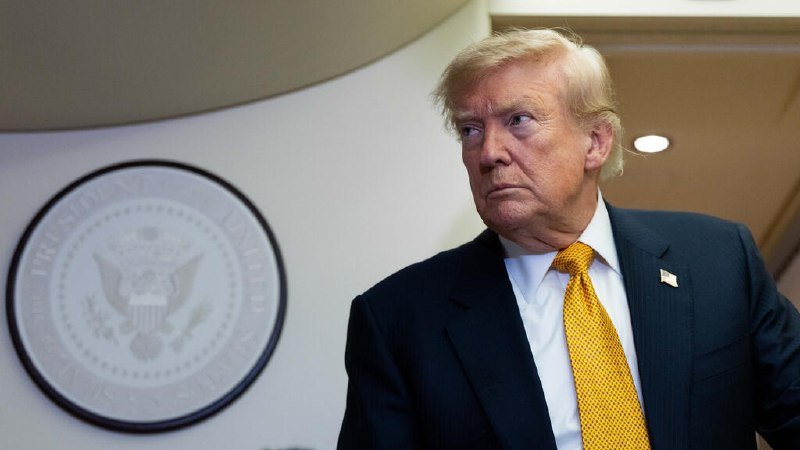
Iran's negotiating position hardened on 7 July 2026, with Tehran making clear there will be no final deal with the United States if American threats continue. The warning came a day after US President Donald Trump said he would "finish the job" and pledged to "knock out" bridges and energy sites across Iran, according to messaging relayed by The Cradle on 7 July.
For a quarter-century, Iranian-American diplomacy has run on a familiar pattern: escalation, then a climbdown, then a partial accord. The current episode is testing whether that cycle still holds, or whether the bar to negotiation has been raised past the point either side can clear.
The terms Tehran has now set
The Iranian position, as relayed by Reuters on 7 July, is that talks cannot proceed unless Washington halts its threats. That is not a softening of Iran's nuclear posture; it is a precondition for the conversation itself. The messaging reportedly came from senior figures in the Islamic Republic's diplomatic and security establishment, including comments attributed to Foreign Ministry spokespeople carried across Iranian state-aligned outlets.
For Tehran, the conditionality is strategic. Accepting talks while the US president publicly floats strikes on bridges and energy infrastructure would amount to negotiating from inside a gun barrel. The Iranian position therefore reframes the threat not as background noise but as a determinant of whether diplomacy exists at all.
That posture has domestic scaffolding behind it. Footage posted on 7 July by Mohammad Marandi, an academic at the University of Tehran who appears frequently in Iranian-aligned media, showed mass rallies in Qom — a city with deep symbolic weight for the clerical establishment — framed as a show of support for Supreme Leader Ali Khamenei. Reuters, citing its own reporting on the same day, described "millions" marching in cities across Iran in a coordinated display of regime legitimacy.
The choreography matters. Rallies of this scale, held in cities beyond Tehran, are not spontaneous. They are part of the signalling architecture the Islamic Republic uses to demonstrate internal cohesion to an outside audience, particularly when the country is under pressure.
The Hormuz incident
The diplomatic freeze coincided with a security incident in the waters both sides depend on. Reuters reported on 7 July that a ship had been struck in the Strait of Hormuz, the narrow chokepoint through which a substantial share of global seaborne oil transits. The outlet did not specify the vessel's flag, owner, cargo, or the party responsible for the strike, and the available reporting does not attribute the attack.
Even without those specifics, the geography does the analysis. Any disruption in Hormuz pushes oil benchmarks, rattles insurance markets, and tests the naval posture of the US Fifth Fleet, which operates from Bahrain. The strait is not just a shipping lane; it is leverage. For Iran, the demonstration that commercial traffic is vulnerable is itself a strategic asset. For Washington, any attack on shipping in those waters is grounds for a military response, and for escalation that neither side's public messaging suggests it currently wants.
The combination is combustible: an unresolved attack on a vessel, public threats from the US president, mass rallies at home, and a hard precondition for talks. Each element compounds the others.
What Trump's language actually does
The remarks attributed to Trump — "finish the job," "knock out bridges," "knock out" energy sites — are not policy documents. They are pressure. The phrase "finish the job" carries a specific echo: it was the framing used by the administration during the June strikes on Iranian nuclear facilities, and its return to the vocabulary signals that the same playbook is on the table.
For Tehran, the rhetorical question is whether those threats are tactical, intended to extract concessions at the negotiating table, or whether they reflect a genuine intent to escalate. The Iranian public position, as relayed through the warning that there will be "no final deal," is that the threats themselves, regardless of intent, have poisoned the atmosphere.
This is the part of the cycle that often breaks in Western commentary: the assumption that threats are costless, that escalation is reversible, that a deal can always be closed once both sides decide they want one. The Iranian message on 7 July is that the threat environment has now become a precondition, not a backdrop.
Stakes and forward view
If the trajectory continues, three outcomes are plausible. The first is a managed de-escalation: behind-the-scenes contact through intermediaries such as Oman or Qatar, a quiet walk-back of the rhetoric, and a return to the technical table on the nuclear file. The second is a freeze: both sides hold their public positions, the Hormuz investigation yields no clear attribution, and the world absorbs a higher insurance premium on Gulf shipping without a kinetic event. The third is a strike — on a nuclear site, on an energy installation, or on a Revolutionary Guards facility — that would close the diplomatic window for the foreseeable future.
Iran wins the second scenario; the United States arguably wins the first; neither side wins the third. The Hormuz incident introduces a fourth variable that nobody has yet claimed: the risk of an inadvertent escalation driven by a non-state actor or a miscalculated naval manoeuvre, with neither government in full control of the escalation ladder.
What remains genuinely uncertain is whether the threat language is a prelude to negotiation, as some read the historical pattern, or a prelude to action. The Iranian position on 7 July assumes the former is no longer operative; the Trump administration's silence in the immediate wake of the warning leaves the question open.
Monexus framed this against the grain of the Western wire consensus that emphasises Iran's isolation. The available reporting suggests the opposite reading: a regime that has organised mass domestic mobilisation, attached conditions to talks rather than accepting them unconditionally, and absorbed a security incident in its most strategic waterway without losing its diplomatic posture.
Wire provenance
This editorial synthesis draws on the following public wire/social posts:
- https://t.me/thecradlemedia
- https://t.me/TheCradleMedia
- http://reut.rs/4fmvhdl
- https://x.com/s_m_marandi/status/2074417237297938432