Tehran's Two-Front Game: Hormuz Provocation, Street Mobilisation, and the Conditional "No" to Washington
A commercial vessel is struck in the Strait of Hormuz while millions rally for the supreme leader — and Tehran ties any negotiation to the US ending its threats.
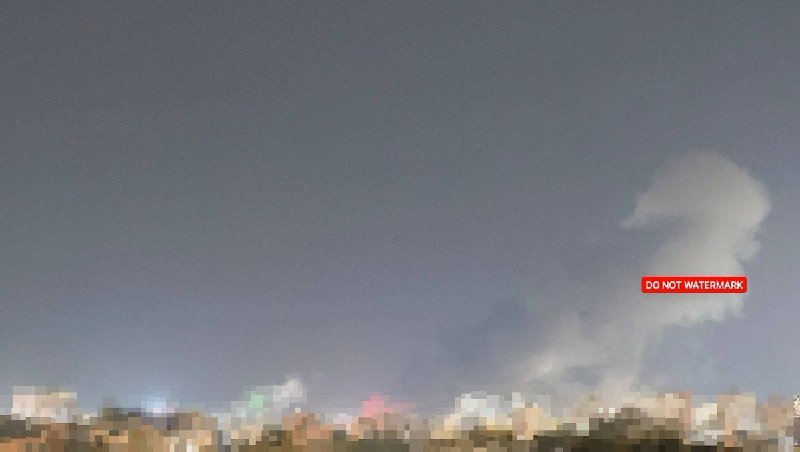
A commercial vessel was struck in the Strait of Hormuz on 7 July 2026, the same day millions of Iranians were reported mobilising in cities across the country in support of Supreme Leader Ayatollah Ali Khamenei. Within hours, Tehran had used both incidents to deliver a single, conditional message to Washington: there will be no negotiation while the United States continues what Iran describes as threats. The synchronisation reads less as coincidence and more as choreography — pressure in the water, power in the street, a diplomatic door held shut on Iranian terms.
The combined signal is the most serious coercive posture Tehran has adopted toward an American administration in this cycle, and it lands at a moment when the US side has been talking openly about the choice between a deal and the use of force. President Donald Trump warned on 6 July that the United States would either reach an agreement with Iran or "finish the job," while also predicting that the stock market would go "through the roof" in a deal scenario. Tehran's answer is to redefine the cost-benefit: escalate at sea, consolidate at home, and tie diplomacy to a US concession that Washington has no political incentive to grant.
What happened at sea — and on land
The Reuters wire carried the day's signature event: a ship hit in Hormuz, an incident with immediate consequences for oil shipping through a chokepoint that handles roughly a fifth of seaborne crude. The same dispatch framed Tehran's diplomatic position — no talks unless Washington halts what Iran characterises as threats. The strike's specifics, including the vessel's flag, ownership, and crew, were not detailed in the available reporting and remain to be verified by independent maritime authorities.
Domestically, the public display was on a different scale. The same Reuters line referenced millions of Iranians marching in support of Khamenei — a turnout consistent with the regime's effort to project unity under sanctions pressure and external threat. The street mobilisation matters because it gives the leadership a domestic mandate to refuse talks on unfavourable terms. A negotiation framed by Tehran as capitulation becomes politically untenable when the public square is already full.
The two lines from Washington
The American posture has hardened into a binary. On 6 July, Trump set the terms: a deal, or a military completion of an objective he has not publicly defined in operational terms — a phrase, "finish the job," that floats between negotiations-table leverage and the language of force. The same day, the President paired the warning with a market signal, telling supporters that equities would move sharply higher in a deal scenario — an argument aimed less at Tehran than at the domestic audience that prices disruption.
That double register is now the negotiating environment Tehran has to navigate. The hard line raises the cost of any agreement that looks like retreat from either capital. The market line raises the cost of escalation that the United States can frame, fairly or not, as the cause of a price spike. Iran has decided to push back against both registers simultaneously.
What Iran is actually saying
The conditional refusal — no talks while threats continue — is not a no. It is a sequencing demand. Tehran wants the threat lifted, or at minimum suspended, before the conversation begins. From Iran's vantage point, negotiating under an explicit US threat concedes the premise that force is on the table. From Washington's vantage point, suspending the threat before talks begin concedes the premise that Iran can weaponise its own strategic geography.
The Hormuz strike, if confirmed as Iranian action, is the structural argument behind the sequencing demand. Roughly a fifth of global seaborne crude transits the strait. Any sustained disruption forces oil prices higher, lifts US inflation, and complicates the macroeconomic picture Trump has tied his market claims to. Iran does not need to close Hormuz to leverage it; the credible threat of disruption is enough to alter the negotiation's price.
What remains unclear
The most consequential unknowns are not yet in the public record. Maritime authorities and the vessel's flag state will need to confirm who struck the ship, with what, and under whose orders — a process that can take days and that Iran will contest if attribution points its way. The size and location of the street mobilisations, beyond the headline figure, will take satellite and on-the-ground verification. And the diplomatic question — whether any back-channel is still alive despite the public refusal — is the kind of thing that becomes visible only in retrospect.
The honest read of 7 July 2026 is that Tehran has chosen to play both boards at once: street politics to foreclose domestic criticism of any deal, and maritime pressure to ensure that the cost of escalation registers in Washington before either side sits down. Whether that posture produces a settlement or an accident now depends on choices neither capital has yet made.
How Monexus framed this: the wire treated the Hormuz strike and the mass rallies as parallel items on a busy day; the structural read is that they are the same item — Tehran's calibrated answer to a US administration that has tied its market claims and its coercive claims to the same set of decisions.
Wire provenance
This editorial synthesis draws on the following public wire/social posts:
- http://reut.rs/4fmvhdl
- https://x.com/Polymarket/status/2026-07-06-trump-iran-finish-the-job
- https://x.com/Polymarket/status/2026-07-06-trump-stock-market-through-the-roof