Toyota's $3.6bn Texas Bet and the New Geometry of Tariff Diplomacy
On 7 July 2026, two announcements — Toyota's $3.6bn San Antonio investment and a US pledge to lift sanctions on Turkey — landed within hours of each other. Read together, they sketch the new transactional playbook.
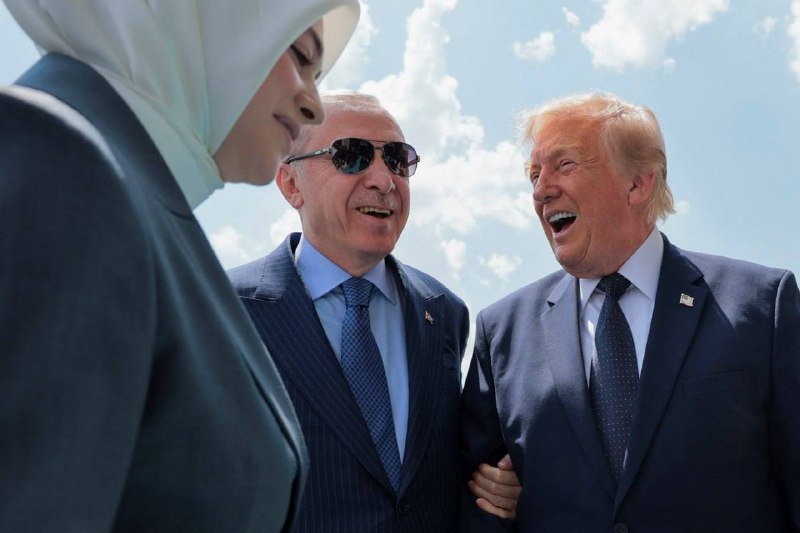
Two announcements landed within eight hours of each other on 7 July 2026, and the distance between them is the story. At 05:01 UTC, Nikkei Asia reported that Toyota Motor had committed $3.6 billion to its San Antonio plant in Texas, re-routing Tacoma pickup production out of Mexico. By 13:10 UTC, US President Donald Trump was telling a rally — and Euronews was relaying it on the wire — that the United States would lift sanctions on Turkey. The Toyota statement is a corporate capital decision. The Turkey statement is a geopolitical concession. That they are sitting in the same news cycle is not an accident. It is the operating logic of the second Trump administration's economic statecraft, on display in real time.
The premise is no longer hidden. Industrial location, tariff schedules and the bilateral relationship between Washington and a NATO ally are now three variables in one equation. Capital is meant to flow toward whichever jurisdiction the White House is rewarding this quarter. Countries and corporations adjust in kind, and the press writes the rest up as coincidence. It is worth saying plainly: the pattern works — at least in the short term — because both sides of the table are getting something they want. The question is what it costs the system that is being rewired around it.
The Toyota move, in plain numbers
Toyota's $3.6 billion commitment to San Antonio is, on the figures Nikkei Asia reported, a straightforward reallocation. Tacoma production — long centred in Mexico — is being pulled into Texas. The investment is large by the standards of single-plant auto announcements, and the political utility is immediate. Trump claimed credit within hours, framing it in a post relayed by Clash Report at 12:23 UTC as a victory for tariff policy: "Toyota is moving from Mexico to the United States (Texas!). A really big deal. Tariffs at work!" That is the framing the administration wants to set, and it is the framing that will be repeated on cable news for the rest of the week.
Two things are worth holding in mind. First, the announcement confirms a corporate calculation that tariffs on Mexican-assembled vehicles have made the southern siting uneconomic — and that a Texas siting, even with higher US labour costs, now pencils out. Second, the announcement does not, by itself, settle whether net US automotive employment rises or whether production simply migrates within a North American supply chain that the administration has spent three years trying to re-draw. Nikkei Asia's report is specific to Tacoma; the broader question — what happens to the rest of Toyota's Mexican footprint — is not addressed in the available material.
Turkey, and the price of an ally
The Turkey statement is the more consequential of the two. Euronews reported on 7 July 2026 at 13:10 UTC that Trump has declared the United States will lift sanctions on Turkey. No implementation timeline, no reciprocal concession and no joint statement from Ankara are visible in the thread material. What is visible is the willingness to use a sanctions regime — historically a tool of last resort against hostile states — as a leverage point in a transactional negotiation with a NATO member that hosts US nuclear weapons at Incirlik and sits on the eastern flank of the Black Sea.
This is not the first time the lever has been pulled on Turkey. The pattern — tariff threat, sanctions threat, sudden thaw — is now familiar. The structural concern is that each cycle erodes the credibility of US economic statecraft in the eyes of third parties. A sanctions regime that is treated as a bargaining chip is, by the time it is lifted, no longer a sanctions regime. It is a price list. The countries that read that price list most carefully are not in Ankara. They are in Beijing, in New Delhi, in Brasília — capitals that are now building commercial and financial architectures precisely because the US toolkit has become harder to price.
The new tariff doctrine
Read together, the two items are a coherent doctrine. Tariffs are not, in this framing, a protectionist tool in the 1980s sense — a permanent shield around domestic industry. They are an instrument of negotiated reallocation, designed to produce specific capital movements on a specific timeline. Toyota's San Antonio bet is a deliverable. The Turkey announcement is a deliverable of a different kind, in which a strategic ally's economy is being held as collateral until the desired posture is achieved.
The counter-reading is straightforward and should be taken seriously. The administration will argue that the Toyota investment would not have happened without the threat of Mexican tariffs, and that the Turkey thaw rewards a recalibration of bilateral ties that serves US interests. There is real evidence for both propositions in the short run. The harder question is whether the system being constructed — in which corporate siting decisions and allied states' policy choices are made under the implicit threat of US economic punishment — is one the United States will still be running in five years' time, or whether it will have spent the leverage it once had.
Stakes, and what remains uncertain
The winners in the near term are clear. US autoworkers in Texas gain a $3.6bn plant. Turkish exporters gain access to US markets. The Trump administration gets two cable-ready victories. The medium-term winners are less obvious. Mexico loses investment it had been promised under USMCA. Smaller US trading partners — those without Toyota's balance sheet or Turkey's strategic weight — see a template in which saying no to Washington becomes more expensive than saying yes. And the architecture of dollar-based economic statecraft, which has been a US asset for decades, takes another small hit to its credibility.
Two things the available sources do not resolve. The thread material does not specify which Turkey sanctions are being lifted, the legal instrument involved, or any reciprocal concession from Ankara. It also does not say whether Toyota's investment is net-new US capacity or a relocation from existing Mexican lines that will leave Mexican workers bearing the cost. Until those questions are answered, the doctrine on display should be read as ambitious in design and still unfinished in execution.
This publication framed the Toyota and Turkey items as a single doctrine of transactional economic statecraft; the wires have largely run them as two disconnected stories.
Wire provenance
This editorial synthesis draws on the following public wire/social posts:
- https://t.me/NikkeiAsia
- https://t.me/ClashReport
- https://t.me/euronews
- https://t.me/nikkeiasia