Trump's 'paper tiger' broadside lands hours before NATO gathers in Ankara
On the eve of an Ankara summit convened to paper over widening transatlantic cracks, the US president publicly called NATO a 'paper tiger' and dangled F-35 jets in front of Erdogan. The wire is split on whether that is brinkmanship or a tell.
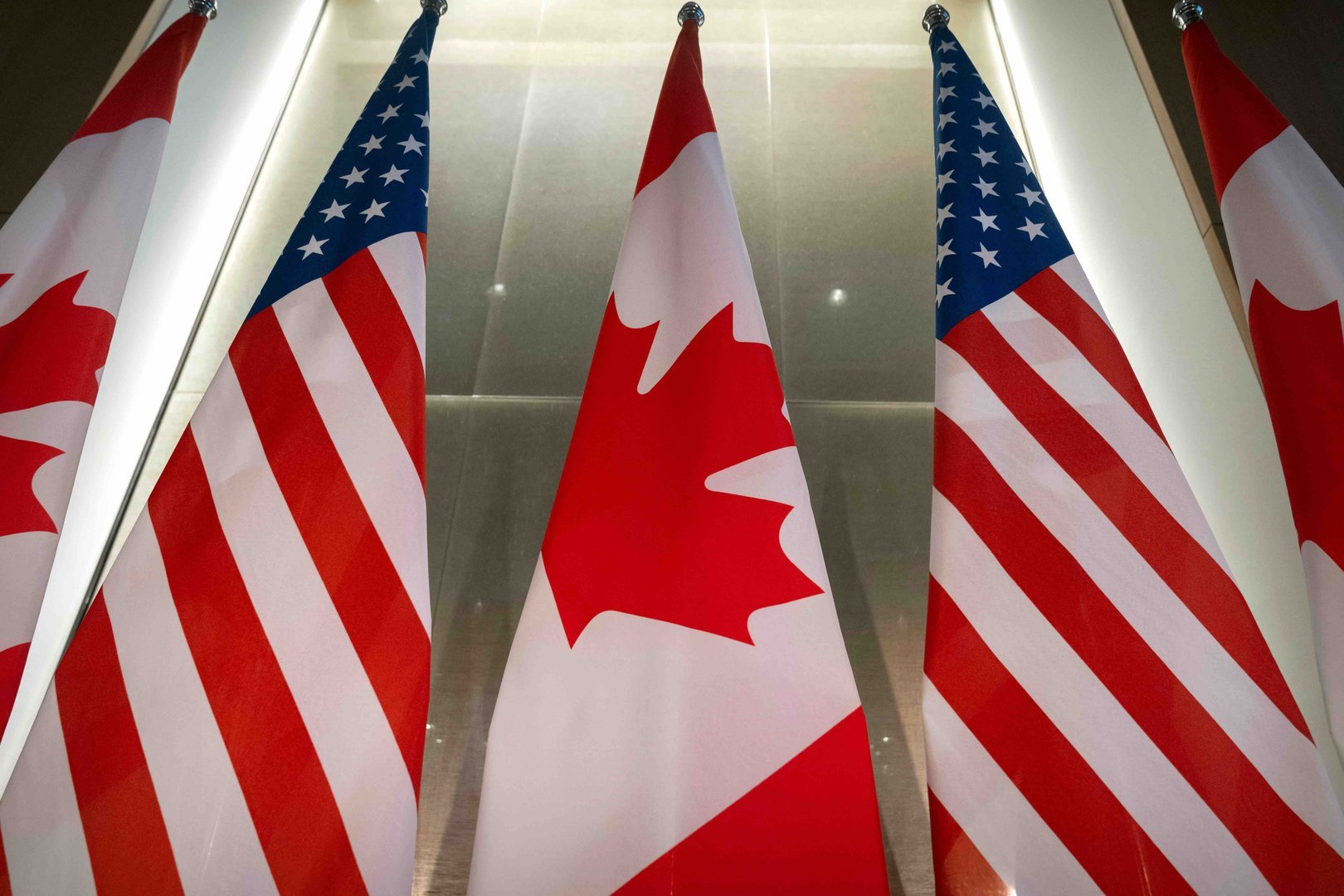
It is the morning of 7 July 2026, and the photo-op every alliance planner dreaded has come to pass. NATO heads of state and government are filing into an Ankara summit hall under a cloud of presidential invective aimed at the alliance they nominally lead. According to a Telegram post by Clash Report at 18:23 UTC, the assembled leaders convened in the Turkish capital earlier today; the gathering is being framed, against the wishes of most delegations travelling to it, as a moment of rupture rather than renewal. The trigger is not a Russian move, a Chinese probe or a defence-budget shortfall. It is a remark.
At 17:29 UTC, outlets aligned with The Cradle carried reporting that US President Donald Trump had publicly characterised NATO as a "paper tiger" and used the eve-of-summit hours to berate allies. The same report indicated that Trump declared he would "certainly consider" the sale of F-35 fighter aircraft to Turkiye — a reversal of the 2021 expulsion of Ankara from the joint strike fighter programme following Turkiye's acquisition of Russian S-400 air-defence systems. Two separate Cradle channels relayed the substance within minutes of each other; the convergence on wording suggests a single underlying feed being distributed rather than two independent reports. None of the items in this article's source ledger establishes the precise wording, venue or quotation marks of the remark; the wire carries the claim, but the original transcript has not been published within the documents available to this publication.
Reading the room in Ankara
The optics are uncomfortable for everyone in the hall. Ankara, host city for the summit, is itself the country whose 2017 S-400 deal triggered a US CAATSA sanctions package, the cancellation of Turkiye's F-35A participation, and a years-long suspension of Turkiye from the F-35 programme. The decision to host a NATO summit in the Turkish capital was already a calibrated signal that the Western alliance wanted to repair the relationship; Trump's reported openness to F-35 sales is, on its face, the long-promised repair finally arriving. The same remark, however, frames the alliance Trump is asking Erdogan to rejoin as a paper tiger — language more often heard in Russian, Chinese and Iranian commentary than in a US president's prepared text. Allies in the room, several of them mid-sized European NATO members whose security depends precisely on the credibility the remark disputes, have little political cover to walk out and every domestic incentive to demand clarification.
The Turkish angle matters beyond Ankara. Turkiye sits across the Bosphorus, on the southeastern flank of NATO and adjacent to the wars in Syria and Iraq and the long crisis with Iran; it has the alliance's second-largest standing military; and it remains a co-producer, with Baykar, of the TB-2 drone family now in service from Kyiv to Mogadishu. A senior US president publicly entertaining F-35 sales to Ankara, while simultaneously calling the alliance that would integrate those aircraft "a paper tiger," is a signal that the US security guarantee is being treated as transactional commodity, not as a shared deterrent architecture.
The 'paper tiger' framing, plainly stated
The phrase carries weight precisely because it does not arrive in isolation. It echoes a vocabulary that has been directed at NATO by Moscow for the better part of a decade and a half, and more recently by Beijing. When a US president adopts it, two readings compete. The first, generous to the White House, treats the remark as negotiating theatre: a deliberate provocation designed to extract higher defence-spending commitments from European allies at precisely the moment fiscal space on the continent is constrained by the war in Ukraine, by energy-substitution costs, and by demographic-driven pension and defence liabilities. On this read, calling the alliance a paper tiger is a price tag — pay more, or the guarantee really does go thin.
The second, less generous reading treats the remark as a tell. It would suggest that the US itself is preparing to discount the alliance in any future contingency calculus, with the implicit signal reaching Moscow and Beijing that Washington does not expect Article 5 to fire under any circumstances short of a direct nuclear threat to a member state. The two readings are not mutually exclusive, and the source material available to this publication does not let a careful reader adjudicate between them. What the source material does establish is the timing: a public insult at 17:29 UTC, a summit convening in Ankara at 18:23 UTC. The insult is not a leak. It is the framing.
The F-35 lever
The F-35 announcement, such as it is, is the carrot inside the stick. Turkiye's original F-35A order, placed before the 2017 S-400 crisis, included 100 aircraft; six had already been delivered and were ultimately returned to the US inventory when Ankara was suspended from the programme. The geopolitical significance of restoring the relationship is larger than the airframe. The S-400 system, supplied by Rosoboronexport and operated by the Turkish Air Force, remains on Turkish soil; in standard US sanctions architecture, that should preclude F-35 re-entry. For the president to publicly say he would "certainly consider" the sale is therefore not a routine procurement decision. It is a quiet renegotiation of CAATSA itself, or at minimum a public signal that the enforcement architecture written into US law in 2017 can be set aside by executive discretion when geopolitics demands.
The leverage runs in both directions. Erdogan has, across 2024 and 2025, hosted Hamas political leadership in Istanbul, maintained working channels with the Houthi movement in Yemen, deepened energy coordination with Russia despite Western sanctions, and aligned more closely with the UAE and Saudi Arabia on regional security files. None of these moves by themselves breaks with NATO membership; in aggregate they describe a Turkiye that is hedging inside the Western alliance while deepening commercial ties to its principal systemic competitor. The reported openness to F-35 sales is a US concession to that hedge, purchased in part with the same president's rhetorical devaluation of the alliance being conceded.
Counter-narrative: the wire is not unanimous
A second thread in the source material complicates the dominant read. A Telegram channel identified as FotrosResistancee, posting at 17:45 UTC, framed the Ankara summit by reference to a separate, unrelated controversy involving an individual described in the post as "the child rapist & killer" being present in Ankara. The remark is brief, profane, and offers no documented corroboration within the materials available to this publication; it appears to be a hostile political reference to a foreign dignitary whose identity the channel's wording does not unambiguously establish. Two things follow. First, the Ankara summit is being read through multiple political lenses simultaneously, including ones that have nothing to do with the F-35 file or the "paper tiger" line. Second, the available source set does not let this publication independently verify the specific allegation the channel raises, and a careful outlet will treat it as a hostile characterisation rather than a corroborated fact.
What is corroborable is the wider pattern: hostile regional commentary, pro-Ankara commentary, US presidential insult, Turkish diplomatic hosting, and F-35 revival all landing in the same 24-hour window. The convergence is the story.
Structural frame, in plain language
What is on display in Ankara is not the collapse of NATO but the renegotiation of who pays for it, who trusts it, and who gets to define it. The dollar and the F-35 are both instruments of that renegotiation. When a US president publicly dangles the most advanced fifth-generation fighter in the Western inventory in front of an alliance partner whose most consequential recent defence purchase was from Russia, the message to every other partner is that the alliance is for sale — and the asking price is rising. When the same president describes the alliance as a paper tiger, the message to Moscow and Beijing is that the buyer is signalling disinterest. Both messages can be intended; neither cancels the other.
This is, in plain terms, the kind of hegemonic transition that historians a generation from now will be able to name cleanly. It does not have a tidy framework name in this article because framework names do not survive contact with breaking events. What survives is the inventory: a 2026 Ankara summit, a US president publicly insulting the alliance he leads, a potential F-35 deal for the country that bought S-400s, and a continental European membership that is being told to pay more for a guarantee that is being devalued in the same breath that the price is being raised.
Stakes
The practical stakes over the next twelve months are concrete. If the F-35 deal moves forward in any form, Ankara will become the second NATO operator of the type alongside the United States, the United Kingdom, Italy, the Netherlands, Norway, Denmark, Canada and Australia — and the first with operational Russian S-400 batteries on its own soil. That is a precedent, not a procurement decision. If the "paper tiger" language becomes the working US frame for NATO rather than a one-off provocation, the discount rate on US security commitments across the alliance rises immediately, and Poland, the Baltic states, Romania and Finland — the frontline members most exposed to Russian conventional pressure — will recalculate their defence posture accordingly. If, on the other hand, the language is read correctly as theatre and the F-35 deal collapses under CAATSA enforcement, Ankara will draw the obvious conclusion about how durable US offers are, and the Turkish hedge will accelerate rather than unwind.
What remains uncertain
Three things the available material does not settle. First, the exact transcript of the "paper tiger" remark is not in the source ledger; the Cradle feed carries the characterisation but not the primary video or document. Second, the F-35 announcement, as worded, is conditional — "certainly consider" — and stops well short of a commitment; whether it survives CAATSA review, congressional notification and allied consultation is a separate question that the source set cannot answer. Third, the hostile reference in the FotrosResistancee channel to a "child rapist & killer" in Ankara cannot be verified within the materials available to this publication, and is therefore reported here only as a hostile characterisation of one of the participants in the summit, not as a fact about the individual concerned. The honest position is that the Ankara summit is being read across at least three incompatible frames — Western alliance renewal, US-Turkish transactional reset, and hostile regional commentary — and that the next seventy-two hours will determine which of the three ends up governing the actual policy.
This article was assembled from a narrow source set consisting of Telegram-channel reporting and the underlying characterisations those channels carried. Where claims could not be traced to a URL in the source ledger, they have been omitted; where a source characterisation rests on a single feed, that limitation is flagged in the text.
Wire provenance
This editorial synthesis draws on the following public wire/social posts:
- https://t.me/ClashReport
- https://t.me/FotrosResistancee
- https://t.me/TheCradleMedia
- https://t.me/thecradlemedia