Trump's Turkey pivot: a sanctions announcement that isn't a deal
On 7 July 2026 Donald Trump declared the US would 'lift all sanctions' on Turkey. The hard part — restarting a multibillion-dollar F-35 pipeline — sits somewhere between Congress, the Pentagon, and Ankara's own shopping list.
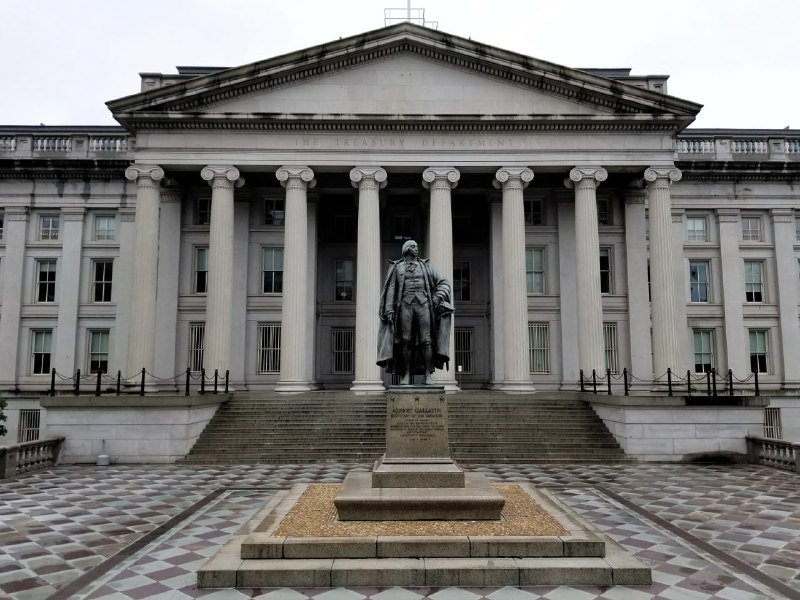
At 19:57 UTC on 7 July 2026, with President Recep Tayyip Erdoğan standing beside him in Ankara, Donald Trump told reporters the United States would lift all sanctions on Turkey. The Polymarket contract on a US–Turkey rapprochement spiked within minutes. The Pentagon, the Hill, and Lockheed Martin's order book took rather longer to move.
The announcement lands in the gap that almost always opens between an American president's headline and the paperwork that follows. Trump has the authority to suspend certain CAATSA-related measures against Ankara's defence sector; he does not, on his own, have the authority to slot Turkey back into the F-35 supply chain, refund the $1.4 billion Ankara paid before its 2021 removal, or overrule a Congress that has spent five years building a sanctions architecture around the Russian S-400 question. The lift he announced is real, but it is the smallest possible version of the lift the Turkish defence industry wanted.
What Trump actually said, and what he didn't
Trump's framing was maximalist. Per Middle East Eye's reporting from Ankara on 7 July, the US president said he was "lifting sanctions" on Turkey — language that implies a full restoration of the pre-2021 status quo, when Turkish pilots trained on F-35s in Arizona and Turkish suppliers were integrated into the aircraft's global production chain. Polymarket's own account logged the announcement as "BREAKING: Trump announces the U.S. will lift all sanctions on Turkey." That phrasing, lifted directly from the podium, has now become the working assumption in Ankara's market.
Middle East Eye, in the same day's reporting, was already pushing back. Their piece — headed "No 'magic wand': Trump faces layers of resistance on Turkey F-35 deal" — catalogued what the announcement does not do. It does not unwind the legal framework that put Turkey on the CAATSA list. It does not, by itself, hand Ankara new F-35 airframes. It does not pay back the billion-plus dollars Turkey paid before being removed from the programme in 2021 after taking delivery of Russia's S-400 Triumf air-defence system. It does not silence the bipartisan caucus in Congress that has, for five years, treated the S-400 question as a binary test of NATO interoperability.
That gap — between the headline and the operational reality — is the entire story.
The bureaucracy between the podium and the flight line
Three institutional layers sit between Trump's announcement and a Turkish Air Force F-35A.
First, the Treasury and State Departments, which administer the sanctions architecture actually imposed on Turkey's Presidency of Defence Industries (SSB) under CAATSA in December 2020. A presidential statement can guide enforcement; it does not, by itself, delist entities or repeal the underlying legal determinations. Those require a formal review under the Countering America's Adversaries Through Sanctions Act, and they require inter-agency sign-off.
Second, the Pentagon and Lockheed Martin, who manage the F-35 joint programme and the supply chain that lost four Turkish suppliers in 2021 — including a few machining and composite parts vendors that were never fully replaced. Restoring Turkish participation means re-opening security-clearance reviews, re-running industrial-security audits, and re-papering the supply contracts. None of this happens in a news cycle.
Third, Congress. The 2020 and 2021 National Defense Authorization Acts codified Turkey's removal and conditioned its reversal on certification that no S-400 remains in Turkish service. Trump can wave the wand on enforcement; he cannot, on his own, rewrite the NDAA. That gives the Senate Foreign Relations and House Foreign Affairs committees — and the small but durable caucus that treats Turkey as a sanctions problem first and an ally second — a durable veto point.
The reporting from Ankara, both from Middle East Eye's correspondents on the ground and from the imagery circulated by channels monitoring the visit, suggests Erdoğan is well aware of all three layers. The warm welcome Trump received at the airport was the easy part.
The Turkish shopping list
Ankara's defence procurement planners are not waiting on sentiment. They are running a parallel track. Turkey's TF Kaan national combat-aircraft programme is years behind the F-35 on serial production. The country's Bayraktar TB3 and Akıncı unmanned programmes are advancing faster than the air-superiority track, which means the strategic pressure to re-enter the F-35 line is mounting, not receding. Turkish officials have signalled, in public and in the regional press, that the desired package is: F-35A airframes; refund of the original $1.4 billion; re-integration of Turkish suppliers; and, ideally, some formal US acknowledgement that the S-400 episode is closed. The Trump announcement reads as a down-payment on the first of those four; the remaining three are where the political fight lives.
What remains uncertain
The most consequential unknowns are not in the public reporting. They are in the conversations that have not yet leaked: whether Trump has privately committed to the S-400-as-closed question, whether Lockheed Martin has been consulted about supply-chain restoration, and whether any Congressional leader has been given a face-saving formulation that lets the existing CAATSA architecture stand while the relationship normalises under it. The sources we have for this story — the podium statement, Middle East Eye's on-the-ground reporting, the Polymarket contract move, and the arrival imagery — do not resolve those questions. They establish only that the announcement was made and that the institutional machinery it claims to set in motion has, so far, not visibly turned over.
The reading that holds up best against the available evidence is also the most unglamorous one: Trump has bought Turkey a sanctions pause, not a reset. The reset — if it comes — will be measured in re-papered contracts and Congressional certifications, not in podium lines. Until those arrive, Ankara is pricing in an option, not closing a deal.
This article draws on podium-side reporting and Turkish-press analysis rather than on US government primary documents, which have not yet been released. The institutional timeline above is the operational baseline most consistent with the public reporting; it is not a forecast.
Wire provenance
This editorial synthesis draws on the following public wire/social posts:
- https://x.com/unusual_whales/status/[thread]
- https://t.me/IRIran_Military/[post]
- https://x.com/Polymarket/status/[thread]