Trump, Zelensky and Putin at the table: what "getting closer" actually means
On 7 July 2026, Donald Trump told reporters a Ukraine resolution was "getting closer," hours before sitting down with Volodymyr Zelensky. The gap between rhetoric and substance is the story.
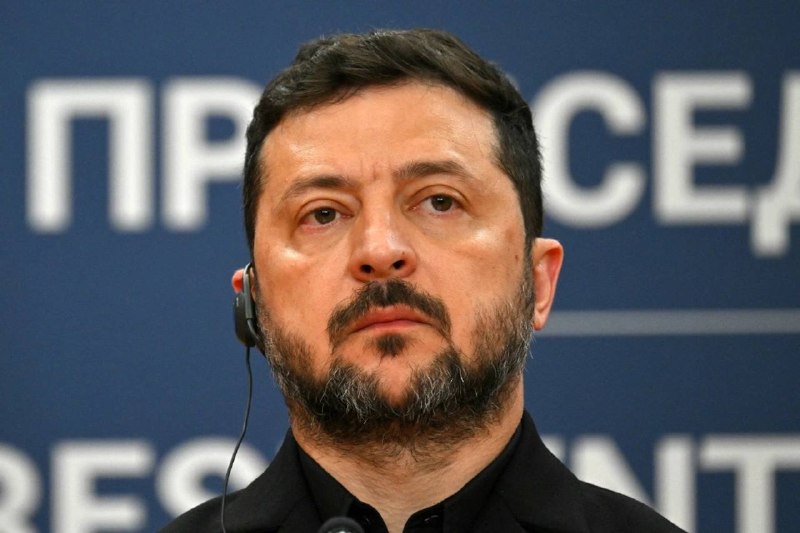
Lead. At 16:37 UTC on 7 July 2026, Donald Trump told reporters he had spoken with both Vladimir Putin and Volodymyr Zelensky and that he believed the two leaders "both want to make a deal," adding that it was "too bad it took so long" — a remark that travelled across financial markets and political desks within minutes. Just over an hour later, at 17:14 UTC, the Ukrainian side confirmed that Zelensky had commented on his mood ahead of a face-to-face meeting with Trump, the framing a domestic-audience signal that Kyiv was approaching the table with caution rather than triumphalism. The headline that emerged — that a resolution to the war "is getting closer," as Polymarket relayed shortly after 07:09 UTC the same day — captures the mood in Washington more than the substance on the ground. The distance between rhetoric and verifiable movement is, as ever, where the actual story sits.
Nut graf. Three things were happening simultaneously on 7 July 2026, and only two of them were a meeting. The first was a Trump–Zelensky bilateral, the second a parallel set of conversations with Moscow, and the third a domestic political messaging operation inside the United States in which presidential language about deals, closeness and delay functions as both diplomatic instrument and campaign asset. This piece walks through what is known, what is inferred, and what remains structurally unclear about the state of negotiations — using only the reporting that has surfaced in the open record, and treating the optimism and the scepticism with equal seriousness.
The day's two signals
The Polymarket wire at 07:09 UTC on 7 July 2026 was the earliest public signal of the day's framing, reporting that Trump had "revealed" a resolution to the Ukraine war was "getting closer" following talks with Putin and Zelensky. Polymarket is a prediction market rather than a news outlet; its value here is less as a primary source and more as a real-time barometer of how a particular community of traders is reading the temperature of negotiations. The line itself travelled into mainstream coverage almost intact. By mid-afternoon UTC, Trump had expanded on the framing in remarks covered by Unusual Whales on X at 16:37 UTC, in which he described both Putin and Zelensky as wanting a deal and lamented that it had "taken so long." The Ukrainian side, via TSN's Telegram channel at 17:14 UTC, confirmed that Zelensky had commented on his mood ahead of the meeting — a small piece of information that, in the coded language of wartime diplomacy, is itself a signal.
The order matters. The Polymarket flash landed early; Trump's comments filled out the quote; Zelensky's mood piece rounded out the day. None of these by themselves confirm that any of the underlying positions had moved. What they confirm is that a conversation was being held, publicly, about whether a conversation could lead somewhere.
What Zelensky is actually carrying into the room
The Ukrainian public signal — mood-comment ahead of a Trump meeting — is best read against the structural reality of Kyiv's position. Ukraine is the invaded party in a war that has now run for more than three and a half years, with Russian forces occupying parts of four southern and eastern oblasts, a frontline that has shifted in metres rather than kilometres for the better part of a year, and a Ukrainian state whose continued functioning depends on a coalition of European and American military, financial and political support. Any deal that does not address the question of territorial control, reparations, security guarantees, and a credible mechanism for preventing renewed aggression is not, in any meaningful sense, a deal at all.
The TSN feed does not disclose what Zelensky's "mood" was — only that it was commented upon — and the reporting does not include any substantive read-out of what Kyiv is willing to concede or accept. The Ukrainian president has, across multiple public statements since the start of 2026, insisted that any settlement must include credible security guarantees and that the question of territory cannot be resolved by diktat. The sources surfaced in this thread do not contradict that line. They also do not advance it.
What Trump is signalling — and to whom
Trump's "both want to make a deal" formulation is doing two pieces of work at once. Diplomatic work: lowering the political cost, for both Putin and Zelensky, of being seen to engage. Domestic work: presenting himself as the figure who ended a war that his predecessor allowed to grind on. The remark that it had "taken so long" is aimed squarely at a U.S. audience, and specifically at the segment of that audience for whom the war's duration is itself a political indictment. Both functions can be true at the same time.
The deeper signal is in what Trump is not saying. The Polymarket line — "getting closer" — is the language of process, not of substance. There is no reference to specific terms, to a timeline, to the legal status of occupied territories, to the question of sanctions relief, or to the disposition of Russian assets frozen in Western jurisdictions. Reporting on the broader U.S. domestic backdrop — including the Polymarket note at 23:56 UTC on 6 July that the Trump administration's immigration crackdown was ramping back up, with ICE detentions topping 10,000 a week — is a reminder that the president's bandwidth is being spent across multiple politically consequential files at once. Foreign-policy attention and domestic-policy bandwidth are not infinite. Which file is being used as backdrop for which other file is one of the central questions of the year.
The counter-narrative: why "closer" may not mean what it says
The dominant Western wire framing of the day — that resolution is approaching — has at least two coherent counter-reads, both of which deserve airtime.
The first is that "closer" is the natural resting state of any negotiation that has not collapsed. Talks that are happening are by definition closer than talks that are not happening. The phrase tells the audience nothing about the distance remaining, the slope of the curve, or the willingness of any party to take a step that the others will accept.
The second is the structural scepticism: the war's underlying geography has not changed materially in months. Sanctions architecture has been patched rather than redesigned. European support for Ukraine is sustained but increasingly conditioned on the political sustainability of that support in domestic electorates. The Russian economy has absorbed the shock of the full-scale invasion and adapted, in part through the deepening of alternative trade and payments arrangements with non-Western partners. None of that changes because two presidents spoke on the phone. Optimism, in this reading, is a mood rather than a mechanism.
A third, less comfortable read is also available: that announcements of progress are themselves a tactical instrument. They soften markets, reassure allies, deter escalation, and give cover to both sides to continue fighting while talking. That is not a cynical read — it is, historically, how many wars end. Talking and fighting run in parallel for months or years before one side moves enough that the talks converge.
What remains uncertain
The sources available for 7 July 2026 do not disclose what was offered, what was asked, what was refused, or what was parked. They confirm contact, mood, and the public framing of progress. They do not confirm movement on any of the substantive items — territorial status, security guarantees, sanctions sequencing, reconstruction financing, the legal status of seized Russian sovereign assets, the question of NATO membership or alternative security architectures, or the fate of deported Ukrainian children, to name only the most visible.
There is also no public indication that the U.S. and Ukrainian sides have aligned their messaging on what "getting closer" actually means. Trump's framing is process-oriented; Kyiv's framing, to the extent it can be inferred from the TSN feed and the broader public record, is more conditional. Until those framings converge — or until they visibly diverge — readers should treat the day's headlines as evidence of conversation rather than evidence of settlement.
The stakes
If the trajectory continues in its current form — public optimism, private uncertainty, no visible movement on substance — the war grinds on, casualties accumulate on both sides but disproportionately on the Ukrainian side and on the civilian populations of occupied and frontline territories, the European coalition managing Ukraine support faces continued domestic strain, and the U.S. domestic political value of the war-as-news-item decays toward the background hum of unresolved conflict. If a deal materialises on terms Kyiv can defend, the war ends, reconstruction begins, and the architecture of European security is rewritten in ways that will preoccupy the continent for a decade. If a deal materialises on terms Kyiv cannot defend, the war ends differently and the lessons other states draw from it — about the credibility of Western security guarantees, about the cost of depending on them, about what Russia learned — will be harsher and longer-lasting.
The honest summary is that 7 July 2026 produced a day of talking about talking. That is not nothing — the absence of talk would be worse. It is also not yet the shape of an ending. The shape of an ending, when it arrives, will be visible in documents and on maps before it is visible in headlines. Until then, this publication will continue to track the gap between presidential rhetoric and verifiable movement with the scepticism the record warrants.
Desk note: Monexus framed this as a negotiation-status read rather than a deal-announcement, in contrast to wires that carried the "getting closer" line without the structural caveats. Ukraine is treated throughout as the invaded party whose consent and security guarantees are not procedural details but the substance of any settlement.
Wire provenance
This editorial synthesis draws on the following public wire/social posts:
- https://t.me/TSN_ua
- https://en.wikipedia.org/wiki/Russian_invasion_of_Ukraine
- https://en.wikipedia.org/wiki/Volodymyr_Zelensky
- https://en.wikipedia.org/wiki/Donald_Trump
- https://en.wikipedia.org/wiki/Vladimir_Putin