Ankara's defense pitch: Turkey tells NATO it belongs in the top tier of arms exporters
At the NATO summit in Ankara, Turkey's vice president claimed the country ranks 11th globally in defense exports. Mark Rutte asked allies for an industrial leap. The numbers tell a different story about who actually builds what.
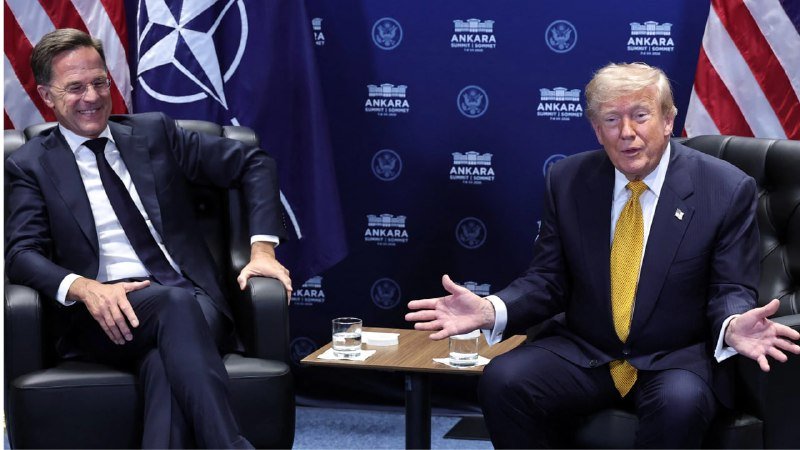
On 7 July 2026, at a NATO summit in Ankara, Turkish Vice President Cevdet Yılmaz made a pitch that doubled as a sales call. Türkiye, he said, now ranks eleventh in the world among defense exporting countries. The country's ambition, framed in a footballing metaphor this publication has seen quoted from the floor, is to break into the top ten. The audience for that pitch was not the Turkish public. It was the alliance finance ministers and procurement chiefs sitting in the room, deciding where the next round of rearmament contracts will land.
The pitch lands at a moment when NATO is asking its members, loudly, to spend more, build more, and build faster. The alliance is trying to turn procurement into industrial policy, and the summit's central question is no longer whether allies should produce more ammunition, drones, and air-defense interceptors — it is who gets the work.
The pitch from Ankara
Türkiye's case is built on a decade of consolidation. A country that, fifteen years ago, was a defense import market has rebuilt its base industries around state-backed champions — Baykar in drones, Aselsan in electronics, Roketsan in missiles, and a longer tail of platforms and subsystems suppliers. The output has grown fast enough that Yılmaz can stand at a NATO podium and claim a top-eleven slot without the room laughing. The structural change is real: Turkish defense exports have moved from a curiosity to a line item that procurement officers in the Gulf, in Africa, and increasingly inside Europe itself, write into tenders.
What Ankara wants now is not just to sell. It wants to be inside the alliance's industrial perimeter — to be a preferred supplier on the next generation of platforms, not a buyer on the margins. The footballing metaphor is doing real work here: top ten means inside the first eleven; the top tier means a permanent seat.
The pushback NATO is coordinating around
The counter-voice at the summit is Mark Rutte, the alliance's secretary general. His line, delivered on the same day in Ankara, is that NATO stands on the cusp of what he called a "transatlantic defense industrial revolution." The framing is deliberately aggressive: Rutte is asking allies to take a leap, to show their publics that the alliance is "ready and capable to protect them." The single most concrete number in his remarks is a production target — by next year, the alliance claims the capacity to produce around four million artillery shells annually, roughly twice the run-rate of the year prior.
Four million shells is not an abstract procurement figure. It is the answer to the lesson Russia drilled into NATO between 2022 and 2025: the side that runs out of 155mm loses the artillery duel, and the side that loses the artillery duel loses the line. Rutte is essentially telling allied publics and parliaments — some of which are still arguing about the cost of living — that rearmament is the price of deterrence, and the bill is going up.
What the numbers actually allow
The two pitches are not symmetric. Ankara's claim is directional: a top-eleven slot, a top-ten target, and a story about trajectory. Rutte's claim is operational: a specific production figure (four million shells annually by next year), backed by the kind of supply-chain coordination NATO has historically struggled to deliver. The danger is that the alliance sells the trajectory and loses the throughput.
The harder question — what share of new procurement goes to non-traditional suppliers, and on what terms — is the one the Ankara summit is designed to defer, not answer. Industrial revolution, in the Rutte formulation, is a request for patience and political cover at home. A seat at the table, in the Yılmaz formulation, is a request for contracts and concessions now.
The stakes inside the alliance
Two readings of this moment are plausible. The first is that the alliance absorbs Ankara's bid and treats Türkiye as a co-equal industrial partner, on the logic that any line of capacity inside NATO is better than another line of capacity inside a competitor's orbit. The second is that the older members of the alliance use the rhetoric of industrial revolution to justify renewed internal spending, while leaving the supplier map roughly unchanged — Türkiye inside, but bracketed.
The reader take-away is blunt. The Ankara summit is selling two products at once. One is a faster, larger, more coordinated allied industrial base. The other is a country that wants to be inside it, on its own terms, and is willing to publish its own rankings to make the case. Whether the two products fit together is the question the next twelve months of contracting decisions will answer. The sources do not specify which reading the alliance's procurement directors will adopt; that is what makes the stakes concrete, not abstract.
This publication frames the Ankara summit as a market signal, not a parade. The wire coverage tracks the speeches; Monexus tracks where the contracts land.
Wire provenance
This editorial synthesis draws on the following public wire/social posts:
- https://t.me/ClashReport/
- https://t.me/ClashReport/
- https://t.me/ClashReport/