The war inside the war: who really pockets Ukraine's reconstruction billions
A wartime brokerage scandal, sixfold fee hikes and opaque procurement contracts are turning the post-invasion economy into its own theatre of conflict — and the public is starting to notice.
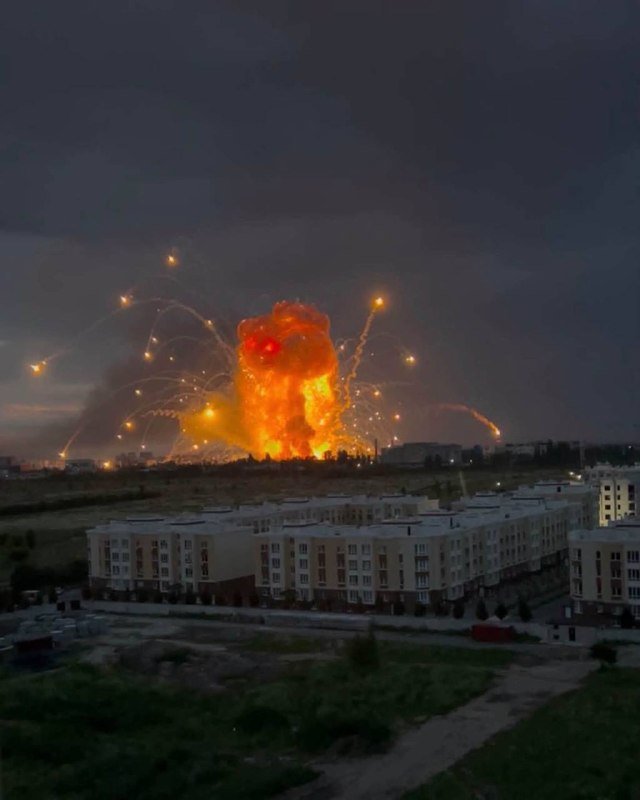
The arithmetic of Ukraine's wartime economy rarely makes the front page. On 7 July 2026, however, a clip from Ukrainian television host Olya Tsybulska surfaced in which she recalled a "scandalous proposal" from the early weeks of the full-scale invasion: brokers demanding fees multiplied, in her telling, by six for transactions that, in peacetime, would have cleared at a fraction of the cost. Read alongside a Wall Street Journal study flagged the same week — showing that, since the pandemic, college-educated fathers of young children have cut six hours a week from paid work and added four hours to housework — the clip lands in an inconvenient place. It points to a wartime economy in which the people doing the dying and the people doing the procurement are not the same people, and the distance between them is measured in margin.
Ukraine is the invaded party. That premise is not in dispute. Foreign military and financial support is, by every honest accounting, the precondition of the country's survival. But survival is not the same as reconstruction, and reconstruction is not the same as enrichment. As the war enters a fourth year, the gap between those three words has become the country's most consequential internal political problem.
The early-war fee spike
Tsybulska's recollection, broadcast by TSN on 7 July 2026, points to a pattern that multiple Ukrainian outlets have been documenting in fragments for months. When the invasion began in February 2022, the procurement system was overwhelmed. Ministries were issuing emergency contracts for fuel, body armour, drones, generators and medical supplies at speed, and the gatekeepers — customs brokers, freight forwarders, the small firms that move goods across Ukraine's western borders — found themselves in an unusually powerful position.
A wartime fee multiplied by six is not, on its own, a smoking gun. Brokers are entitled to a margin, and a country at war is entitled to pay whatever the market will bear to keep trucks moving. But the line between a fair wartime premium and extraction is thin, and Tsybulska's framing — "scandalous" — suggests she believes the line has been crossed. The Ukrainian public appears to share that view: a steady drip of investigative reporting by Ukrainian outlets has named specific firms, specific officials and specific contract values, and each revelation has chipped away at the consensus that wartime solidarity means suspending normal scrutiny.
The procurement state
The structural problem is older than the war. Ukraine inherited a public-procurement architecture that, by the standards of any EU member state, was permissive in the wrong places. The 2014 reforms helped; the ProZorro system, open by default, was a genuine improvement and remains one of the country's proudest governance exports. But ProZorro was built for a peacetime economy in which contracts were competed for in normal time. War contracting is different. National-security carve-outs, single-source procurements, classified addenda — all of these are legitimate tools, and all of them are also tools that, in the wrong hands, become laundering channels.
This is where the Western wire line and the Ukrainian street line are beginning to diverge. Western coverage tends to frame Ukrainian reconstruction as a question of money — how much will Europe and the United States commit, on what timeline, through what vehicles. The WSJ study on shifting household labour patterns, surfaced the same week as Tsybulska's clip, belongs to a different register: it is about who is actually bearing the cost of the past four years, and who is not. The fathers cutting hours are not the brokers multiplying fees. The mothers adding hours are not the procurement officials signing emergency contracts. The economic geography of the war is, increasingly, a story about who got to stay home and who got paid.
The American precedent
The parallel is uncomfortable and worth naming. On 7 July 2026, a separate thread surfaced from Unusual Whales citing reporting on Donald Trump's business activity, in which the observation was made that "almost anything they do, if they want to buy a truck, if they want to buy an energy efficient truck, they have inside information." The remark was about access, not about Ukraine — but the structural lesson travels. Wartime and crisis procurement are the natural habitat of insider advantage. The question is whether the architecture of contracting is robust enough to channel that advantage into legitimate margin, or porous enough to let it bleed into rent.
Ukraine's Western partners have an obvious interest in the answer. Reconstruction money — the tens of billions already pledged through the EU, the IMF, the World Bank, the EBRD and bilateral channels — will flow through contracting systems that are being built right now, in real time, under the pressure of an active war. Every fee multiplied by six in 2022 is a precedent set for the post-war tendering system that will, by 2030, shape who owns Ukrainian infrastructure, who runs its logistics chains and who extracts rent from its reconstruction.
What the sources do not settle
The thread material is fragmentary by design. Tsybulska's recollection is a television host's memory of an early-war episode, not a procurement audit; the WSJ labour-pattern study is about household time, not about wartime contracting; the Unusual Whales thread is about a different country's political economy altogether. The three do not, between them, constitute a smoking gun. What they constitute is a triangulated warning: that the war economy is producing winners and losers, that the winners are not always the people doing the fighting, and that the institutional machinery for telling the difference is, at best, incomplete.
The honest reading is that Ukraine's reconstruction fight has not yet been lost. ProZorro is still running. Ukrainian investigative journalism is still naming names. The country's European integration track, whatever its pacing, requires procurement standards that are incompatible with the fee-multiplication model. The structural incentive to clean the system up is, in fact, enormous — because the alternative is a reconstruction decade in which the money flows in and the legitimacy flows out.
Desk note
Monexus frames this around the wartime economy's internal politics, not around Western fatigue or aid skepticism — Ukraine is the invaded party, and reconstruction is a question of institutional design, not generosity.
Wire provenance
This editorial synthesis draws on the following public wire/social posts:
- https://t.me/TSN_ua