US revokes Iranian oil-sale waiver as Hormuz ceasefire frays
The Treasury Department has withdrawn the general licence that permitted Iranian crude exports, citing attacks on tankers in the Strait of Hormuz and putting a fragile US-Iran understanding at risk.
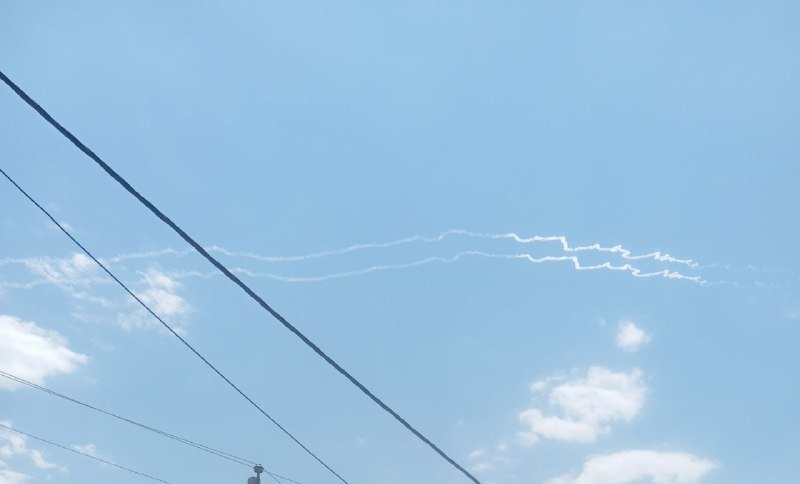
The US Treasury Department on Tuesday revoked a general licence that had permitted the sale of Iranian oil on international markets, severing one of the central pillars of a recent ceasefire understanding between Washington and Tehran. The action, confirmed in US official statements and tracked across Iranian and pro-Iran outlets, comes after a spate of attacks on commercial tankers transiting the Strait of Hormuz, the chokepoint through which roughly a fifth of seaborne crude ordinarily passes.
That the licence has been pulled is significant not because the sanction architecture around Iranian crude is new — it has been a moving fence for two decades — but because the licence was the concession that made the current ceasefire intelligible. Take it away and the bilateral arrangement, such as it was, has no economic floor.
What changed, and on whose authority
The decision was taken at the Treasury Department's Office of Foreign Assets Control, which administers general licences carved out under existing Iranian Transactions and Sanctions Regulations. A general licence is, in essence, a standing permission: it tells counterparties — insurers, shippers, refiners, trading houses — that certain otherwise-prohibited transactions will not be prosecuted during a defined window. By withdrawing it, Washington has signalled that the window is closed, and that any broker, insurer, or port operator handling Iranian crude is back in the cold.
The trigger, per US officials cited in pro-Iran reporting, was Iran's recent activity in the Strait of Hormuz, including strikes on tankers and what the same officials described as behaviour inconsistent with the de-escalation framework. Iran's position, articulated by an informed Iranian official tracked by Sprinter Press on 7 July at 20:04 UTC, is that movement through the strait is conducted "in accordance with Iran's own agreements," and that any provocative US action will meet a reciprocal response. That formulation — denial plus warning — is the standard Tehran register: minimise the act, reframe it as defensive, and convert withdrawal into an act of standing on principle.
The official Iranian framing of the wider arrangement is more pointed. Iranian-aligned channels report that the MoU between Tehran and Washington is now "in tatters" — language that overstates what was ever a formal accord but captures the substantive point. There was no treaty; there was an arrangement, and the arrangement is now underwritten only by the absence of escalation, not by anything resembling a written deal.
Why the waiver mattered
Iran's crude exports did not survive in defiance of US sanctions; they survived because Washington chose to let a defined volume move. That choice — opaque, contested in Congress, periodically litigated by Treasury's inspector general — was the trade. Iranian oil reached buyers in Asia; Tehran earned hard currency that flowed, ultimately, into state finances and into the regional axis that includes Hezbollah, the Houthis, and Iraqi Shia militias. The arrangement functioned as a pressure valve: sanctions stayed in place, but the valve was open enough that Iran's economy could breathe.
Closing the valve does not by itself stop the flow. Iranian crude has been traded through shadow fleets, price-discounted cargoes, and via intermediaries in jurisdictions that maintain some daylight from US secondary sanctions. But it does compress the price Iran can command and the buyers willing to take the cargo. The volume that previously moved under cover of a US general licence now moves, if it moves at all, on the assumption that the next OFAC enforcement action could name names. That is a different risk calculus.
The market consequence is more orderly than the political consequence. Brent has already priced a Hormuz risk premium; the marginal effect of pulling a waiver that was already thin is smaller than the marginal effect of the original permission. The political effect is larger because it converts a transactional ceasefire into a doctrinal standoff.
The structural read
Two readings are available, and both contain some truth. The first is that Washington is re-establishing a credible deterrent — that the cost of attacking commercial shipping in the strait must be borne by the party that attacks, and that economic re-incarceration is the price Iran pays for each tanker struck. This reading is dominant in the Gulf Arab capitals and in pro-Israel commentary, where the framing is that Iran extracted a concession and is now testing its expiry.
The second reading, more common in Iranian commentary and in parts of the Global South press, is that the waiver was always an instrument of coercion rather than a peace dividend. Under that framing, Iran had no sovereign right to require a US permission to sell its own crude; the licence was a Trump-administration-style mechanism of selective compliance, and the strikes on shipping are an attempt to force a more durable arrangement. The licence's revocation, on this reading, is the predictable response of an incumbent that prefers managed tension to managed trade.
Neither reading is fully adequate on its own. The strait is a shared commons; the cargo moving through it is not all Iranian, and the insurance and re-routing costs imposed by attacks fall on third-party operators and on importing states. A ceasefire arrangement that licences a fixed volume of sanctioned crude is, structurally, an attempt to monetise deterrence without enforcing it. It works only as long as both parties treat the licence as valuable. That is now in question.
What remains uncertain
The sources available do not specify the precise volume of crude affected, nor the names of the tankers struck, nor whether any Iranian-flagged vessels were among the casualties. The phrase "Iran struck tankers" appears in one channel; the phrase "Iran's activities in the Strait of Hormoz" appears in another, without elaboration. The dollar figures, the timing of the most recent attacks, and the identities of the buyers previously covered by the general licence are not in the public reporting we have read. A full accounting will require wire confirmation from Reuters, Bloomberg, or the Financial Times, which we have not yet seen in this thread.
What can be said with confidence is this: as of 19:22 UTC on 7 July 2026, the US has formally revoked the licence; Iran has formally rejected the premise; and the arrangement that briefly made a US-Iran ceasefire legible to markets is, for the moment, suspended. Whether the suspension produces a return to active sanctions enforcement, a negotiated successor, or a further military episode in the strait is now the question that sets the price of crude for the rest of the quarter.
Desk note: Monexus has reported this as a contractual collapse rather than a rhetorical one. The pro-Iran channels led the timeline on this story and have been treated as primary sources for Iran's framing, with their caveats made explicit in prose. Western wire confirmation is pending; the article will be updated as Reuters or Bloomberg pick up the OFAC action.
Wire provenance
This editorial synthesis draws on the following public wire/social posts:
- https://x.com/sprinterpress/status/...
- https://x.com/sprinterpress/status/...
- https://t.me/osintlive/...
- https://t.me/bricsnews/...
- https://t.me/FotrosResistancee/...
- https://t.me/FotrosResistancee/...